Philippe Meirieu is professor of Education at Lumiere-Lyon University.
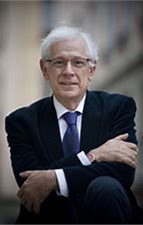
“Pedagogy is a tool for today’s challenges. Pedagogical inventions help us to resolve everyday problems, like punishing without excluding, living together and not leaving any child by the wayside”.
Pedagogism has become columnists new scapegoat; pedagogy and its history have never been so misunderstood. However, the contributions of pedagogical opinion may be helpful in thinking about and trying to overcome the difficulties in which we find ourselves today. Important topics like dealing with school rejection, the difficulties in accessing formal knowledge, the organisation of rituals to focus attention, the place of experimental approaches, research into learning, taking into account the body and physical activities, the tension between constraint and liberty, the possibility of punishing without excluding, learning to live together and plenty of other questions besides need treating in a profound way.
We must certainly be careful in looking for ready-made solutions to today’s problems in various pedagogical doctrines.
On the other hand, it is interesting to try and understand the reasons behind the approaches of those pedagogues. In many ways they anticipated our current project of “not leaving any child by the wayside”, which is a fundamental right. Before today they have been confronted by the same contradictions that we are now encountering; such as kindling a desire to learn when faced with an imposed curriculum. How can we transmit knowledge and develop a critical outlook? How can we deal with specific problems without stigmatising or making the child ill?
From Pestalozzi to Oury, pedagogues have explored that fundamental contradiction between two ideas that are both necessary whilst appearing contradictory: the concept of “educability” indicates that all individuals are able to learn, whilst that of “freedom” says “no one should be forced to learn”.
In renouncing the first idea, we allow “educational Darwinism”, fatalism and selection by failure to win. If we reject the second, conditioning and training threaten. On the other hand, keeping them together opens a considerable space for our inventiveness. A space that has been occupied by people who attempt to teach those on the fringes of society and who have developed approaches to democratise education.
The history of pedagogy also contains a remarkable reservoir of antidotes to facile and doctrinaire thinking. The pedagogue is a worrier, not through weakness or lack of reference points, but because he insists in facing up to difficult realities. Also because he doesn’t wish to renounce the desire to teach, but doesn’t want to teach in a clinical way.
Albert Thierry (1881-1915) was faced with young peasants who were as reluctant to study as some modern youths. He recounted, “I saw Marcel Brun suffering under my control as if he was faced with a red-hot iron”. Whilst remaining intellectually demanding, in that strange situation he saw that the pupil could not function. There was no question about it that he had to moderate his objectives to deal with the pupil’s resistance to learning; that to him was pedagogy.
“Real pedagogues do not agree with spontaneous libertarianism. Fernand Oury denounced the idealists who kneeled before the “Petit Emile with a pink bottom”, who allowed the children to do what they wanted with law or rules. He also denounced the use of the cane saying “One pays severely for brutal repression or for the naivety of laissez-faire. It is difficult to recover that which is lost in constraining them without sacrificing the development of liberty through new types of group work”.
He was influenced by Makarenko (1888-1939) and Korczak (1878-1942) both of whom were devotees of the collective construction of rules which allowed them to escape from the “law of the jungle” or rules imposed by little chiefs.
The teacher did not make the law, he embodied it. He was responsible for the fundamental rights in forbidding the incest, harm and gratuitous acts, to ensure a satisfactory future and freedom. That prohibition actually authorises… even if it isn’t easy to comprehend, even if it isn’t immediate and even though it brings frustrations. The pedagogue believes that the child must accept these frustrations if it is to perceive and to design the programme whose outline it is helping to draw.
However to “perceive” and to “design” are not the same thing; in the first case the child or pupil has to claim ownership of the adult’s question, in the second he is its author, or at least its co-author.
One of the issues highlighted by pedagogical reflection is the multiple interpretations of “interest”. Is that the “child’s interests” or that “which interests the child” or is “in his interest”. Dewey (1859-1952) and Decroly (1871-1932) tried to show this can be resolved not by opposing the “immediate interest” (superficial) and “profound interest” (cultural), but by inventing some original propositions that are found in not Psychology, nor in the curriculum. “Project pedagogy” has object of devising and putting into practice.
Pedagogues are not disinterested in the fundamental question about the formalisation of knowledge. Insisting in the discovery does not mean that they minimise its systemisation; Comenius (1592) and Freinet (1896-1966) are not incompatible. The former considered that progressiveness and exhaustiveness in learning are the key to accessing all knowledge, whilst the latter made experimental trial and error the cornerstone of his method. In addition, Comenius never stopped affirming the importance of “finding out for oneself” and Freinet, who invented coloured belts and a system of diplomas, insisting on working to organise knowledge.
If one tries to look at them deeply, the pedagogues inform us about educational facts. Certainly, one has to deal with the irritation of vague or excessively polemical arguments. On can certainly think that Freinet exaggerates when he says that in schools the national flag should be replaced by Dante’s inscription on the gates of Hell, “Abandon hope all he who enter here”. On the other hand, should we ignore his immense and minutious work.
In the same way, we may be irritated by some of the scientific pretensions, say of Maria Montessori in her books “Scientific Pedagogy” and “The Absorbent Spirit”. This is not a psychological concept, but it is a useful tool for thinking about the attention of a class.
Similarly, working in groups may appear rather naive if one follows the injunctions of Cousinet, but it is particularly interesting if one sees it as a way of getting the pupils to participate socially.
In reality, nothing is more current than pedagogy; on the fringes of institutional and philosophical systems, it develops alternative ideas, opens new pathways, suggests alternatives to escape from the eternal contradictions between nature and culture, innate and learned, authority and liberty, taking into account the need for order, whilst allowing for change, etc.
Faced with a world where individualisation appears to be an irreversible movement, whilst at the same time there is a great need to (re)construct a collective sense. Perhaps it is possible to find a way through by examining pedagogy.
Philippe Meirieu is a Professor at the University of Lyon II. He is the author of many articles and book. He has been involved in workshops and reforms. His “Pedagogy, the Duty to Resist” was published in 2007
 Jam Butty's Alternative Education