Paolo Freire (1921-1997) was born into a catholic family in Recife, one of Brazil’s poorest regions. He trained as a jurist and developed a pedagogy that focused on the child understanding his background which inspired a national literacy programme in 1963. The following year, after a coup that led to a military dictatorship, he exiled himself to Chile, then to the USA and on to Switzerland, where he worked for the Ecumenical Council of Churches, until his return in 1980. In 1989 he became Education Secretary for Sao Paolo.
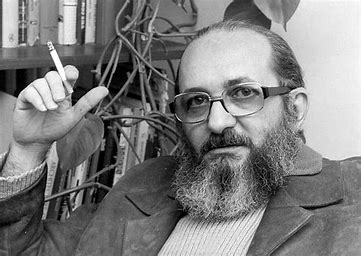
His “Pedagogy of the Oppressed” has been translated into twenty-eight languages and more than twenty universities around the world granted him an Honorary Doctorate.
The Brazilian educator promoted a liberation education in opposition to the “pedagogy of the oppressed”, which he saw as the pouring of pre-digested knowledge into children’s heads. He supported the creative powers of the pupils.
“The teacher who remains in a fixed unvarying position risks projecting ignorance upon his pupils. He will always be the one who knows and the pupils are the ones who don’t. The rigidity of these attitudes denies that education and understanding are processes of research. Faced with the pupils, he presents himself as their essential opposite. He finds the reason for his existence in their intransigent ignorance.
The reasons for a liberation education reside in the initial urge for unification. This type of education implies by-passing the teacher-pupil contradiction in such a way that they become simultaneously teacher and learner.
In the “banking” conception of education, teaching is the act depositing, transferring and transmitting values and knowledge, so one does not see and one cannot notice this by-passing. On the contrary, reflecting the oppressive society, it becomes a dimension of the culture of silence and “banking education” maintains and enhances this contradiction.
- This is because it is the teacher who educates, the pupils are those who are educated
- It is the teacher who knows, the pupils don’t know.
- It is the teacher who thinks, the pupils are thinking.
- It is the teacher who pronounces the word, the pupils listen docilely.
- It is the teacher who disciplines, the pupils are disciplined.
- It is the teacher who chooses and imposes his choices, the pupils obey.
- It is the teacher who acts, the pupils have the illusion acting, through the teacher’s actions.
- The teacher chooses the curriculum content, the pupils are never consulted, they just fit in.
- The teacher identifies the authority of his knowledge with his functional authority which is opposed to the pupils’ freedom, they must adapt to the teacher’s resolutions.
- Finally, the teacher is the active participant in the process, the pupils are simply objects.
If it is the teacher who knows and the pupils are those who know nothing, his role is to give, bring, deliver, provide or transmit his knowledge to them. However, this knowledge has not been gained from experience, but from recounted or transmitted experiences.
It is not surprising that within this “banking” view of education, men are considered as adaptable and adjustable beings. The more that pupils store the “deposits” that they are handed, the less that they develop a conscious critique which allows them to enter the world as agents of transformation.
The more that passivity is imposed upon them, instead of changing the world, they tend to adapt themselves to the fragmented reality contained in the “deposits” that they have received.
As much as this “banking” view nullifies the pupil’s creative abilities or reduces them to a minimum, as well as not developing their critical senses, it serves the oppressor’s interests; who do not want them discover the world, let alone transform it. Their “humanitarianism”, which is not a “humanism”, consists of maintaining the situation in which they are beneficiaries and allows them to perpetuate their false generosity. Also they react against any educational attempt that tries to stimulate authentic thinking, that does not leave them deceived by some incomplete aspect of reality; always searching for the bonds that connect one point with another, one problem with another.
What the oppressors desire is to change the mentality of the oppressed and not the situation that oppresses them; those who adapt best tom this situation will be more easily controlled”.
(Extract from “Pedagogy of the Oppressed” – 1974)
Miguel Benasayag
Miguel Benasayag is an Argentinian philosopher and psychoanalyst, living and working in Paris. He works with RESF, (Reseau education sans frontieres).
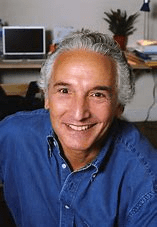
In 1970 he met Paolo Freire at a conference for priests supporting “liberation theology” in Buenos Aires. He put the theories of Freire into practice in Argentina.
He fled the military dictatorship in the 1980s.
Education does not consist of bringing Enlightenment to the ignorant, rather it is the co-creation of our own knowledge.
In 1971 in the shanty town of Bojo Flores, near Buenos Aires, he started the first school that used Friere’s methods of teaching literacy. In these slums, it is essential to understand that people want to be literate, to understand their collective history and their everyday practices in order to raise awareness. The “global method” did not involve making passive citizens literate, but by placing words in an experience in order to put together knowledge.
Later we reproduced this process in the shantytowns around La Courneuve with a “popular university” from 1999 to 2002. The project rests on the same basis, that is we refuse to instruct good ignorant people by means of pedagogical action by humanist scholars. We seek to create the conditions for producing knowledge together. Thus, the teachers are invited to put their knowledge into the common cauldron alongside the local inhabitants.
I am deeply convinced, in pedagogical relations, that which I must face is the bearer of immense knowledge that I have to help give birth to and which he has to shape for himself. That is the way to emancipation.
Our university looks at the issue of the insecurity by refusing pre-established or stigmatising discourse on the subject. We have created research groups composed of young people aged between 18 and 25 years that look at the question “How do you live with insecurity”?
For the 200 participants, this is the ideal way of moving from identity towards creating relevant knowledge.
So, in producing their own knowledge, away from other influences, each has been able to undo their prejudices about insecurity.
Originally, Education was seen as the conquest of darkness by enlightenment from knowledge and our minds have fixed upon the postulate that educated people are vaccinated against Barbary. By exercising a massive act of barbarism by a people as educated as the Germans during the Second World War, these convictions have been shaken. Also, the idea that those who think well act well has been invalidated. The abandoning of the humanist ideal of Enlightenment has given way to a new figure, the “competent man”. Now that the ideals of a humanist education are fading, the solution offered by a neoliberal society is this “competent man”, a modern example of barbarism, a versatile and flexible man who has neither the time nor the leisure to deploy this skills.
Faced with this crisis, the popular university inspired by Freire suggests another route; not a way of working that confronts the institution, but one which may blossom beyond its limits.
From 2000 to 2003 the popular university of ZEP Orgeval, near Reims has worked on the question of violence in school with fifty teachers, some senior advisors and inspectors. We come together in a situation of not knowing because it is necessary to avoid certainty and being blinkered. The teachers do not have to wait for the minister to give them solutions. For example, one can create bodies where the conditions for the production of knowledge are established to fit with local situations. It is necessary to rethink the relationship between the global and the local; it is through local education that national education can escape from the crisis. Dinosaurs’ brains were unable to control the entire body because it was so massive; they had a second brain which controlled the rest of the body, ensuring the coordination of the whole.
I propose the creation of multiple local nuclei in place of the mammoth National Education system. The ministry would cohabit and cooperate with these local bodies. However, it must be recognised that many teachers fear such a regime.
Teachers who attempt to introduce this type of experimentation often feel blocked by the administration and school has become a place of intolerance, where there is no room for manoeuvre for fear of the future. This makes the teachers feel a lack of control.
It is essential to distinguish between authority and authoritarianism. The opinion that everybody is essentially the same is one of the malignant effects of neoliberalism. In a world where nothing is sacred and everything has a price, it is neoliberalism that needs the authoritarianism. The government enacts neoliberal measures through an authoritarian approach.
Authority resides, in effect, in the often legitimate asymmetries, such as between generations: one respects one’s elders, parents and the wisest. Neoliberalism levels and equalises everyone and everything, all is commodified; that is what ends authority.
Thus the “competent men”, who are exchangeable and without real quality, are also men without authority who can only turn to authoritarianism. A posture that is nothing but an artifice, they erode the foundations of authority on one hand, whilst they delight in authoritarianism.
 Jam Butty's Alternative Education