Decroly (1871- 1932) was a Belgian educator and child psychologist, who developed a new approach to teaching. The key ideas of his pedagogy were based on the child’s centres of interest, observation and globalisation.
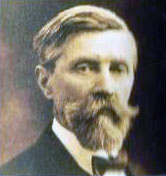
At the end of the nineteenth century, many people lived in misery and the well-being of children was not a priority. In school many were badly treated.
He observed, “I can confirm that school has a malign influence, an undeniably antisocial action; not only does it not prepare us for life, but it wrecks life for many of us”.
The Hermitage School
The Paediatric Society’s decision to set up a small clinic for the observation and treatment of children described as “abnormal” orientated Decroly’s life. He accepted the appointment on condition that he would raise the youngsters in his own home alongside his children.
Thus in 1901, the “Institut d’Enseignement Spécial” (Institute for Special Teaching) was opened. “Dr Decroly’s Psychological Laboratory” immediately transformed itself into a laboratory school, where these “irregular” children lived a normal life in a natural environment. In the institute they received the care that they required for their conditions, also they were exposed to a wide education allowing Decroly to say that their educability was the same as normal children.
In 1907, on the instigation of friends and parents, he opened a second school for “normal” children, “L’école de l’Ermitage” – The Hermitage School, which grew rapidly from the initial intake of seven children to six groups providing all levels of basic education. Whilst it systematically changed the education process, its aim was to change the educational system.
Decroly’s Method.
Decroly observed that children’s mental activity is not spontaneously analytical, their fears of the world are marked by a global perception which confused numerous elements. In addition, the child’s “interests” tied in with the fundamental requirements which are:
- To be fed
- To rest
- To be protected from the cold
- To defend itself
- To produce
Thus it mattered that all teaching must primarily arouse an interest in the topic. In each case, it is necessary to start from observations which provoke the association of ideas in order to discover which interests those observations may awaken in the child. This allows him to express and to show what he has assimilated.
Decroly’s pedagogy rests on four foundations:
- The child’s centres of interest as a guide to education.
- Globalisation
- The laboratory classroom
- The natural environment’s importance in allowing the child to make discoveries
To stimulate a child’s mind, it is necessary to address his emotions and excite his curiosity. Interest is the centre point of learning because it creates connections between all the subjects involved. From the direction of these interests, one commences to understand the pupil’s motivations and create possibilities of integrating his knowledge in an organised way.
Globalisation
A young child learns and accumulates experiences in no particular order: objects and beings are taken in relations to each other and to the child. The World is perceived as a living unit and this is the step that should be adopted at school; starting from the real and concrete, moving on later to the particular and the abstract details.
This prescription is still used today under the title of the “Global Method”.
In Decroly’s school the class became a workshop where the child acted and lived. This applied everywhere; in the kitchen, the garden, the factory and the museum, etc. The pedagogy involved places of learning where the pupils learned through practicing freely, experimenting and making mistakes. It depended on play and pleasure for children to develop their understanding, rather than having to receive a series of obligatory ideas.
Exposure to the natural world was a key point in Decroly’s approach. In the environment one finds the things that awaken and stimulate the pupils’ potentialities. There is an inexhaustible supply of topics that can be reflected upon, talked or written about. Nature allows the students to discover things and become aware of their identity.
For Decroly, it was not about subjects to be completed, timetables, deadlines, textbooks or the classic curriculum. His organisation was based on projects and work plans. The students freely chose the subject to study.
- Individuals suggested the topics that they would like to follow.
- These propositions were negotiated with the whole group.
- A collective work plan was devised.
It mattered not that the chosen theme covered scientific, economic, geographical, historical, literary or legal aspects that needed an introduction to a variety of techniques and ideas without losing sight of the connections.
This freedom stimulated their work; even though it was difficult, the training and exercises brought a immediate sense of usefulness. In progressing without haste and completing all subject’s aspects the pupil developed a real “box of tools” that could be used to tackle new questions. They developed more confidence in their capacity for invention, discovery and personal work that they could not have found with an adult giving him the information. School was more about finding out than the transmission of knowledge.
Amélie Hamaïde was Decroly’s first assistant and published at book on his methods that was translated into thirteen languages. His methods were emulated across the globe and by 1932, beside in Belgium and Europe, there were school in Turkey, Bolivia, Chile and Ecuador where it was officially adopted in the state schools. It was a source of inspiration in Uruguay, Brazil and Colombia.
Under these conditions what was the teacher like?
Amélie Hamaïde explained, “Few words, plenty of action; watching, observing on the go, analysing, manipulating, experimenting, collecting and preparing.
“Introducing innovations in education and teaching programs is not easy. Its mechanism has been slowly elaborated over centuries, it is complex and not susceptible to change; so most people find it best to leave it alone. They are not bad and do not notice the cracks”.
http://www.histoire-des-belges.be/quelques-celebrites-belges/ovide-decroly
 Jam Butty's Alternative Education