The letter box, a pedagogical tool
Precursor of the Declaration of Children’s Rights , Janusz Korczak was pivotal with his participative educational methods which broke away from the authoritarian pedagogy of his time. The child was encourage to sublime his violence through speaking and writing.
Janusz Korczak (1878-1942) real name Henryk Goldszmit, was a committed journalist, a fashionable paediatrician, a renowned author. … his curriculum vitae, can withstand any comparison.
Born into a comfortable Jewish family in Warsaw, this educator always stood on the side of children. In the Twentieth Century, he founded two orphanages, where he put his principles into practice using a non-repressive approach based on accepting the children’s word and their respect.
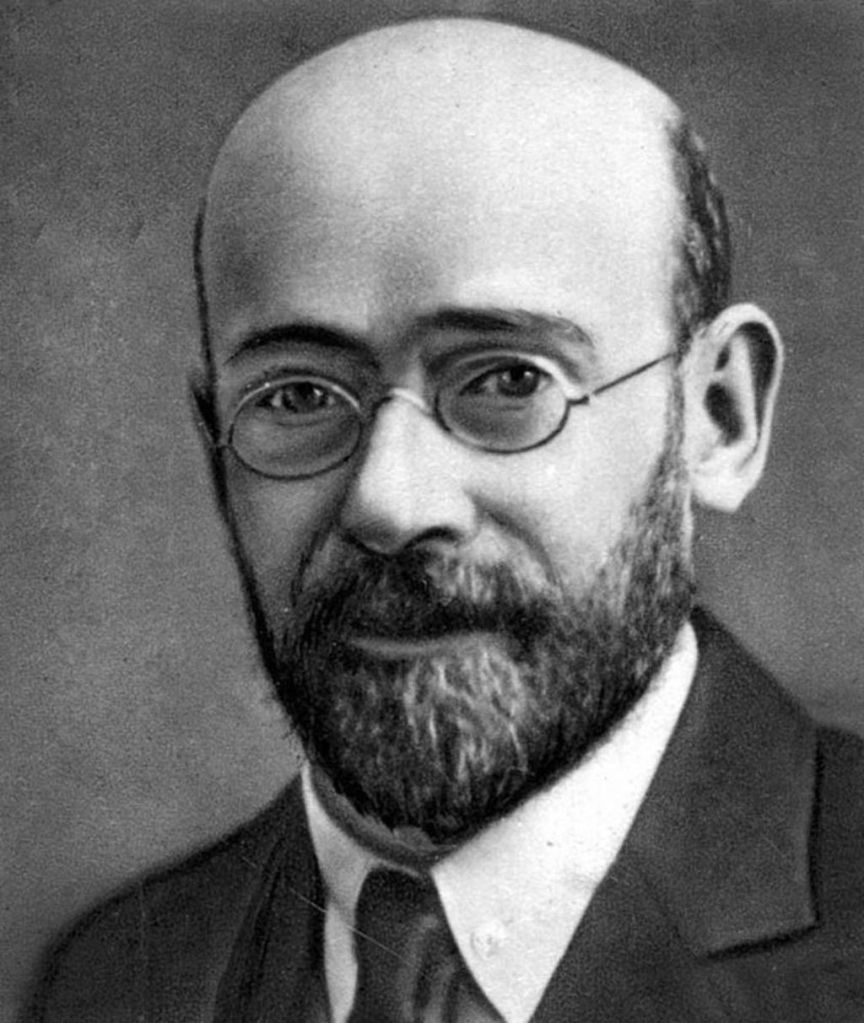
On 5th August 1942, Janusz Korczak and two hundred Jewish orphans were deported to the extermination camp of Treblinka to be killed by the Nazis.
Korczak was greatly influenced by a group of turn-of-the-century liberals who stood for a democratic socialism that refused to recognize class or ethnic divisions, set the moral standards of their time.
These included Jan Wladyslaw Dawid, the editor of Voice and Poland´s first experimental psychologist, Korczak attended his course at the underground Flying University.
Dawid had studied in Leipzig with the founder of experimental psychology, Wilhelm Wundt, and his lectures were filled with the radical ideas in education that were sweeping both sides of the Atlantic at the time: ideas that called for liberating the child from the conventional restraints of the past.
Dawid´s wife, Jadwiga Szczawinska had started the underground Flying University to provide education for young women in Polish language and literature. Its influence soon spread to men as well. Its students included Zofia Nalkowska, who became a well-known novelist
Korczak considered Johann Pestalozzi one of the greatest scientists of the nineteenth century with his boarding school set up in 1805 in Yverdon that laid the foundation for progressive education.
Many of his later ideas on education, the dignity of work, and the importance of observing carefully in order to think clearly, reflect the influence of the Swiss educator.
Dawid´s experiments with measuring the psychological responses of children at different ages-work that anticipated the field of child development made Korczak decide to do scientific research on the child that would exclude subjectivity.
Korczak gave his Saturdays to inspiring unruly children to read in the Free Lending Library. The Russian authorities, convinced that the library was subversive, conducted constant roundups. Because of the raids on the Flying University and the library, he spent time in prison.
In his writing he says:
“The science of diagnosis occupies a preponderant position in medicine. The student examines numerous individuals, learning to see and discern the symptoms, to translate them and to associate them in order to draw conclusions.
In order for teachers to follow the path opened by medicine, they must develop a science of educational diagnosis based on understanding the symptoms. Fever, coughing and vomiting are to medicine what smiles, tears and red cheeks are to the teacher. There are no symptoms without significance.
One should observe and reflect, reject chance happenings, connect similarities and seek basic principles.
Do not seek to know how to demand of the children, how to compel them or to forbid them, rather look what they need, what there is too much of, and what they can give. Schools are educational clinics, places of analysis.
Why does a pupil, on arriving in school check out every corner and have a quick chat with everyone? When the bell rings he then finds it difficult to return to his place.
Why does another quickly take her place and only leave it reluctantly at break.
Who are these children?
What can the school give them?
What should be asked for in return?
Why is it that one individual, when called to the front, approaches the board willingly, head erect with a bright smile and writes in big, bold letters?
Another gets up reluctantly, clears her throat, adjusts her clothing, approaching the board slowly with downcast eyes awaiting instructions and writes in tiny, pale characters. ….Why?
Rather than avoiding the question because we have no right to expect an answer, we must pose an objective question, “Why”? We must be investigators without which we will be unable to gain experience, to believe and advance; without which there is no understanding. “
Knowing the advantages of written communication for children, he rapidly realised a letter box was required. It allowed him to delay decisions, “Write to me and you will see”. It is often easier to write something than to say it.
What teacher has never received childish scribblings full of questions, requests, complaints, excuses or confidences? Children have always written them and the letter box makes this wise behaviour readily acceptable.
Each evening, you recover a handful of sheets covered with clumsy writings and, in the quietness of your study, you can calmly reflect on everything that has happened in your busy day. You should be able to make out what seems the most important. “Can I leave tomorrow because my Mummy’s brother is coming”. … “The children are nasty to me”. … “You are unfair, you sharpen everyone’s pencils, but you have never done it for me”. …. “I don’t want to sleep near the door because I always think that someone will come in during the night”. …. “I am upset with you”. … “At school, the teacher has told me that I am making progress”.
There will be banal letters, everyday letters and there will be exceptional letters. Things will be repeated. There may be some problem that you will have to sort out. If you haven’t time in the evening, you can reflect on it in the morning. If the contents of one letter really strike you, you can devote more time to it.
The letter box also serves to teach the children to wait for a response, rather than expecting it there and then; to put things into perspective; to distinguish between their voices, their pains, their doubts, that which is important from that which is less so. Writing a letter expects a decision. (It is rare that a child wishes to retrieve a letter once it has been posted); to reflect, to motivate an action, to have the will (.. it is necessary to want, in order to learn).
Some educators have reproached me saying, “Isn’t this means of communication rather too formal for children?” I would rather affirm that the letterbox doesn’t hinder oral communication, on the contrary it facilitates it. It makes time for the educator to devote to the children who need attention.
Daniel Halperin
Janusz Korczak was a defender of children’s rights, he was attentive to the well-being of the smallest and developed a pedagogy based on their rights of expression. In addressing educators he gave neither recipes nor advice, only the recommendation that they respect infants.
He was an educational pioneer, who abandoned a prosperous career as a paediatrician to open a model orphanage for Jewish children, then founded a second establishment for Catholic youngsters.
He condemned the ready-made psycho-pedagogical theories that were pronounced by university teachers, all his pedagogical science came from his experiences in the paediatric clinic. He wasn’t content to just examine a patient, but enquired about the environment in which they developed. He assigned great importance to the interactions between the child and its parents, defending the idea of the child’s autonomy.
He said, “There isn’t a ready-made recipe to give you. You must put up with the harsh reality of everyday life; it is rather tiring. You shouldn’t think about time, the children will make you pay dearly for your mistakes, but this is the price of learning your job.
Infancy is not a period, but a state; the child isn’t a virtual adult, an incomplete individual, but a full human being who is a child. For him being small was not derogatory; on the contrary it is to be large in sensibility, aspirations, utopias and generosity.
We bestow too little importance on children’s wishes, which often seem to be trifles or whims. Korczak defended the daydreaming, play, secrets, intimacy and the little sadnesses as active elements in the child’s life.
From 1910 onwards he appealed for a Declaration of Children’s Rights, well in advance of the International Convention in 1989, which was greatly inspired by him.
In his time, there were many children in the streets begging or looking to do little jobs; they were raised in the school of hard knocks. Korczak tried out an original route where the children were involved in making the orphanage rules.
The rights that he identified were:
- Pocket money
- To be taken seriously
- To play
- To make mistakes
- To be supervised
- To give their opinion
- To have a secret
- To tell a lie from time to time.
One can make fun, but it appears that is all very relevant and quite representative of current pedagogical difficulties. Korczak was a very sensible man.
In order to develop, a child has to explore the forbidden and Korczak handled the paradoxes cleverly. He did not think that it was necessary to use violence, but believed that children should fight from time to time to discover their limits and he installed rules about fighting. “You want to fight a classmate who has really annoyed you? Ok! Do it.
Rule one – tell him that you are going to fight him, but not immediately
Second rule – the fight will have a time limit and you cannot hit him outside the ring.
You wouldn’t think of it, but he taught the children to control their impulsivity, to delay from immediate action and to supplant instinctive behaviour with premeditated, thought-out and controlled actions.
The general principles that defined the rules involved the children’s participation and recognising their right to expression. Korczak had a variety of measure, such as the letter box that allowed timid and frightened children to ask questions or make anonymous criticisms. The parliament gave children the power to make decisions, but it had to be managed because there are limits to what a child can do, for example to legislate on the organisation of chores. He assumed that the children were able to resolve their daily conflicts without recourse to an adult. To that effect, he drafted a penal code with a hundred articles enumerating all sorts of infractions and their sanctions, which were relatively kind. The children were thus brought to known the regulations, what would be the punishments, which would be applied by his peers as judges in the tribunal.
The heritage of Korczak can be summed up in his own words:
- Children are not the individuals of tomorrow, they are today’s individuals.
- You have to stand on tip-toe to raise yourself to their level.
Beyond the words, the central notion of respect stands out. According to Korczak it is impossible to force parents, let alone teachers, to love children, however they are bound by their duty to respect them in every circumstance.
 Jam Butty's Alternative Education