Discipline

I am in the middle of reading “Il Bambino è il Maestro – Vita di Maria Montessori” by Cristina de Stefano.  (The Child is the Teacher – Life of Maria Montessori).

In view of the constant demand from politician for discipline in schools, I was particularly struck by the following passage

“Nel nostro sistema, abbiamo un concetto diverso della disciplina; la disciplina, anch’essa, deve essere attiva. Non è detto che sia disciplinato solo un individuo allorché si è reso artificialmente silenzioso come un muto e immobile come un paralitico. Quello è un individuo annientato, non disciplinato”.

“In our system, we have a different concept of discipline; discipline too must be active.  You cannot say that an individual is disciplined when s/he is artificially rendered silent like a dumb person and immobile like a paralysed one.  That is an annihilated person, not a disciplined one”.

Touch

Listening to Claudia Hammond’s BBC Radio 4 programme “Anatomy of Touch” this morning caused my mind to make connections with what I had read yesterday evening in Cristina de Stefano’s biography of Maria Montessori about the work of Jean Marc Gaspard Itard with the Wild Boy of Aveyron and of his assistant Édouard Séguin‘s education of children with cognitive impairment. 

As well as playing an important role in our emotions, the sense of touch is so significant in the learning process. My earlier post about the importance of teaching handwriting is just one example. The feedback between what the eye sees and what the fingers feel helps to develop the neuro-muscular coordination necessary for the formation of letters. An example of kinaesthetic learning.

Why writing by hand makes kids smarter

by Anne Sliper Midling,  Norwegian University of Science and Technology

This is an edited version. The full article can be read at: https://medicalxpress.com/tags/screen+time/

Typing, clicking and watching occupy an increasing number of hours in the average child’s day. But brain research shows that writing by hand helps people remember better and learn more.

New brain research shows that writing by hand helps children learn more and remember better. At the same time, schools are becoming more and more digital, and a European survey shows that Norwegian children spend the most time online of 19 countries in the EU.

Professor Audrey van der Meer at NTNU believes that national guidelines should be put into place to ensure that children receive at least a minimum of handwriting training.

Results from several studies have shown that both children and adults learn more and remember better when writing by hand.

Now another study confirms the same: choosing handwriting over keyboard use yields the best learning and memory. “When you write your shopping list or lecture notes by hand, you simply remember the content better afterwards,” Van der Meer says.

Van der Meer and her colleagues have investigated this several times, first in 2017 and now in 2020.

In 2017, she examined the brain activity of 20 students. She has now published a study in which she examined brain activity in twelve young adults and twelve children.

Both studies were conducted using an EEG to track and record brain wave activity. The participants wore a hood with over 250 electrodes attached.

The brain produces electrical impulses when it is active. The sensors in the electrodes are very sensitive and pick up the electrical activity that takes place in the brain.

Handwriting gives the brain more hooks to hang memories on

Each examination took 45 minutes per person, and the researchers received 500 data points per second.

The results showed that the brain in both young adults and children is much more active when writing by hand than when typing on a keyboard.

“The use of pen and paper gives the brain more ‘hooks’ to hang your memories on. Writing by hand creates much more activity in the sensorimotor parts of the brain. A lot of senses are activated by pressing the pen on paper, seeing the letters you write and hearing the sound you make while writing. These sense experiences create contact between different parts of the brain and open the brain up for learning. We both learn better and remember better,” says Van der Meer. Notes written and drawn by hand make it easier for the brain to see connections because you may create arrows, boxes and keywords that make it easier to get a holistic understanding. Credit: NTNU / Microsoft Digital reality a big part of European children’s lives

She believes that her own and others’ studies emphasize the importance of children being challenged to draw and write at an early age, especially at school.

Today’s digital reality is that typing, tapping and screen time are a big part of children’s and adolescents’ everyday lives.

A survey of 19 countries in the EU shows that Norwegian children and teens spend the most time online. The smartphone is a constant companion, followed closely by PCs and tablets.

The survey shows that Norwegian children ages 9 to16 spend almost four hours online every day, double the amount since 2010.

Kids’ leisure time spent in front of a screen is now amplified by schools’ increasing emphasis on digital learning.

Van der Meer thinks digital learning has many positive aspects, but urges handwriting training.

“Given the development of the last several years, we risk having one or more generations lose the ability to write by hand. Our research and that of others show that this would be a very unfortunate consequence” of increased digital activity, says Meer.

She believes that national guidelines should be put in place that ensure children receive at least a minimum of handwriting training.

“Some schools in Norway have become completely digital and skip handwriting training altogether. Finnish schools are even more digitized than in Norway. Very few schools offer any handwriting training at all,” says Van der Meer.

In the debate about handwriting or keyboard use in school, some teachers believe that keyboards create less frustration for children. They point out that children can write longer texts earlier, and are more motivated to write because they experience greater mastery with a keyboard.

“Learning to write by hand is a bit slower process, but it’s important for children to go through the tiring phase of learning to write by hand. The intricate hand movements and the shaping of letters are beneficial in several ways. If you use a keyboard, you use the same movement for each letter. Writing by hand requires control of your fine motor skills and senses. It’s important to put the brain in a learning state as often as possible. I would use a keyboard to write an essay, but I’d take notes by hand during a lecture,” says Van der Meer.

Writing by hand challenges the brain, as do many other experiences and activities.

“The brain has evolved over thousands of years. It has evolved to be able to take action and navigate appropriate behavior. In order for the brain to develop in the best possible way, we need to use it for what it’s best at. We need to live an authentic life. We have to use all our senses, be outside, experience all kinds of weather and meet other people. If we don’t challenge our brain, it can’t reach its full potential. And that can impact school performance,” says Van der Meer.

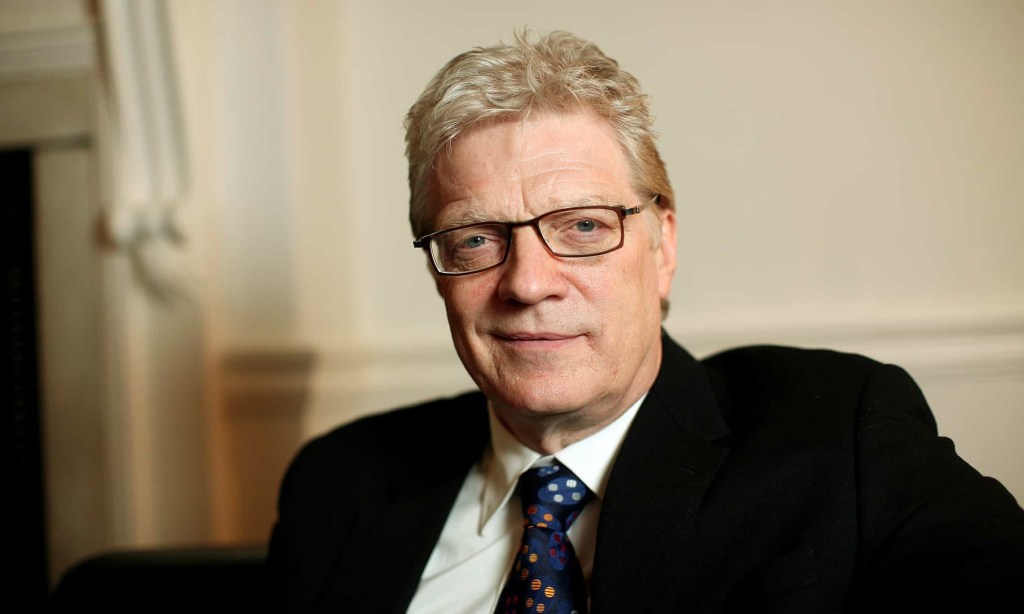
Sir Ken Robinson

It is worth sharing Stephen Bates, Guardian obituary (5-9-20) of which this is an edited version.

Sir Ken Robinson, a proponent of the encouragement of creativity among children was largely ignored by politicians of both main parties as he insisted that the policy of successive UK governments, that literacy and numeracy should predominate, was a false priority. As he told interviewers: “That’s like saying let’s make the cake and if it’s all right we’ll put the eggs in.”

He told an audience in 2006: “I believe our only hope for the future is to adopt a new concept of human ecology, one in which we start to reconstitute our conception of the richness of human capacity. Our education system has mined our minds in the way we strip-mined the earth for a particular commodity. We have to rethink the fundamental principles in which we are educating our children.”

Understandably, this was much more enticing to the education profession than it was to government ministers, but it was based not on a single speech but Robinson’s whole career in academic education, which culminated in a professorship at Warwick University (1989-2001), before he became a senior adviser to the J Paul Getty Trust in Los Angeles.

If the argument was that individual creativity was stifled by the system, it was less easy to discern how that might be recreated within a state education with its emphasis on attainment targets and examination results. The Blair government at least invited him to chair an inquiry in 1997, which produced a report, All Our Futures, but then largely ignored it; while Michael Gove as education secretary and his special adviser Dominic Cummings chose snide derision to dismiss the establishment “Blob” of which they felt he was clearly a part. Robinson himself said, “If I didn’t piss somebody off I’d probably be doing something wrong, but I don’t set out to do it.”

He told Kirsty Young on Desert Island Discs in 2013 that schools should have discretion to develop creativity: “Don’t treat children as the same or over-programme them, they find their talents by trying things out.” 

But Robinson admitted on the programme that he had benefited from an academic education system and insisted he was not opposed to a national curriculum, but just wanted one with different priorities and parity of esteem between core subjects and artistic ones such as dance.

Robinson was the author of several books, including Out of Our Minds: Learning to Be Creative (2001), Finding Your Element (2014) and Creative Schools (2015). He was knighted in 2003.

• Kenneth Robinson, educationist, born 4 March 1950; died 21 August 2020

Sistema Amara Berri

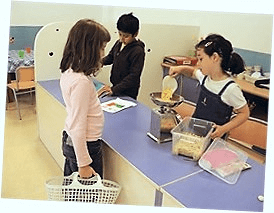
This project was founded by Loli Anaut in the Amara Berri suburb of San Sebastian. Her pedagogical planning, untiring work, tenacity and efforts were aided by a team of teachers united in the task of providing a high quality educational experience. The organisation coordinates nineteen centres in the Basque Autonomous Community. 

In 1990 Amara Berri was recognised by Basque Government as an Educational Innovation Centre with the twin functions of investigation and pedagogical development for teacher training in other centres.  Attention to pupils with special educational needs is a key part of the centre’s activity. 

The participation of the Parents’ Association and various commissions play an important role, whilst the Students’ Council has responsibility and represents the Centre in various ways. 

Investigation, experience and innovation have been and are characteristics of the Amara Berri System.  Its priorities include ensuring coherence between the purpose, practical form, the organisational structures and formation of the centre.

“We develop the theoretical framework of competences through classroom activities that entail methodological changes in our educational and organisational practices. 

These changes create new roles and ways of acting between the elements that form our educational communities.  The implementation of global projects may progress in this direction, from this perspective we believe that all initiatives that arise may become incorporated in the culture of every school.  This culture develops continuously with everyone involved and that improvement is not just an end, but also the means. 

The project “Globalisation as a vital process within an open system” began in 1978.  This “System” consists of human, physical, educational purposes, organisation, essential activities, methodology, resources, etc., which interact continually and through this process each acquires its meaning. 

It is a system of working, rather than a method; it is interdisciplinary, conceptual and organisational. It involves planning, reflection, analysis and decision-making. 

It is an “open system” that can absorb new elements, create new interactions without losing its systematic organisation. “

Unschooling

These two letters from the Guardian 6-8-20 are worth sharing:

Your balanced interview with Anna Dusseau on home schooling was a pleasure to read (The teacher who decided to ‘unschool’ her own children, 4 August). Dusseau highlights why ever more families (over 50,000 children at the last count) are rejecting institutional schooling for home education – not least, “forced learning” in schools, the coercion of the national curriculum and the test- and results-driven English schooling system.

Research evidence shows that home-educated children achieve substantially better outcomes than the mainstream. Even more importantly, as Dusseau says, children are more able to discover “who they really are, and what they want to do in life”, as opposed to them having to develop a “false self” just to survive at the hands of a schooling system that is stultified by the soulless audit culture.

For many, the Gradgrindism of modern bureaucratised schooling has now reached the limits of unacceptability, yet the Department for Education and Ofsted will doubtless be the very last to get the message. Indeed, a coming battle could well be one of protecting home schoolers from the dead hand of Ofsted’s accountability and surveillance empire, which is likely to be determined to intrude before too long.

It’s fitting that Dusseau completed her English degree at Exeter, where the late great Guardian columnist Ted Wragg (1938–2005) was education professor. Ted would have loved this interview and how Dusseau is opening up the core questions about education that he himself fearlessly pursued all his professional life.
Dr Richard House
Stroud, Gloucestershire

• Unschooling the parents is the real task. My husband and I unschool our three daughters (aged nine, six and four), having tried school for our eldest for a year. My daughters are naturally inquisitive and enquiring, ready to learn by following their interests. Unschooling seems to suit them well. My husband and I are personally benefiting from unschooling. We are gradually freeing ourselves from the heavy tangle that imposed schooling left us carrying into adulthood. We too can think and learn more freely now.
Claire Richardson
New Malden, London

Jean-Baptiste Godin

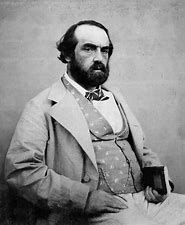
Jean-Baptiste André Godin (1817-1888) was a utopian industrialist who put into practice the ideal of social justice. He was the head of large foundry and factory in Guise and Brussels.  He was self-taught and became a journalist, writer and politician as the Deputy for the Aisne Department.

He built a town of 2000 inhabitants called La Familistère close to his Guise factory (1859-84). This was influenced by the ideas of Charles Fourier.  Fourier believed that interests and cooperation were the basis of social success.  The Familistère was visited by influential people from France, England, Russia and the USA.  This led to the formation of several Fouriériste schools in the US. 

Godin was equally influenced by the utopian ideas of Henri de Saint-Simon, Étienne Cabet and Robert Owen. 

The educational system of the Familistère was organised into three institutions: the crèche for children between 15 days and 4 years, nursery for those between 4 and 6 years, the primary school up to 13 years.

The schools were comprehensive and accessible to everyone without exception.  In addition, the theatre had a programme of conferences and performances, whilst  a public library beside the school completed Godin’s educational project.

https://www.familistere.com/jean-baptiste-andre-godin/

Charles Fourier

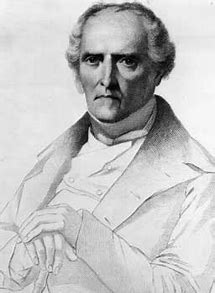
Charles Fourier (1722-1837) was a French philosopher and utopian social theorist who advocated the “phalanx” a communal association of producers as a way of reconstructing society. The phalange was to be a cooperative agricultural community that shifted roles to ensure the individual’s social welfare. He saw this as a way to distribute wealth more equitably than under capitalism. The phalanx’s members were rewarded on the group’s total productivity.

Charles Fourier (1722-1837) was a French philosopher and utopian social theorist who advocated the “phalanx” a communal association of producers as a way of reconstructing society. The phalange was to be a cooperative agricultural community that shifted roles to ensure the individual’s social welfare. He saw this as a way to distribute wealth more equitably than under capitalism. The phalanx’s members were rewarded on the group’s total productivity.

Alternative Schools in France

Marie-Laure Viaud

unknown

Today, in France, there are quite a number of schools that are not easily labelled; “alternative schools”, “experimental schools”, “innovative…”.   They are less common than in countries like Germany and Canada.  In public education there are around forty and it is estimated that they teach less than 2,000 pupils.

Some like the Decroly schools have existed since 1946, whilst others, such as the Parisian Vitruve school, date from the beginning of the 60s and plenty opened in the 70s.  Only a few have managed to survive including that at La Villeneuve de Grenoble. 

In 1982 the Education Minister, Alain Savary created five autonomous lycees, including those at Paris, St Nazaire, Oleron and Herouville. At the beginning of the 1990s, with the increasing awareness of disaffected students, innovative schools were created. Jack Lang authorised some “pioneer” middle schools (colleges) in 2001-2. Throughout this period some twenty Freinet primary schools managed to develop.

In the private sector, some sixty “alternative” nursery and primary schools exist, together with a dozen or so middle and upper schools.  These include Montessori, Steiner and “new education” establishments like La Prairie.  There are also isolated teachers in primary education many of whom belong to the Freinet movement. 

Finally, in Paris VII & VIII Universities, which were created after 1986, certain departments still have examples of “alternative teaching”

In what ways do these establishments differ and how do they resemble each other?

 They all put the activity of the pupils at the forefront, working in their interests and relating it to real life. Expression and communication, carrying out projects and multidisciplinary work are found throughout. Nevertheless, many lines of ideological cleavage exist between them, even after more than a century. 

One line of disagreement concerns the priorities, specially designed schools favour the children’s thriving whilst following courses leading to national qualifications, nevertheless they do not attempt to change the relationship with knowledge. For example the Herouville College-Lycée offers individual tuition, assistance with homework and several hours of multidisciplinary project work each week.  Other than that, the classes, exams and internal discipline differ little from ordinary schools. 

“Integrated schools” focus on the long term by developing a love of learning, a critical attitude and the ability to carry out projects. A Le Mans middle school doesn’t arrange the pupils in classes, instead they belong to groups carrying out multidisciplinary project, such as producing a piece of theatre or writing a journal.  During the year they belong to a stable tutor group.  Every six weeks they join groups that interest them or fulfil their needs, rather like the university system of credits. These include Mental Arithmetic level 2, Ancient Egypt, Geography or Volcanoes. Evaluation is by means of diplomas, each pupil has a list of the diplomas that they need to acquire by the end of the course. 

 Another line of disagreement concerns the role of adults; some consider that the child has a natural desire to learn and the ability to do it, so the adults should exercise a minimum of constraint and not intervene in the learning process.  In some lycées there is no control over attendance, nor is there any evaluation other than an informal oral process; rather like the legendary Summerhill. 

Other innovators consider that a highly structured framework with pedagogical measures to promote motivation and learning, these can be found in La Neuville where there are detailed rules that have been established collectively and coloured belts that allows the evaluation of the pupils and their progress. 

The final schism is political. A section of alternative schools have an intake of socially favoured children, partly due to the cost of private schooling or because the parents have the knowledge to choose such an education for their children.  This is the case in most of the Montessori and Steiner schools. 

Others tie their theories to the desire for social transformation and consider that an alternative education may emancipate the lower classes.  In order to connect with these people many of these schools have had to the destination for the children that no one wants. Korczak and Paul Robin worked in orphanages, Deligny with delinquents. Today, some of these schools only exist because they take children in difficulty. 

The results of these different schools are generally good, though the vary according to the establishment. The specially designed schools have the best exam results in the short term, particularly with pupils who only attend for a few years. 

The “Integrated Schools”, rather than favouring knowledge largely promote autonomy and succeed best with pupils who obtain most of their schooling there. In non-directive schools, youngsters in difficulty have difficulty with the lack of reference points; whilst in schools founded on the principle of “institutional pedagogy” often bring them spectacular success. 

Overall, the pupils say they are happy to come to a school with an excellent atmosphere, where violence and rudeness are very rare. 

Why don’t more of these schools exist?  The existing schools are largely in the secondary sector and are several times oversubscribed, but they find it difficult to exist with regimes that differ considerably from the norm.  National Education puts them in a paradoxical situation, officially it is said that they wish them success; but, in fact, there are many constraints, such as the obligation to accept an important percentage of children in difficulty, the problem of getting voluntary teachers, inappropriate premises, late payments and incessant administrative annoyances. These all compromise the project’s success. 

However, if they were more numerous and rigorously evaluated, these schools might provide a laboratory of ideas for tomorrow’s schools. 

Marie-Laure Viaud is a researcher at the “Service d’histoire et d’education” (SHE) in Lyon
Mutual Schools

Anne Querrien is a sociologist 

The National Library of France holds much information about urban collectives and the extraordinary ideological battle surrounding mutual schools. 

In France, mutual schools started in 1816 under the then Minister of Public Instruction, François Guizot and were suppressed by him in 1833, as prime minister, because they were too successful. They disappeared completely during Jules Ferry’s tenure.  No one seems to have taken their history seriously. 

The mutual schools were closed because of their efficiency. 

Like the Brothers’ Schools in the 17th Century, they were created for poor children, to take them off the streets and teach them the basic skills of reading, writing and arithmetic. Their considerable efficacy was down to the sharing of skills and to helping each other.  Organised is small groups, those who understood helped the others. This is illustrated in prints showing some pupils giving lessons to soldiers in the Napoleonic army.  Between 1816 and 1848 several hundred pupils emerged from these schools; including Pierre-Joseph Proudhon, the French politician and mutualist philosopher. These schools, in effect, went too well. Their students learned twice as fast as those in the Brothers’ schools and this encouraged their curiosity. In the factories they questioned the management’s methods. 

Mutual schools were introduced into the UK by the Scot, Andrew Bell, an Anglican minister, who discovered  mutual teaching in India between 1790 and 1795.  He applied this approach with success in a Madras school.  Similar methods were adopted in London by Joseph Lancaster, who popularised them so much that there were over a thousand “Lancasterian schools” around the World. 

This approach became known as the monitorial system. 

From those mutual schools we can learn about their learning methods.  As Bertrand Schwartz said, “It is possible to learn to learn”. 

Design a site like this with WordPress.com
Get started