ADOLESCENCE; Risks and rewards

This is the second part of the New Scientist article “The seven ages of you” by David Robson. It makes some pertinent points on the myths about this age group.

We may think that the wayward teen is a modern invention, but the stereotype can be traced at least to the ancient Greeks. The youth, according to Aristotle, are prone to “overdo everything”. Shakespeare took a similarly dim view: “I would there were no age between ten and three-and-twenty… for there is nothing in the between but getting wenches with child, wronging the ancientry, stealing., fighting”.

Puberty- with all those sex hormones rushing through the veins-might seem to be the most obvious reason for this unruly, impulsive behaviour. Until recently, teens were also thought to undergo some characteristic brain changes that impair their capacity to act rationally. The brain’s limbic system, which governs motivation and reward, matures much more quickly than the prefrontal cortex, which is essential for behavioural inhibition and logical thought. As a result, teenagers were thought to have “imbalanced” brains wired to experience uncontrollable emotions, with little capacity to rein them in until their mid-20s, which is when the prefrontal cortex finally catches up with the limbic system. Until that point, adolescents were thought to be incapable of making good decisions- an idea that is still popular today.

In Romer’s opinion, it is time to ditch these stereotypes. “They are a very gross generalisation,’ he says. There is actually limited evidence that most teens have a severe deficit of self-control, he says. It is true that the capacity for “sensation seeking” behaviour-the desire for varied, new and intense experiences-peaks between the ages of i6 and 19, which may explain the willingness of teenagers to take risks. But Romer thinks that scientists should focus more on the many benefits of teen spontaneity and curiosity when trying to explain their risk-taking behaviours. “Adolescents are exploring and trying things out,” he says. “That’s going to involve a certain amount of risk. But you have to try things out in order to learn if they’re successful and adaptive.”

Whether it is their attempts to explore their sexuality or a desire to travel, the drive to seek new sensations helps adolescents to amass a wealth of experience that they can draw on in later life. This is aided by the under appreciated trait called tolerance of ambiguity. Adolescents are particularly good at coping with uncertain outcomes, which is why they are able to embrace new situations so readily.

We also need to appreciate the need adolescents have to establish themselves socially. A stable social network is essential for our well-being as adults. According to some researchers, this could explain why teens are so keen to avoid rejection and are prone to peer pressure, even if it involves acting recklessly. They may simply calculate that the risks are worth it given the possible of cementing relationships, which isn’t necessarily an irrational decision if your goal is to set up a secure friendship circle. 

Childhood – original thinking

This excerpt from New Scientist article (3-7-21) – “The seven ages of you” is worth sharing because it provides a scientific basis for alternative pedagogies.

It is a great shame we can’t remember our first few years. In terms of the sheer number of changes to the body and brain, early childhood sees the greatest transformations of our lives. We not only learn essential skills for survival – how to walk and feed ourselves- but also language and how to recognise what others are thinking and feeling.

Neurologically speaking, a lot of this transformation involves the steady strengthening of connections between certain brain cells and the pruning of unnecessary connections between others. For some areas, such as the visual or auditory system, this happens rapidly during the first few years. This could explain why childhood is a peak period for learning, especially for sensory skills such as developing the accent of a language or perfect pitch in music. For other brain areas, such as the prefrontal cortex involved in higher level thinking and decision-making, this neural pruning and strengthening continues beyond our teens.

Much of this childhood brain development may arise from a form of statistical learning that resembles the scientific method: making predictions about the world and updating them according to evidence gained through experience. To gather this information, a baby’s attention will drift to anything that is unexpected or surprising-explaining why they are so intensely curious about even the most trivial details. Over time, the process helps them to recognise objects and sounds and to work out what different words mean.

Imaginative play can aid this process, particularly as the child begins to explore the sophisticated thinking that defines our species. Humans engage in counterfactual reasoning, for example, which involves considering complex hypothetical scenarios and exploring the consequences. Playing pretend seems to train that capacity. As developmental psychologist Alison Gopnik points out in her book The Philosophical Baby, children spend a huge amount of time in imaginary worlds honing those skills, compared with adults. 

This might explain why childhood is a key period for creativity and imagination, with youngsters scoring highly compared with older people on tests of original thinking-up unexpected uses for an object such as a brick, for instance (adolescents generally score more highly too).

As a child grasps more words, a growing ability to tell stories will also affect their ability to remember their life; our autobiographical memory seems to grow with our language skills, which may explain why our recollection: of the first few years are hazy at best.

Japan’s hands-off formula in disciplining schoolchildren works. Is it worth a try elsewhere?

A study examining Japanese schools’ hands-off approach when children fight showed it could create opportunities for autonomy and encourage ownership of solutions, suggesting a new strategy in handling kids squabbles in other countries. Called mimamoru, the pedagogical strategy is a portmanteau of the Japanese words mi, meaning watch, and mamoru, meaning guard or protect. It is generally understood as “teaching by watching”—where adults, including early childhood educators, intentionally let kids handle disagreements on their own to promote their learning through voluntary exploration and actions. While not an official part of Japan’s early childhood education and care (ECEC) curriculum, it is treated as an implicit guideline. The approach reflects Japanese socialization practices at home and school, where it is a norm for grownups to wait for children to respond to problems and guide them to take ownership of their learning.

“This study aims to understand the reason why Japanese early childhood educators tend not to intervene, and how and in what contexts they do,” said study author Fuminori Nakatsubo, ECEC specialist and associate professor at Hiroshima University’s Graduate School of Humanities and Social Sciences.

The researchers said insights gleaned from exploring the mimamoru approach could provide educators with fresh perspectives on disciplinary practices, particularly in countries where direct and immediate intervention is prioritized.

Maximizing learning through minimal intervention

A total of 34 Japanese and 12 US early childhood educators participated in focus groups that used modified video-cued multi-vocal ethnography methods to scrutinize the non-intervention strategy. After watching a three-minute clip showing it in action at a private preschool in western Japan, the international mix of educators discussed non-verbal cues exhibited by the students and teachers and the timing of intervention. Their findings are published in the Early Childhood Education Journal.

It may seem counterintuitive to just stand by when youngsters are in a tussle. But the approach sees conflicts as a valuable opportunity for learning which adults can rob kids from gaining if they immediately intercede. Stepping in and judging kids’ behaviors may also inadvertently set them up as good and bad, impacting relationships negatively.

The study noted that allowing children to experience a feeling of “It hurts!” (physical pain) or “Oh no, I shouldn’t have done it!” (guilt) can be a teachable moment that physical fights do not solve any problem.

Mimamoru’s three major characteristics

The researchers, however, clarified that “watching” doesn’t mean that adults ignore the safety of children. Japanese educators intervene when the risk of physical harm caused by fighting is greater than the benefit for children to learn.

Japanese and US educators highlighted mimamoru‘s three major characteristics: temporary, minimal intervention to reduce the immediate risk of physical harm; non-intervention or staying out of the fight to encourage kids to solve their problem; and non-presence or leaving the children by themselves once determined that they can sort out their dilemma without adult support.

Selecting which to apply among these three relies heavily on an educator’s patience in balancing benefits vis-a-vis threats, careful observation of behaviors, and trust in the children’s capacity to learn from their own experiences.

“Although the mimamoru approach looks passive, it rather challenges educators to remain patient, watching and waiting for children to think and act on their own. An underlying assumption of this Japanese practice is adults’ trust in children’s inherent goodness, more specifically, their ability to learn through everyday social interactions,” the researchers explained.

“In other words, children learn through their exploration of autonomy under the protection of adults.”

US participants in the study raised how policies to protect children from any physical harm may not allow educators in their country to wait for kids to solve their own problems. But they recognized that it might be worth trying it out in their classrooms once they secured parental consent and applied some modifications that fit with the country’s educational and policy contexts.

Nakatsubo said he hopes their research revealed the hidden strengths inherent in the approach of Japanese educators.

In my opinion, this approach has features in common with Maria Montessori’s; particularly the careful observation of the children.

What I saw in my year and a half at a ‘no-excuses’ charter school


by Joanne W. Golann , The Conversation

This article gives an indication of results of “no excuses education”.

Charter schools are 30 years old as of 2021, and the contentious debate about their merits and place in American society continues.

To better understand what happens at charter schools—and as a sociologist who focuses on education—I spent a year and a half at a particular type of urban charter school that takes a “no-excuses” approach toward education. My research was conducted from 2012 through 2013, but these practices are still prevalent in charter schools today.

The no-excuses model is one of the most celebrated and most controversial education reform models for raising student achievement among Black and Latino students. Charters, which are public schools of choice that are independently managed, show comparable achievement to traditional public schools, but no-excuses charters produce much stronger test-score gains. No-excuses schools have been heralded as examples of charter success and have received millions of dollars in foundation support. At the same time, no-excuses schools themselves have started to rethink their harsh disciplinary practices. Large charter networks like KIPP and Noble in recent years have acknowledged the wrongfulness of their disciplinary approaches and repudiated the no-excuses approach

Here are 10 of the most striking things that I observed at the no-excuses charter school where I spent 18 months.

1. Teachers let nothing slide

Teachers at no-excuses schools “sweat the small stuff.” The long list of infractions at the school that I observed included: not following directions, making unnecessary noise, putting one’s head down on a desk, being off-task, rolling one’s eyes and not tracking the speaker.

Students on average received one infraction every three days. One fifth grader managed to accumulate 295 infractions over the school year. Infractions resulted in detention, loss of privileges like field trips and school socials, and “bench”—a punishment in which students had to wear a special yellow shirt and could not talk to their classmates or participate in gym class.

2. Teachers constantly explained the ‘why’

Teachers were encouraged to explain the “why” of infractions so students would understand the rationale behind the school’s unbending rules. Why did students receive detention for arriving one minute late to school? Because supposedly it helped them develop time-management skills. College applications would not be accepted if they were one minute late, they claimed. Why were there silent hallways? Because, the school argued, self-control would get kids to and through college.

3. Students developed distorted ideas about college

Students formed an impression of college as very strict. Upon visiting a college, one student noticed couches in the dorm hallways. This made her think that colleges must allow students to talk “a little bit” because students weren’t just going to sit on couches and read a book. She questioned whether some of the rules at her own school might be “a little extra.” An alumna of the school also was surprised at the freedom afforded to her in college. Accustomed to a system of rewards and consequences, she struggled with turning in her essays for class because the teacher did not grade them. When the term ended and she had to turn in a portfolio of all her work, she found herself playing catch-up. She received a C in the class.

4. School was stressful

Because teachers constantly narrated expectations for behaviour and scanned classrooms for compliance, students felt as if they were always under surveillance. Even the best-behaved students felt pressure. One mother told me that she kept her daughter home for two weeks because her daughter could not handle the pressure of being set up as a positive example for her classmates.

5. The school intentionally recruited novice teachers

No-excuses schools hire young, energetic, mission-aligned teachers. According to the human resources team, the school had two key criteria for recruiting teachers: coachability and mission fit. The school was less interested in hiring professionals with specialized skills and knowledge. Instead, the school sought teachers who they thought would be more open and responsive to the school’s direction and intensive coaching. This meant that a teacher with 10 years of experience was not favored over one with almost no experience. 

6. Teacher turnover was high

The rallying cry at the school I observed was “Making the School a Better Place to Work.” Half the teachers had left the school the previous year. Teacher turnover in no-excuses charter schools can range from 20% to 35% nationally, about twice the annual turnover rates in traditional urban schools. 

7. Maximizing instructional time had its drawbacks

Procedures as simple as handing back papers or entering the classroom were streamlined to save minutes and seconds for instruction. This left little informal time for teachers to slow down and get to know the students. As one teacher put it, “It’s like you have to move quickly, quickly, quickly, quickly. There’s no time to waste and it’s like, you know, sometimes I feel like, oh wait a second, I need a breather, like we’re moving too fast. Like, slow down. Or [students] even need to feel like they’re being heard; they’re not being ignored.”

8. School order was fragile

School staff members were reluctant to ease up on school discipline because they observed how a small change in procedure altered the school culture. The principal saw visible declines in student behaviour when the school implemented special events like “crazy sock day.” 

When the school invited an adventure-based learning group to lead a few activities, students were found to have difficulty adjusting back after being in a less structured environment.

9. One size does not fit all

No-excuses schools target a select group of students and families willing and able to comply with the school’s demanding expectations. In the initial summer visit made to the homes of all newly admitted students, school staff reviewed a five-page contract between families and the school detailing the school’s stringent expectations. They explicitly told families that the school “is not for everyone.” 

10. Teachers and students creatively adapted

The strict procedures and rigid routines did not stop teachers and students from finding ways to bend rules. Teachers found ways to adjust school practices to better fit their own styles. They used humour and took time to build relationships with students outside of school. Students also engaged in minor acts of resistance. They erased names off the infraction board. They wore multicolored socks when the school required solid-coloured socks. If a teacher put forth the expectation of no talking, students tapped on their desks or hummed to show defiance. 

Looking ahead

One of the original visions for charter schools was to create spaces for teachers to experiment with innovative practices and for communities to create schools that reflected local cultures and needs. Instead, no-excuses charters employ a carefully maintained structure that limits the autonomy of both teachers and students. The costs of these structures are becoming apparent to the schools themselves. Change in these schools is happening but may not be quick or easy. As no-excuses schools seek to modify their practices, they might do well to reflect on and revisit these founding charter principles.

Learning from below: A micro-ethnographic account of children’s self-determination

At a West Coast-based after-school making/tinkering program, educators gathered participating kindergarten-5th grade students together at the beginning of each session, gave them instructions for the day’s work, and then let them work independently or in small groups to complete science, technology, engineering, arts and mathematics (STEAM) activities. Assistant Professor Natalie R. Davis and colleagues from Northwestern University’s School of Education and Social Policy analyzed three years’ worth of data from this after-school program to better understand how and when students demonstrated moments of self-determination—or, how children assert themselves and bring their own ideas, interests and questions into their work.

The research team used 70 hours of video, 30 ethnographic fieldnotes and participant interviews for their study, which was published in Learning, Culture and Social Interaction.

They grouped children’s instances of self-determination into two broad categories. The first, called “acts of contestation,” included moments when students rejected offers of help from others, opted out of certain prompts or expressed different perspectives from adults or peers. The second, called “moves to elsewhere,” included times when students explored ideas outside of the STEAM activity’s instructions, incorporated playfulness into their work or pursued their personal interests related to the activity.

In both sets of self-determination practices, students created new possibilities for learning and inspired their peers to do the same. Davis and her colleagues took an in-depth look at two specific students’ actions over time and explored how their moments of self-determination shaped social conditions and improved learning outcomes for themselves and their fellow participants.

“We show how seemingly small moments can really be important opportunities for collective learning and interaction,” Davis said.

This research also has important implications for educators, who can learn how to encourage and incorporate children’s questions, feedback and new intellectual pursuits into their classrooms.

“Children are very sensitive to conditions and environments that feel constraining. Through playfulness, humor, questioning and resistance, they offer important insight into classroom culture and disciplinary learning,” Davis said. “Educators can prevent opportunities for rich learning and critical civic development if they routinely ignore or punish children’s self-determined activity.”

Learning from below: A micro-ethnographic account of children’s self-determination (phys.org)

How parental politics affect their choice of educational schemes

Whether parents prefer a conformance-oriented or independence-oriented supplemental education program for their children depends on political ideology, according to a study of more than 8,500 American parents by a research team from Rice University and the University of Texas at San Antonio. “Conservative parents have a higher need for structure, which drives their preference for conformance-oriented programs,” said study co-author Vikas Mittal, a professor of marketing at Rice’s Jones Graduate School of Business. “Many parents are surprised to learn that their political identity can affect the educational choices they make for their children.”

Supplemental education programs include private tutoring, test preparation support and educational books and materials as well as online educational support services. The global market for private tutoring services is forecasted to reach $260.7 billion by 2024, and the U.S. market for tutoring is reported to be more than $8.9 billion a year. According to the Bureau of Labor Statistics, there are more than 100,000 businesses in the private education services industry. Supplemental education program brands are among the top 500 franchises in Entrepreneur magazine’s 2020 rankings, and they include popular providers such as Kumon (ranked No. 12), Mathnasium (No. 29) and Huntington Learning Center (No. 39).

For over five decades, education psychologists have utilized two pedagogical orientations —conformance orientation and independence orientation. A conformance orientation is more standardized and guided, emphasizing lecture-based content delivery, knowledge and memorization, frequent use of homework assignments, standardized examinations with relative evaluation and classroom attendance discipline and rules. In contrast, an independence orientation features discussion-based seminars and student-led presentations, an emphasis on ideas rather than facts, use of multimodal interaction instead of books, and highly variable and unstructured class routines. The two approaches do not differ in terms of topics covered in the curriculum or the specific qualities to be imparted to students.

The research team asked parents about their preferences for different programs framed as conformance- or independence-oriented. In five studies of more than 8,500 parents, conservative parents preferred education programs that were framed as conformance-oriented, while liberal parents preferred independence-oriented education programs. This differential preference emerged for different measures of parents’ political identity: their party affiliation, self-reported political leaning and whether they watch Fox or CNN/MSNBC for news.

“By understanding the underlying motivations behind parents’ preferences, educational programs’ appeal to parents can be substantially enhanced,” Mittal said. “Supplemental tutoring will be a major expenditure and investment for parents grappling with their child’s academic performance in the post-pandemic era. Informal conversations show parents gearing up to supplement school-based education with tutoring. Despite this, very little research exists about the factors that affect parents’ preference for and utilization of supplemental education.” Mittal cautioned that these results do not speak to ultimate student performance. “This study only speaks to parents’ preferences but does not study ultimate student achievement,” he said.

Celestin Freinet: work as a source of discipline

This is a translation of an article by Guy Lebas

http://www.icem-pedagogie-freinet.org

Should discipline be considered as a prerequisite for work?

Doesn’t discipline in itself induce work?

This is what Célestin Freinet speaks about in his writings.

Celestin Freinet thinks that class is in opposition to that of the traditional school, so it is not surprising that his conception of the discipline is different from that traditionally recognized applied in school.

For him, it is a direct consequence of the pedagogy used. He writes very little, especially, on this subject which, despite everything, remains the backdrop of his thoughts. Wanting to abolish certain manifestations of authority, specific to the traditional school, he is very aware that “order and discipline are necessary in the classroom. It is too often believed that Freinet techniques are readily suited to an anarchic lack of organization, and that free expression is synonymous with license and laissez-aller. The reality is exactly the opposite: a complex class, which must simultaneously practice various techniques, and where one tries to avoid brutal authority, needs much more order and discipline than a traditional class, where textbooks and lessons are the essential tools.   Freinet thought that the child is naturally curious and that this vital impulse is the source to which the construction of his knowledge will be fed.

But child often has this opportunity, … except in traditional school. The educator, there, is more willing to instill pre-established and pre-constructed knowledge from textbooks than to listen and accompany the impetuousness of curiosity that boils in children’s souls.  This soul then fades, , and the child, at best takes this evil in patience, at worst he revolts. Discipline boils down to a brutal confrontation where the master thinks he is all-powerful, but only strength and cunning speak. It is a question of bending the whole group of children to the desire of the adult, or to be more just, to those of the program and therefore of the textbooks.

Freinet thought, and we agree with him, that it is possible to do otherwise. Let us organize the educational environment, the classroom and also the school to be a place where everyone’s desires, fears, joys, finds and hesitations can be expressed. A place where every child can quench his thirst for knowledge through his curiosity, his research and his discoveries. A place where he will be allowed to grope, to be wrong, to start over, to find, to express himself, to communicate, to actually work.

For it is the work that disciplines the group, Freinet does not stop saying it throughout his writings. Work, yes, but not any job, not the dead work that the traditional school imposes too often. It is the freely consented and eagerly desired work that allows the miracle of a self-disciplined group, entirely focused on the success of its companies. There is no longer any question of brutal confrontation and the imposition of the will of the adult.

Some symbols of the authority Freinet speak of are no longer physically present. Does this mean that they are no longer relevant? How many teachers, school teachers and teachers from colleges and high schools have not yet come down from their stands? Freinet notes that, as a whole, the traditional school obeys scholasticity, that is, “a particular rule of work and life at school and which is not valid outside the school, in the various circumstances of life to which it cannot therefore prepare.” – he must passively obey external orders; – he is forced into a job he cannot choose; – he does school exercises whose purposes are not his own, learns by heart texts that he does not understand, writes others whose only reader will be the master and who do not meet any of the imperatives naturals of expression and communication; – the master constantly reproaches him for his failures; – its only avenues of acquisition are the explanation, the demonstration, the study of rules and laws; – he must listen to ex-cathedra lessons which he has not asked for and which do not meet any living needs; – its functions of understanding, its intelligence, its creativity, its inventiveness, its artistic, scientific, historical sense are minimized; – it is controlled and sanctioned; – it is rated and therefore classified; – he is silent, more often than not, and listens to the master speak; “A school where the master does his lessons from the pulpit, gives homework, corrects, monitors, interrogates – without blowing – notes, punishes and rewards. This is the function that has always been assigned to the schoolmaster, and whose tradition has marked us with an inhuman tare, dangerously inscribed in the almost natural reflexes of anyone who claims to rule children.” 3

WHY IS THIS TRADITION PERPETUATED?

It does not meet the needs of children, but the desire for narcissistic self-satisfaction of the adult who finds in the classroom a privileged place to satisfy him. “School is far from being for the child. It is a question of precedence and prestige rather than understanding. The presumptuous adult likes to command too much and be considered. It is sometimes said in a learned word that the child is self-centred. Alas, adults may be even more so than children. Apparently, in words, they manifest generous ideas that imply a certain detachment from their natural selfishness and the projection on others of their constant concern. Practically, and with happy exceptions that honour our species, the behaviour of the common man remains terribly self-centred.”

Initial or continuing training provides teachers with, at best, reflexive and technical tools that improve, refine and challenge the scholastism. Then, inevitably, the new teacher, dropped alone, unaided, in a complex class situation that he cannot master at first, confronted with institutional models that have become so only by the force of the years, turns to the security of what he has experienced as a student; traditional school. At the same time, he shows that Freinet was right: we only know what we went through. – Adults want to mark their authority over the child and “these authoritarian habits are, alas, so ingrained in the lives of parents and teachers that, in almost all classes and families, children remain essentially minors and subject to the unquestionable authority of adults.”

Many adults do not see the child as a person in their own right, of the same nature as them, able and willing to choose his learning according to his aspirations and needs. For many, the child must be coerced and corrected because, not knowing, he cannot know what is good for him. “It is readily said that this is a necessary evil and that it must be ordered and controlled: the reaction always increases when, in the face of revolutionary initiatives, it intends to defend tradition and its privileges. And yet, if we found the possibility of removing these disruptive practices, pedagogy would take an encouraging step. It is not so much the corrections themselves that we must abandon, but rather change the attitude of the master towards the child’s work. In traditional school, the child is, in principle, always at fault. The teacher tends to see in the work of his students, not what is good but what is, in his opinion, reprehensible. It is similar to the gendarmes who are always looking for offenders. This situation of inferiority and fault is essentially demeaning. It is certainly one of the main causes of school failures and the child’s early aversion to the things of school. But, he will say, we must correct his flaws and weaknesses otherwise he will never make an effort to improve himself. The mother never scolds her child because he mispronounced a word or fell in his first steps. She knows, intuitively, that the child by nature, does everything possible to succeed because failure imbalances. If he made a mistake, it was because he could not do otherwise. Our role as an educator is similar: not correcting, but helping to succeed and overcome mistakes. A helping attitude is the only valid one in pedagogy.  The school, to which the vast majority refers to having known only it, is a traditional school. 

Many parents are anxious to see their child take paths they do not know, even if school has not been an opening for them towards social success. They do not want or cannot see that it is part of the reproduction of social patterns, that it denies cultures other than those institutionally recognized. “What is the point,” you will be advised, “What is the point of persisting in preparing your children for a world that will not be theirs? Is it useful, and even prudent, to give them today in our classrooms initiatives and freedoms that will be forbidden to them in the schools they will attend tomorrow? Isn’t it better to get them used now to obey and comply with the demands of a society that is always a cause of the “maladjusted” worker? »

“For those who hold intellectual, political and economic power, the traditional school is the expression of the dominant culture that encourages those who suckle from the cradle, whilst pushing the vast majority of others to abandon it.  This is the best way to guarantee their children a place that seems to be their due.” And, if by chance you asked for an education that takes into account the cultural milieu from which your child came, “Those who command will overwhelm you saying that forgetting correct and formal hierarchies, together with the respect that is due to idols and gods.”

This explains that “the opposition of the pedagogical reaction, element of the social and political reaction” is also an invariant with which we will have to count without being able to avoid or correct it ourselves.”

Educators reproduce a pedagogy where everyone does the same thing at the same time, turns the same pages, repeats the same words, emits the same signs and this, because they themselves, educators, can no longer steal. They are cast in psychological, cultural and social representations that prevent them from imagining the freedom to undertake and think, which, in contrast, forbids them to offer it to those in their educational care: “They have tried to cut off their victims wings. The saddest thing is that they have partially succeeded, that they have waged the often victorious war on activity, joy, momentum; that they have persuaded the sons of men that they must be wise, measured, humble, docile to duty; that they held them at the edge of the nest where they were preparing to take flight and that they unlearned them, in the name of their science, the physical and intellectual audacity they carried in their generous nature.”

Freinet asks, “Have you ever wondered why the captured fox withers and dies in his prison, no matter how much science and care is given to him for the food that is usually specific to him? … You conclude philosophically: “They don’t live in cages… we can’t tame them!” Did you think that the same was true for children, at least for those – the proportion is higher than one thinks – that dressage or atavism have not been able to designate obedience and passivity: they always hear distractedly the words you utter and look with their vague eyes, beyond the bars… of the window, the free world of which they keep forever nostalgic. You say, “They’re in the moon…” They are in reality, in the reality of their lives and it is you who miss out with your flickering lamp. … You accuse them of a lack of will, reduced intelligence, a congenital distraction whose causes and remedies are studied by psychologists and psychiatrists. They simply wither like captured beasts. … Of course, there is the success of those who have “tamed”. Is it so much more spectacular than that of the men and women who did not accept prison, even when flowered and who, in life, proved to be attacking in front of the elements? So, should we leave them in the jungle of ignorance and give up this school culture that they refuse to accept?

The dilemma is wrong: between the wild state and training there is, by intermediary, the creation of a climate, an atmosphere, norms of organization, life and work together, an education from which lie and cunning will be excluded, and this instinctive fear and unbearable obsession of wild beasts and children to see the doors of light and freedom close behind them”

So , “to use textbooks, to do doctrinal lessons, to correct mistakes, to punish or reward, causing boredom, the teacher quickly and invariably acquires a spirit of autocrat who believes to create life and lead the world with his learned wand.”

Now, like any autocrat, he is obliged to apply, in order to retain his authority, a coercive discipline made of obligations, of a static order, denunciations, lies, inertia, silences, punishments. “It’s certainly a way of thinking about discipline and education.

We say only that it corresponds to the now outdated image of an autocratic society where the master commands subjects who obey. It is still practiced in the army and the police, but with improvements and mitigations that the school would do well to emulate. We add that no adult, including a teacher, would accept for him the regime of suspicion, command and bullying that is still commonly that of the vast majority of our schools.”

WHAT DOES FREINET PROPOSE?

“School education has always been a showdown. […] Teachers first see the child as the enemy who will dominate them if they do not dominate him. Because we have all been trained in this showdown, we assume it natural and inevitable. Moreover, is it not official, and do not the regulations that exclude corporal punishment allow an infinite variety of disciplinary practices, the least of which can be said to be that they do not enhance our prestige and that we are not proud of them? We do not pretend that discipline is not a necessity, especially in the overcrowded classrooms, alas! We only ask the question: is the showdown in education a valid solution, or even just acceptable? Or is it regrettable, so to be replaced as soon as possible? […] By what discipline?

Be aware first of all that if you engage in the showdown with the children, you have lost in advance. You will save face, get silence and obedience, provided you are still on your guard to avoid nose feet and fangs-in-leg. In depth, you will not have done any constructive work because, at best, you will have only given habits of passivity and bondage, always coupled with hypocrisy and resentment. Fortunately, the child escapes, by all the resources of his overflowing life and by his ability to overcome the obstacles he encounters on his way. I am not exaggerating. All you have to draw, as I do, from the loyal and sincere memories of the school you have endured. And you were the head of class! No, the showdown can only be a worst-case scenario. And there is one to complain about, the educator who is condemned to face it during the forty years of his career. Fortunately, we see a solution: cooperative labour discipline. Have you noticed how wise and easy to bear when they are busy with an activity they are passionate about? The problem of discipline no longer arises: it is enough to organize the exciting work.

Watch children compose or print their daily text, decorate their classrooms, make pottery, complete their worktops, cut out or mount electrically. You then feel well how and how the notion of discipline changes meaning. There may still be excessive disorder, too much noise, little battles. They always have a technical cause: a device does not work, or we put too much ink, it lacks this or that part. More often than not, poorly trained in our new role of technical assistance, we lack worksheets and instructions. We are witnessing the accidental disorder of the workshop that is not yet sufficiently organized But the successes we pride ourselves on prove that, in our classrooms, the showdown is now over. We are gaining democratic discipline, the discipline that prepares the child to forge the democratic society that will be what he will do with it. If you let your bosses cram into your classrooms a mass of children whose moral mastery you will no longer have, and who do not find the food they feel they need, you too will be forced to return to the school of soldiers, strengthen discipline and walk in step.

 Thus, for Freinet, discipline is intimately linked to work. The educator, who is working to organize an environment that presents rich and inspiring work opportunities, will no longer have to worry about policing through repressive discipline, but he will have to ensure that he maintains cohesion in his material organization and responds to the questions and expectations of children so that self-discipline, inherent to any group organizing itself in its activity, be it possible. A double revolution!

The educator should no longer consider work as the acquisition of a sum of abstract knowledge cut off from life, but as the dissemination of activities that originate in the vital needs of the child and answer his ever-increasing questions. He must no longer be the talkative provider of knowledge, which he alone would measure, in advance, the merits of the child. He becomes the organizer of an environment rich enough in vital educational situations for the child to be built through his work and his own personality.
Ineffective ‘learning styles’ theory persists in education

For decades educators have been advised to match their teaching to the supposed ‘learning styles’ of students. There are more than 70 different classification systems, but the most well-known (VARK) sees individuals being categorized as visual, auditory, read-write or kinesthetic learners.

However, a new paper by Professor Phil Newton, of Swansea University Medical School, highlights that this ineffective approach is still believed by teachers and calls for a more evidence-based approach to teacher-training.

He explained that various reviews, carried out since the mid-2000s, have concluded there is no evidence to support the idea that matching instructional methods to the supposed learning style of a student does improve learning.

Professor Newton said: “This apparent widespread belief in an ineffective teaching method that is also potentially harmful has caused concern among the education community.”

His review, carried out with Swansea University student Atharva Salvi, found a substantial majority of educators, almost 90 per cent, from samples all over the world in all types of education, reported that they believe in the efficacy of learning styles

But the study points out that a learner could be a risk of being pigeonholed and consequently lose their motivation as a result.

He said: “For example, a student categorized as an auditory learner may end up thinking there is no point in pursuing studies in visual subjects such as art, or written subjects like journalism and then be demotivated during those classes..”

An additional concern is the creation of unwarranted and unrealistic expectations among educators.

Professor Newton said: “If students do not achieve the academic grades they expect, or do not enjoy their learning; if students are not taught in a way that matches their supposed learning style, then they may attribute these negative experiences to a lack of matching and be further demotivated for future study.”

He added: “Spending time trying to match a student to a learning style could be a waste of valuable time and resources.”

The paper points out that there are many other teaching methods which demonstrably promote learning and are simple and easy to learn, such as use of practice tests, or the spacing of instruction, and it would be better to focus on promoting them instead.

In the paper, published in journal Frontiers in Education the researchers detail how they conducted a review of relevant studies to see if the data does suggest there is confusion.

They found 89.1 per cent of 15,045 educators believed that individuals learn better when they receive information in their preferred learning style.

He said: “Perhaps the most concerning finding is that there is no evidence that this belief is decreasing.”

Professor Newton suggests history is repeating itself: “If educators are themselves screened using learning styles instruments as students then it seems reasonable that they would then enter teacher-training with a view that the use of learning styles is a good thing, and so the cycle of belief would be self-perpetuating.”

The study concludes that belief in matching instruction to learning styles is remains high.

He said: “There is no sign that this is declining, despite many years of work, in the academic literature and popular press, highlighting this lack of evidence.

However, he also cautioned against over-reaction to the data, much of which was derived from studies where it may not be clear that educators were asked about specific learning styles instruments, rather than individual preferences for learning or other interpretations of the theory.

“To understand this fully, future work should focus on the objective behavior of educators. How many of us actually match instruction to the individual learning styles of students, and what are the consequences when we do? Should we instead focus on promoting effective approaches rather than debunking myths?”

More information: Philip M. Newton et al, How Common Is Belief in the Learning Styles Neuromyth, and Does It Matter? A Pragmatic Systematic Review, Frontiers in Education (2020).  DOI: 10.3389/feduc.2020.602451

Spill-over effects show prioritising education of very poorest improves attainment of all

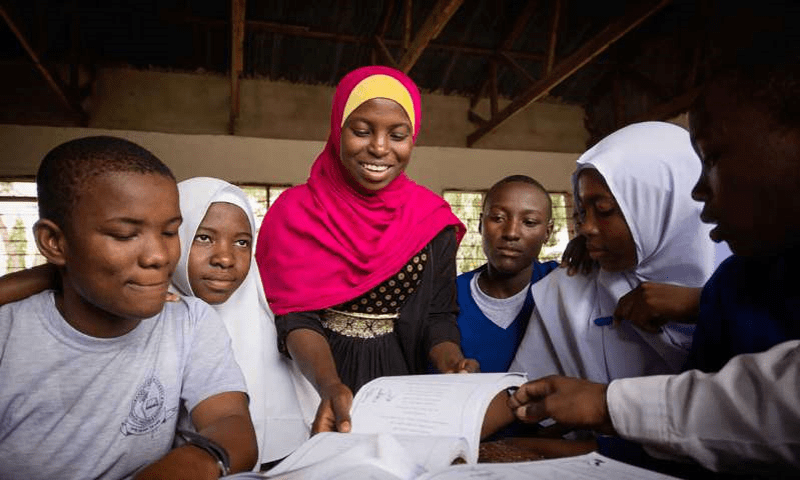
Secondary school students in Bagamoyo, Tanzania

International development projects that target the education of the world’s very poorest children and marginalised girls also significantly improve other young people’s attainment, according to new research that suggests such initiatives should become a priority for international aid.The newly-reported study, by academics at the University of Cambridge, is one of the first to measure the complete value that interventions targeting poor and marginalised children also have for many of their peers, principally through ‘spill-over’ effects which improve the wider education system.

The team tested their model by analysing a programme by CAMFED (the Campaign for Female Education) in Tanzania, which supports the education of disadvantaged girls. They took into account its impact not just on those girls, but on other children at schools where their programme operates. Strikingly, for every $100 spent per girl, per year, the programme resulted in learning gains equivalent to an additional two years of education for all girls and boys at those schools.

The study was carried out by members of the Research for Equitable Access and Learning (REAL) Centre at the Faculty of Education, University of Cambridge.

Professor Ricardo Sabates, the co-lead researcher, said: “Helping the most marginalised children inevitably costs more, and most cost-effective measures only consider that expense against the impact on those specific pupils. But programmes like CAMFED’s also have spill-over benefits and critically are keeping girls in school who would otherwise have dropped out. We can, and should, factor in those considerations when assessing cost-effectiveness.”

Professor Pauline Rose, Director of the REAL Centre, added: “While it may cost more to reach the most marginalised pupils, the impact of those efforts is far more impressive than we tend to imagine. This research explains why system reforms should focus on those who need the most support. Education systems that function for the most marginalised children function for everyone.”

CAMFED is a non-governmental organisation which improves the education of marginalised girls in Africa and was recently awarded the 2020 Yidan Prize for Educational Development. In Tanzania, its bursaries enable thousands of girls to attend secondary school, in tandem with interventions aimed at improving participation and learning among all children in partner schools.

https://googleads.g.doubleclick.net/pagead/ads?guci=1.2.0.0.2.2.0.0&client=ca-pub-0536483524803400&output=html&h=280&slotname=5350699939&adk=3784993980&adf=780081655&pi=t.ma~as.5350699939&w=753&fwrn=4&fwrnh=100&lmt=1606083115&rafmt=1&psa=1&format=753×280&url=https%3A%2F%2Fphys.org%2Fnews%2F2020-11-spill-over-effects-prioritising-poorest.html&flash=0&fwr=0&rpe=1&resp_fmts=3&wgl=1&adsid=NT&tt_state=W3siaXNzdWVyT3JpZ2luIjoiaHR0cHM6Ly9hZHNlcnZpY2UuZ29vZ2xlLmNvbSIsInN0YXRlIjowfSx7Imlzc3Vlck9yaWdpbiI6Imh0dHBzOi8vYXR0ZXN0YXRpb24uYW5kcm9pZC5jb20iLCJzdGF0ZSI6MH1d&dt=1606083115486&bpp=16&bdt=592&idt=35&shv=r20201112&cbv=r20190131&ptt=9&saldr=aa&abxe=1&cookie=ID%3D9fbba41a0ff2e61e-229fb1211ca600b6%3AT%3D1600459851%3ART%3D1605821603%3AR%3AS%3DALNI_MY_LHRaXvduTJg89fUsUJQDxuu0Ag&correlator=4109047104828&frm=20&pv=2&ga_vid=1752605448.1600361164&ga_sid=1606083116&ga_hid=2005691410&ga_fc=0&iag=0&icsg=9086976&dssz=30&mdo=0&mso=0&u_tz=0&u_his=91&u_java=0&u_h=1024&u_w=768&u_ah=768&u_aw=1024&u_cd=32&u_nplug=0&u_nmime=0&adx=214&ady=2074&biw=1024&bih=643&scr_x=0&scr_y=0&oid=3&pvsid=4136667548799107&pem=155&ref=https%3A%2F%2Fphys.org%2Fscience-news%2F&rx=0&eae=0&fc=900&brdim=0%2C0%2C0%2C0%2C1024%2C0%2C1024%2C768%2C1024%2C643&vis=1&rsz=%7C%7CpeEbr%7C&abl=CS&pfx=0&fu=8320&bc=31&ifi=1&uci=a!1&btvi=1&fsb=1&xpc=kszqBNJBPz&p=https%3A//phys.org&dtd=498 Because most cost-effectiveness analyses only measure the impact of a programme on its direct beneficiaries (in this case marginalised girls), interventions such as CAMFED’s often seem to have limited reach while at the same time appearing more expensive than those targeting a broader demographic. The Cambridge study examined how best to measure the wider impact of CAMFED’s work in Tanzania, and then used this to refine the cost-effectiveness analysis.

The researchers analysed data from CAMFED’s programme over two years. To calculate per-head costs, they distinguished between the different components of the intervention and their assorted beneficiaries. For example, the cost of bursaries was divided by the number of marginalised girls who received them, but the cost of delivering extra-curricular courses in CAMFED-supported schools was divided by the number of all participating students. This provided a basis for identifying average annual unit costs for individual categories of beneficiaries.

Impact was calculated by comparing the English test scores of children from 81 randomly-selected CAMFED-supported schools with children from 60 control schools that received no support. Scores were collected at the start and end of the two years, and the team used data about the children’s socio-economic background to make direct comparisons between pupils from similar settings.

They also compared the dropout rates at both groups of schools, and used this to weight the final cost-effectiveness analysis. This reflected the fact that CAMFED’s programme not only improves learning, but also supports girls who might otherwise have dropped out of school, or never attended at all.

The cost of the programme, when only the most marginalised girls targeted by the bursaries were considered, was apparently steep: at $130.41 per year for each girl receiving financial support. However, the researchers also found that the per-head cost for other boys and girls at the same schools was just $15.40, demonstrating far greater value for money than traditional cost-effectiveness analyses might reveal. At the same time, the additional cost of the bursaries was found to be vital for enabling the most disadvantaged girls to stay in school.

Pupils attending CAMFED-supported schools made significant academic improvements compared with their peers. The improvement in English test scores among girls receiving financial support was about 35% better than comparable girls in the control group. Other girls performed similarly, while the boys did about 25% better. Girls who received financial support were 25% less likely to drop out of school than those in the control group.

The researchers then calculated the learning gains of pupils on the CAMFED programme per unit cost. When this measure was converted into equivalent years of learning, they found that for every $100 spent on each of the marginalised girls targeted, English learning outcomes improved by the equivalent of an extra 1.45 years of schooling for all pupils. When the increased proportion of marginalised girls remaining in school was factored in, the improvement in both access and learning for all girls and boys across the CAMFED schools was actually equivalent to an additional two years of schooling per $100.

While it is difficult to compare these results with other programmes, the study suggests that the cost-effectiveness of CAMFED’s work in Tanzania is at least commensurate with similar interventions in sub-Saharan Africa that do not target marginalised  groups. But the findings may also be conservative. For example, CAMFED’s programme may also have further benefits outside the school system, for example among the siblings and communities of the young women it supports.

“Even though we probably underestimated its impact, this intervention is still extremely cost-effective,” Sabates added. “It shows real improvements in learning are best enabled when we invest in the children at greatest risk of being left behind.”

 groups. But the findings may also be conservative. For example, CAMFED’s programme may also have further benefits outside the school system, for example among the siblings and communities of the young women it supports.

“Even though we probably underestimated its impact, this intervention is still extremely cost-effective,” Sabates added. “It shows real improvements in learning are best enabled when we invest in the children at greatest risk of being left behind.”

groups. But the findings may also be conservative. For example, CAMFED’s programme may also have further benefits outside the school system, for example among the siblings and communities of the young women it supports. “Even though we probably underestimated its impact, this intervention is still extremely cost-effective,” Sabates added. “It shows real improvements in learning are best enabled when we invest in the children at greatest risk of being left behind.”

by  University of Cambridge

Group tables, ottomans and gym balls: Kids told us why flexible furniture helps them learn

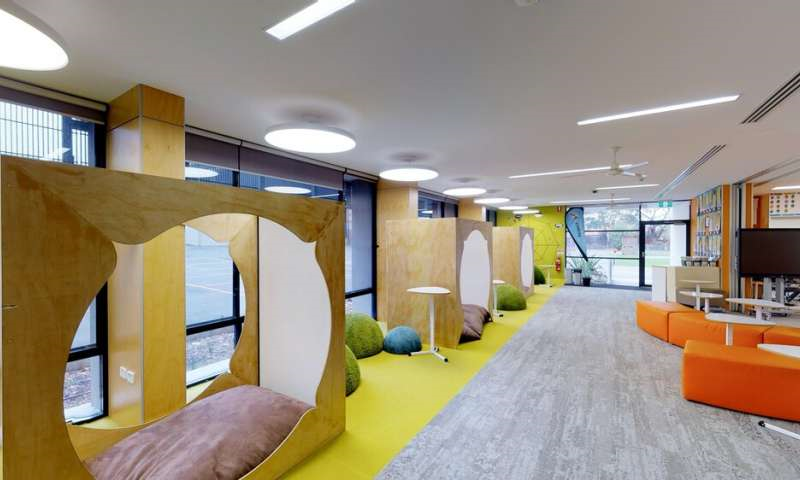
Flexible learning environments include different furniture options, including soft chairs, and no ‘front’ to the classroom.

The COVID pandemic has meant many students learnt from home for a lot of the year. But with schools returning to normal across Australia, how will students readjust from learning at the kitchen table (or couch, or bedroom) to being at desks and chairs in classrooms? We conducted a study to find out how primary school students feel about different types of classroom furniture. 

The students we spoke to clearly explained the reasons why they prefer certain types of furniture. They know furniture can suit their physical and learning needs, and they talked about how they actively set up their own environments to get them ready for learning in the way they know works best for them. 

Teachers and students have the opportunity to think about how the learning environment can be re-imagined to best support students’ (and teachers’) needs. 

What do classrooms look like?

Research shows three quarters of primary and secondary students in Australian and New Zealand schools learn in traditional classrooms. The majority of these classrooms have uniform desks and chairs facing the teacher at the front of the room. This type of classroom is a hangover from the Industrial Revolution. 

While some teachers can teach well in such traditional settings, evidence suggests more flexible learning environments are associated with deeper learning. Deep learning is when students go beyond learning facts. They instead apply knowledge to their context, using critical and creative thinking skills to engage in learning they are curious about.

Flexible learning environments have a range of furniture options including ottomans, stools, multi-height chairs and different height tables. A mix of private retreat spaces and public group spaces means the teacher is everywhere—there is no front to the classroom.

What students say about classroom furniture

We are conducting a three-year industry-funded study investigating how flexible furniture affects student learning in primary school classrooms. 

We surveyed 300 students in Years 3 to 6. About 93% said flexible furniture helped them learn better.

The most popular types of furniture were high tables with height adjustable stools, round or triangular-shaped tables that promoted collaboration, and soft seating like ottomans. 

Students said having options meant they could choose furniture to meet their physical and other learning needs. 

More than half (54%) of students said comfort was the main reason for their furniture selection. They preferred furniture where they could adjust their position if working in one place for long periods of time. 

They also liked it when the furniture could suit their body types or manage injuries. One student said he preferred a higher table with a stool because it “helps my back because its strait [sic] and you can’t wobble on it.” 

Another said about a multi-height table: “… [it] allows me to either stand or sit while being comfortable.”

Students also chose furniture they said helped them learn better. They preferred furniture they could move to support concentration, and facilitate independent and collaborative work. 

Students said they made decisions about the arrangement of furniture to manage their behavior in class. One student told us: “It helps me to stay focused because I have to turn my head to socialize with my friends and if I do that too much my neck will start to hurt.”

Portable furniture was also important for students who felt they had extra energy to burn. Small bounces on a gym ball while working helped some relax and stay focused.

Flexible furniture helps teachers too

Teachers spend more time talking at the students, and delivering content, when they are facing the students sitting at rows of desks.

But flexible furniture allows teachers to use more student-centered ways of teaching. This means they give students more autonomy to be active learners, participating in collaboration with peers or leading their own work.

In our study, we noticed teachers spent more time giving instructions to the whole class when using the traditional furniture arrangement. But when flexible furniture was available they gave instructions to smaller groups, making it easier to tailor specific tasks to students and help those who may need it.

The type of teaching in classrooms with flexible furniture aligns with educational outcomes such as those in the Alice Springs (Mparntwe) Education Declaration, which call for students to become autonomous, confident learners.

We also found teachers felt they built better relationships and trust with students when they were working in flexible furniture arrangements.

While we don’t yet have enough evidence to say using flexible furniture results in higher student achievement, it is clearly a factor that affects students’ learning experience.

by Julia E. Morris, Wesley Imms,  The Conversation

Design a site like this with WordPress.com
Get started