Educate to indoctrinate: Education systems were first designed to suppress dissent

by University of California – San Diego

Public primary schools were created by states to reinforce obedience among the masses and maintain social order, rather than serve as a tool for upward social mobility, suggests a study from the University of California San Diego.

The study in the journal American Political Science Review finds historical patterns from 1828 to 2015, across many countries, of education reforms, including the rise of mandatory primary schooling itself, being implemented after instances of social unrest. The research also sheds light on the current controversy in the U.S. over teaching critical race theory.

“The key prediction of the research is that when there are periods of internal conflict, states will introduce education reform that is designed to indoctrinate people to accept the status quo,” said the study’s author Agustina S. Paglayan, a UC San Diego assistant professor with a joint appointment in the Department of Political Science/School of Social Sciences and the School of Global Policy and Strategy.

Paglayan added that while some could interpret this as evidence that states were trying to solve people’s economic woes by investing in education after violent rebellions, historical documents tell a different story.

“My research reveals violence can heighten national elites’ anxiety about the masses’ moral character and the state’s ability to maintain social order. In this context, public education systems were created and expanded to teach obedience,” Paglayan said.

A recent example in the U.S. of the government turning to education reform after encountering resistance is when former President Donald J. Trump created The 1776 Commission after the widespread Black Lives Matter protests in the summer of 2020. The commission was charged with promoting “patriotic education,” Paglayan said, to supposedly unite Americans.

While the commission was eliminated on the first day President Joseph R. Biden took office, its recommendations continue to shape education reform efforts in many states, Paglayan says, pointing to a wave of different state bills that ban public schools from teaching about systemic racism.

The focus of Paglayan’s study is on non-democracies in Europe and Latin America; however, it includes evidence dating back to the late 18th century that democracies, including the U.S., used primary education as a policy tool to prevent future rebellion and promote long-term order.

Paglayan spent seven years conducting the study. Her findings are based on quantitative data from 40 different countries that include school enrollment numbers and, for a subset of countries, the numbers of schools created and the levels of education expenditures. She combined these data with qualitative evidence based on the language found in school textbooks and curricula, plus the content of parliamentary debates, as well as politicians’ speeches, letters and other political writings.

She cites a letter that Thomas Jefferson wrote to James Madison as evidence that the U.S. looked to primary schools after a period of insurrection that threatened established institutions.

“After several violent uprisings in the late 18th century, such as Shays’ Rebellion and the Whiskey Rebellion, politicians became increasingly interested in education. Soon after Shays’ Rebellion, Thomas Jefferson wrote to James Madison relaying that it should be taught in schools that violence is an illegitimate way for citizens to express discontent and that it should be drilled into them to express it by voting,” Paglayan said.

The research explains why primary education systems precede the rise of modern democracy and were first created by non-democratic regimes.

For example, absolutist Prussia was among the first countries in the world to introduce tax-funded, compulsory primary education. The Prussian education system was conceived as a long-term solution to the problem of social unrest, as revealed by peasant rebellions in the 1740s-1750s. Paglayan documents several cases where other countries were inspired by Prussia’s education system, including the U.S.

She also finds of patterns of schools becoming compulsory in many countries after parents resisted sending their children to school to “shape their moral character” at a time when children were often needed at home to provide labor.

She points out that during most of the history of public schooling, secondary schools and universities were reserved for the upper classes; however, through primary education, states could easily influence the masses’ children to respect authority, the state and its laws.

“Children are like sponges,” Paglayan said. “Politicians thought that primary schools could shape behavior by instilling fear of punishment for misbehavior, or conversely, by promoting rewards for proper behavior. The mere act of attending school every day, sitting still, not speaking out of turn and following schedules, routines and rituals, like marching in silence from classroom to breakroom, would make individuals internalize from a young age what constituted good manners and civil behavior.”

More information: AGUSTINA S. PAGLAYAN, Education or Indoctrination? The Violent Origins of Public School Systems in an Era of State-Building, American Political Science Review (2022). DOI: 10.1017/S0003055422000247

Journal information: American Political Science Review 
Study casts doubt on benefits of teaching grammar in helping children learn to write

by University of York

Lessons on grammar are a key feature of the national curriculum taught in England’s primary schools, but they don’t appear to help children to learn to write, new research reveals.

The study, co-authored by researchers at the University of York and University College London (UCL) and funded by the Nuffield foundation, found that while grammar teaching had encouraging results when it came to children’s ability to generate sentences, there was no statistically significant improvement in their narrative writing.

The authors of the study say their research adds to a growing body of evidence which calls into question the current way grammar is taught: they suggest that a review of the requirements for grammar in England’s national curriculum is needed.

Trial

The study is the first randomized controlled trial worldwide to examine how Year Two pupils’ (six to seven-year-olds) writing might benefit from grammar teaching. The research assessed the impact of a new grammar teaching intervention called Englicious.

70 Year Two teachers in 70 primary schools, and 1,736 pupils, were recruited to the study. The teachers and their pupils were allocated at random to either receive the Englicious intervention program or to have their usual grammar teaching. 

Outcome

Co-author of the study, Carole Torgerson, Professor of Educational Evaluation in the Department of Education at the University of York, said: “The results of this rigorously designed and conducted randomized controlled trial confirm findings from earlier systematic reviews of trials that formal grammar teaching appears to have little effect on narrative writing.

“Teachers were generally positive about Englicious, perceiving it to be an appealing approach to the teaching of grammar; however, this view did not translate into a positive effect on the main outcome.”

Lead author of the study, Professor Dominic Wyse from UCL, added: “The lack of impact of grammar teaching on pupils’ narrative writing raises questions about the extensive grammar specifications that are part of England’s national curriculum.

“Currently, the content of England’s national curriculum requires children aged six to seven to be taught grammatical terms such as: noun phrase, statement, command, and tense. Older primary school children have to learn terms such as subordinate clause; adverbial; modal verb; active and passive.

“Although teachers praised the Englicious intervention for its hands-on and interactive approach, our results match other experimental trials which do not provide enough robust support for extensive grammar teaching as the best way to improve writing.”

Focus

The researchers suggest the national curriculum should focus more on what helps children to develop their writing skills at different points in development, focusing on teaching approaches such as sentence-combining, strategy instruction and emphasizing the processes of writing.

Co-investigator, Professor Bas Aarts from UCL, said: “The free resources on the Englicious website did help teachers to deliver the specifications of the national curriculum in an engaging way, and led to a positive effect on children’s ability to generate sentences by combining clauses.

“We would have liked, however, to have seen stronger evidence of the benefits of grammar teaching on children’s narrative writing and more must be done to help children learn to write.”

Professor Wyse added: “The national curriculum needs to reflect robust evidence on what works much more closely. Until an in-depth review of England’s national curriculum is undertaken children are unlikely to be receiving the optimal evidence-based teaching of writing that they deserve.”

Music can help lift our kids out of the literacy rut, but schools in some states are still missing out

by Rachael Dwyer, Anita Collins, The Conversation

The 2005 National Review of School Music Education found many Australian students missed out on music education, with massive disparities between states. In 2020, our research for the Tony Foundation found the same issues, despite the fact that the Australian Curriculum for Music should guarantee some level of consistency.

We now have evidence that we should be concerned about music education not just for the sake of music itself, but also because of its impacts on language learning and literacy. Research about how participating in music affects the brain-a field known as neuromusical research-has taught us a lot about how the brain processes language. Significantly, it processes language in the same way as music.

If we want to improve literacy, then, we need to ensure the cognitive foundations our students need are in place.

In short, we need to view music education as a powerful complementary learning experience, and not a “nice but not essential” part of the curriculum.

So what are states doing?

We have yet to see this knowledge put into practice across Australia.

Before and after the 2005 review, Queensland has had strong music programs in state-funded primary schools since the 1980s. The state has a classroom music program for the whole school (where a teacher is available), and a low-cost instrumental music program for some students. A campaign is under way in Queensland to preserve these programs and make sure every student gets a music lesson every week.

The same can’t be said for other states. Despite moves to improve music education in some states, there’s still inequity.

South Australia established a Music Education Strategy and Music Innovation Fund in 2019. Victoria has developed a Quality Music Education Framework to guide best practice. Tasmania, Western Australia and the ACT have music specialist teachers in some government primary schools. In New South Wales, general classroom teachers in government schools are responsible for teaching all of the curriculum, including music.

But how much does music really matter?

Music can deliver progress on literacy

While music education has been found to improve a wide range of cognitive functions, let’s look at literacy development as an example. If literacy scores are lower than required or expected, it seems obvious the solution is to spend more time on literacy learning to improve those scores. That’s the approach taken over the past five years.

Yet we have not seen a significant boost in NAPLAN results. In fact, the dial has moved very little.

So the obvious “more time” approach is not yielding higher literacy achievement. Might we then look to research outside the literacy field for the next steps in improving literacy in our schools?

The answer is yes. A field traditionally a few steps outside of literacy education-music education-has greatly enhanced understanding of how the brain develops understanding and application of language.

Neuromusical research has pinpointed the brain mechanisms and interactions that decode language sounds to understand and develop the syntax of language right through to the comprehension and creation of meaning through language. It has led to the enlightening finding that the human brain processes all language as if it was music.

What does this mean for literacy education and the current measure of its effectiveness, NAPLAN? It means we may well be missing a fundamental underpinning of language development-the development of the auditory processing network to its highest levels so our students can effectively interpret language sounds.

Put simply, if a child cannot hear the language sound-that is, process the sound correctly through their auditory network-they cannot speak it. And if they cannot speak it, they cannot read it.

The costs of inaction are high

The research on the potential for music education to improve cognitive development is extensive and compelling. It clearly shows that consistent, high-quality music learning enhances students’ general learning. So music learning isn’t just for those who want to become musicians-it benefits everyone.

The cost of waiting, of not resolving the issues with music education across Australia, is high. This is an issue of equity. If the state a student is schooled in affects their fundamental cognitive development due to the lack of quality music education for every child, then every child is not receiving an equitable and effective education.

The longer we wait to address the inequity, the fewer qualified music educators we will have in Australia. In our report, Music Education: A Sound Investment, we identified that we are on a skills cliff of qualified music educators in this country. In addition to the existing widespread teacher shortage, there are now only a few universities offering a specialization in primary music teaching. Urgent action is needed to make sure there are enough music teachers for all schools, so kids don’t miss out.

When it comes to education, politicians and policymakers ignoring the research evidence is hardly new. But the failure to see the bigger picture of every child’s development has lasting impacts. The focus of education should be to provide the cognitive preparation for a full and productive life. And music is an integral part of providing students with the best possible foundation for their education.

Learning through ‘guided’ play can be as effective as adult-led instruction up to at least age eight

University of Cambridge

Teaching younger children through ‘guided’ play can support key aspects of their learning and development at least as well, and sometimes better, than traditional, direct instruction, according to a new analysis.

The research, by academics at the University of Cambridge gathered and assessed data from numerous, widespread studies and information sources, which collectively documented guided play’s impact on the learning of around 3,800 children aged three to eight. Guided play broadly refers to playful educational activities which, although gently steered by an adult, give children the freedom to explore a learning goal in their own way.

Overall, the study found that this playful approach to learning can be just as effective as more traditional, teacher-led methods in developing key skills: including literacy, numeracy, social skills and essential thinking skills known as executive functions. The findings also suggest that children may master some skills—notably in maths—more effectively through guided play than other methods.

The relative merits of play-based learning compared with more formal styles of instruction is a long-standing debate in education, but most of that discussion has focused on ‘free’ open-ended play.

The new study is the first systematic attempt to examine the effects of guided play specifically, which is distinctive because it uses games or playful techniques to steer children towards specific learning goals, with support from a teacher or another adult using open-ended questions and prompts.

This may, for example, involve creating imagination-based games which require children to read, write or use maths; or incorporating simple early learning skills—such as counting—into play. Such methods are common in pre-school education, but are used less in primary teaching—a deficit which has been criticised by some researchers.

The analysis was carried out by academics from the Play in Education, Development and Learning (PEDAL) Center at the Faculty of Education, University of Cambridge.

Dr. Elizabeth Byrne, a co-author, said: “It’s only recently that researchers have started to conceptualize learning through play as something that exists on a spectrum. At one end you have free play, where children decide what to do with minimal adult involvement; at the other is traditional, direct instruction, where an adult tells a child what to do and controls the learning activity.”

“Guided play falls somewhere in between. It describes playful activities which are scaffolded around a learning goal, but allow children to try things out for themselves. If children are given the freedom to explore, but with some gentle guidance, it can be very good for their education—perhaps in some cases better than direct instruction.”

Paul Ramchandani, Professor of Play in Education, Development and Learning at the University of Cambridge, said: “The argument is sometimes made that play, while beneficial, adds little to children’s education. In fact, although there are still some big questions about how we should use guided play in classrooms, there is promising evidence that it actively enhances learning and development.”

Guided play has rarely been systematically studied in its own right, but the team found 39 studies, undertaken between 1977 and 2020, which had captured some information about its value compared either with free play or direct instruction, usually in the course of wider research.

By combining the results of studies which looked at similar types of learning outcome, the researchers were able to calculate how much of an overall positive or negative effect guided play has on different aspects of numeracy, literacy, executive functions or socioemotional skills, compared with other approaches. These effect sizes were measured using Hedge’s g; a widely-used statistical system in which a result of 0 represents no comparative gain, and 0.2, 0.5 and 0.8 represent small, medium and large effects respectively.

The results offer significant evidence that guided play has a greater positive impact on some areas of children’s numeracy than direct instruction. For example, guided play’s comparative effect size on early maths skills was 0.24, and 0.63 on shape knowledge. There was also evidence that guided play better supports the development of children’s cognitive ability to switch between tasks.

Alongside other positive findings, there was also no statistically significant evidence that guided play is less effective than direct instruction on any of the learning outcomes studied. In short, guided playful activities tend at the very least to produce roughly the same learning benefits as more traditional, teacher-led approaches.

The researchers offer various possible explanations about why guided play may improve numeracy in particular. One possibility is that the gentle prompting that guided play entails may be a particularly effective way of teaching children to work through the logical steps that maths-based tasks often involve.

Equally, the fact that guided play often involves hands-on learning may be important. “Children often struggle with mathematical concepts because they are abstract,” Byrne said. “They become easier to understand if you are actually using them in an imaginary game or playful context. One reason play matters may be because it supports mental visualization.”

More broadly, the authors suggest that guided play may influence other characteristics which have a positive, knock-on effect on educational progress—enhancing, for example, children’s motivation, persistence, creativity and confidence.

Dr. Christine O’Farrelly, a Senior Research Associate at the Faculty of Education, said: “It’s likely that playful activities have the sort of positive impact we saw in our analysis partly because they are acting on other skills and processes which underpin learning. If we can understand more about how guided play shapes learning in this way, we will be able to identify more precisely how it could be used to make a really meaningful difference in schools.”

The study is published in the journal Child Development.

Why are schools revisiting gifted education?

by Heather Hollingsworth

Public school programs for the gifted and talented are garnering increased scrutiny nationwide, as critics denounce them as modern-day segregation and push for broader access or outright elimination.

The screening test New York has given to 4-year-olds used to identify gifted and talented students had drawn controversy for years, but several other districts have been reassessing gifted programs, in which Black and Latino students are often underrepresented.

WHY DO GIFTED PROGRAMS EXIST?

When a kindergartner is already reading chapter books or a third grader is well beyond multiplication, teachers often struggle to keep them engaged. Enter gifted and talented programs, which serve about 3.3 million students nationwide.

Most often, students are identified based on their IQ or how they score on a standardized test. Sometimes a teacher makes a recommendation or a parent pushes for it.

But experts don’t agree about whom the programs should serve. What about kids from poor neighborhoods who aren’t acing standardized tests but are learning faster than their classmates? Should artistically talented students or those with strong leadership skills qualify?

“The debate is ‘Gifted at what?'” said Marcia Gentry, director of Purdue University’s Gifted Education Research and Resource Institute.

The programs vary widely. In some schools, students attend regular classes most of the time but are pulled out once or twice a week to participate in special activities like a Socratic debate. In other districts, students test into specific gifted schools or programs in which they are mostly or entirely separated from “nongifted” peers.

Nationwide, only 56% of the nation’s schools teach students who have been identified as gifted and talented, according to Purdue’s Gifted Education Research and Resource Institute.

DO THEY MAKE A DIFFERENCE?

A 2001 study that is often cited by gifted-program advocates found that adolescents identified as gifted pursued doctoral degrees at rates over 50 times what is seen in the general population.

Some research though, suggests that the effect is less profound with only science achievement improving for those attending a gifted and talented magnet programme. And yet another study found that when schools move to stop grouping mathematics students into advanced and regular levels, often called tracking, high-achieving students achieve at the same levels, and middle- and low-achieving students score at significantly higher levels.

New York City is the first major school system to entirely phase out its program for gifted and talented students.

Seattle, meanwhile, ended a program for gifted middle school students. And a proposed math curriculum overhaul in California sought to end the practice of placing students in either regular or advanced placement math tracks starting in sixth grade. But the proposal, derided by critics as “woke math,” has been tabled.

In Virginia, a premier public high school has dramatically increased the number of Black and Hispanic students offered admission under a new application system. Other districts, like Montgomery County, Maryland, and Broward County, Florida, also have overhauled their admissions process.

WHY ARE DISTRICTS MAKING CHANGES?

Gifted and talented programs are getting a closer look as the nation reexamines racial justice issues.

And the data is startling: Only 8% of students in gifted and talented programs are Black, although they make up 15% of the nation’s public school enrollment. Latinos, similarly, make up 18% of gifted program enrollment but a 27% share of the overall student population, the most recent federal numbers show.

The reasons have nothing to do with intelligence, Gentry and other experts say. The public school teachers who often make the referrals are about 80% white. But when a Black child has a teacher of the same race, they have a higher probability to be admitted, a 2016 study found.

Affluent families also are much more likely to be able to shell out money for test-preparation classes and tutors. And if they don’t like the results of school testing, they can pay afford to pay for their own private testing.

The man recognized as the father of the gifted education movement was a prominent eugenicist. Lewis Terman, who believed that the human race could be improved through selective and restrictive breeding, is credited with revamping one of the earliest IQ exams in 1916 and then following some of the highest scorers on his still-in-use Stanford-Binet test throughout their lives.

A recent proposal to commemorate his research in the field’s flagship publication, Gifted Child Quarterly, led to a massive controversy before it was scrapped.

“Our organization almost came apart,” recalled James L. Moore III, also a professor at Ohio State.

WHAT IS CHANGING?

The plan in New York is to offer accelerated instruction for all elementary school students. Experts are skeptical it will work, though.

“The way to change it isn’t what New York is doing, which is to get rid of all the programing,” Gentry said. “What you do is you fix the problem. You say we have to open the programs up and make them accessible to kids who we have been excluding.”

Many districts are trying to do just that, said Lauri Kirsch, president of the National Association of Gifted Children. She said the best approach is to screen all students and to do so multiple times. She said districts also shouldn’t just rely on an IQ test or a teacher referral to identify them. Some districts use nonverbal tests to identify students who aren’t native English speakers.

Kirsch said that “there’s no perfect way” but that districts that have made changes have seen improvement in finding students from diverse backgrounds.

I have highlight the paragraph that I think is significant because the findings echo those in English comprehensive schools where pupils are not streamed or setted.

Income inequality can harm children’s achievement in maths—but not reading, 27-year study suggests

To me the most significant point that this article makes is:

Income inequality doesn’t just affect the poorer students, but is associated with lower achievement for both poor and non-poor students alike.

Inequalities in income affect how well children do in maths—but not reading, the most comprehensive study of its kind has found.

Looking at data stretching from 1992 to 2019, the analysis, published in the journal Educational Review, revealed that 10-year-olds in US states with bigger gaps in income did less well in maths than those living in areas of America where earnings were more evenly distributed.

With income inequality in the US the highest in the developed world, researcher Professor Joseph Workman argues that addressing social inequality may do more to boost academic achievement than reforming schools or curricula—favored methods of policymakers.

Income inequality—a measure of how unevenly income is distributed through a population—has long been associated with a host of health and social problems including mental health issues, lack of trust, higher rates of imprisonment and lower rates of social mobility.

It may also affect academic achievement, through various routes.

For instance, income inequality is linked to higher rates of divorce, substance abuse and child maltreatment, the stresses of which may affect a child’s development. It is also associated with higher odds of babies being of a low weight a birth—something which can raise their risk of developmental delays as they grow up.

Income inequality may also lead to some schools having a high concentration of children from disadvantaged backgrounds, making it more difficult for them meet each child’s needs.

Professor Workman, a sociologist at the University of Missouri, Kansas City, compared almost three decades of fourth graders’ maths and reading results from the National Assessment of Educational Progress (NAEP) with data on income inequality from all 50 states.

Income inequality in the US has followed a U-shaped pattern over the past century. Levels were high in the 1910s to 1930s before falling off between the 1940s and 1970s and then rising again. Today, the income gap is the highest in the developed world.

The analysis showed that scores in maths were lower, on average, in states with higher levels of income inequality.

It also revealed that that income inequality didn’t just affect the poorer students but was associated with lower achievement for both poor and non-poor students alike.

The results couldn’t be explained away solely by poorer areas having more social problems and educational issues. Instead, it seemed that the concentration of income among top earners was driving down academic achievement.

Further analysis showed that the states that experienced the biggest rises in income inequality over time also recorded the smallest increases in maths results.

Scores in these states rose by an average of 17.5 points—compared to an increase of 24.3 points in states in which the income divide didn’t widen as quickly.

Reading grades were, however, not linked to income inequality overall.

Professor Workman explains: “For maths, income inequality was associated with lower achievement for both poor and non-poor students alike.

“But for reading, income inequality benefited non-poor students and harmed poor students. So, for reading the benefits and harms cancel out to no association overall.”With preliminary evidence suggesting the same patterns apply to other age groups, Professor Workman believes his findings have important implications for policymakers.

He says: “Assessments of the No Child Left Behind Act, which attempted to raise achievement and reduce achievement disparity by reforming schools, have provided scant evidence of the policy being effective in achieving its goals.

“An effective strategy to raise achievement may be to reduce income inequality. Policies such as progressive tax rates, wealth tax, inheritance tax and annual wealth tax can effectively reduce inequality.

“Higher tax revenues could be used on programs that support child development, such as universal pre-kindergarten or summer learning programs.”

It isn’t known, however, if a similar pattern exists in other developed nations with high levels of income inequality, such as the UK. Professor Workman concludes that while it has been argued that income inequality provides motivation for success, rates in the US have “perhaps reached levels that are dysfunctional for society”.

Finger tracing enhances learning: Evidence for 100-year-old practice used by Montessori

This is a useful article that validates Maria Montessori’s method. The original article is at:

https://phys.org/news/2021-09-finger-evidence-year-old-montessori.html

by University of Sydney

Finger tracing enhances learning: Evidence for 100-year-old practice used by Montessori
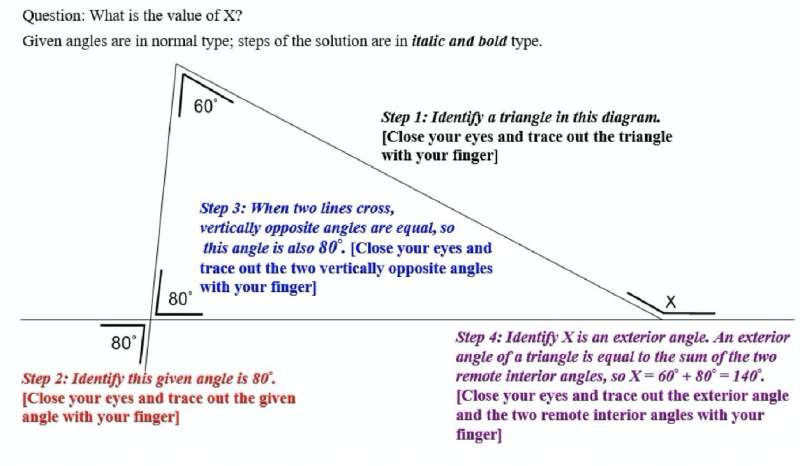
A sample activity in the first study where some students were directed to trace a triangle whilst solving a related math problem. Credit: Ginns et al./Springer

Finger tracing has been used by teachers to help students learn for more than a century. In the early 1900s, education pioneer Montessori encouraged young children to trace over letters of the alphabet made from sandpaper with their index fingers, based on the intuition that a multi-sensory approach (i.e., visual, auditory, tactile, and kinesthetic) to learning would be most effective. In 1912, Montessori noticed that children, after mastering the sequence of tracing a letter with their index finger, “took great pleasure” in closing their eyes and trying to recall it.https://30bfdd38c8852c115fde7de62acebbfe.safeframe.googlesyndication.com/safeframe/1-0-38/html/container.html

Over 100 years later, her method has received some empirical validation. Two new University of Sydney studies show that not only is tracing an effective learning technique; if it is used in conjunction with imagination, its positive effect could be amplified.

Previous Sydney School of Education & Social Work research demonstrated a link between tracing and math performance. Now, tracing in math and science lessons has been specifically found to reduce people’s cognitive load (the demands placed on the conscious mind by a range of cognitive activities), thereby enhancing their ability to learn. It has also been found to potentially increase their learning motivation. Once students have built a foundational understanding of a topic through tracing, asking them to close their eyes and “imagine” the steps while tracing enhances learning more than additional tracing with eyes open.

“Although Australian schools are trending upwards in terms of maths and science performance, there’s still room for improvement,” said Associate Professor Paul Ginns, the academic supervisor and co-author of the papers. “Our research shows that tracing and imagination strategies can help. They are cost-free, simple, and can be easily implemented in classrooms, across a range of lesson topics and media.”

Finger tracing enhances learning: Evidence for 100-year-old practice used by Montessori
A sample activity from the second study, where some participants were directed to point at and trace over elements of a lesson on the lifecycle of a star on a computer screen. Credit: Ginns et al./Association for Educational Communications & Technology

Tracing triangles

In the first study, published in Educational Psychology Review, 93 Year 4 and 5 students from a school in Shanghai, China were being taught about the properties of angles in a triangle. They were randomly assigned to the control condition, the tracing condition, or the tracing/imagination condition, and then given ‘calculate the missing angle’ examples to complete under practice and test conditions.

The control group were instructed to leave their arms by their sides. The tracing group traced the shapes, and the tracing/imagination group were instructed to trace the shape with their eyes open, then close their eyes and imagine the tracing.

Following this, all groups completed a 13-item questionnaire that measured motivation and different types of cognitive load during the learning process. A further experiment investigated whether these findings could be generalised to a new mathematics topic (mental mathematics), a different age group (Chinese tertiary students), and an alternative format (tracing out ellipses in difficult “mental mathematics” worked examples).

A mini meta-analysis combining the results of the two experiments showed that students who traced the shapes solved similar problems more quickly. Students who traced also reported lower levels of cognitive load and higher levels of intrinsic motivation during the lesson, compared to those in the control group. In some instances, tracing then imagining resulted in faster solution times for test questions than tracing alone.

Tracing the stars

Published in Educational Technology Research and Development, the second study involved adult participants. It considered how instructions to point at and trace over elements of a lesson on the lifecycle of a star on a computer screen would help them learn.

44 people were pre-tested on their knowledge of astronomy, then during the lesson they were instructed to either ‘use their hands’ to make links between text and an associated part of the diagram or to keep their hands in their laps. The first group reported lower cognitive load and higher interest and enjoyment of the lesson. Importantly, when tested on what they’d learned, students who used their hands while studying not only remembered more basic facts from the lesson but were also able to transfer that understanding to solve problems not directly covered in the lesson.

Why tracing works

“There are multiple reasons why tracing can help learning,” Associate Professor Ginns said. “It seems that humans are biologically wired so that we pay closer attention to the space near our hands. So, when using an index finger to trace visual stimuli, these elements of a lesson receive processing priority. Tracing can also assist learning because it “chunks” all the important elements of new material into one piece of information, making it easier for us to learn.”

What’s the point of homework?

by Katina Zammit,  Western Sydney University

https://phys.org/news/2021-09-homework

Homework hasn’t changed much in the past few decades. Most children are still sent home with about an hour’s worth of homework each day, mostly practicing what they were taught in class. If we look internationally, homework is assigned in every country that participated in the OECD’s Programme for International Student Assessment (PISA) in 2012.

Across the participating countries, 15-year-old students reported spending almost five hours per week doing homework in 2012. Australian students spent six hours per week on average on homework. Students in Singapore spent seven hours on homework, and in Shanghai, China they did homework for about 14 hours per week on average. 

Shanghai and Singapore routinely score higher than Australia in the PISA maths, science and reading tests. But homework could just be one of the factors leading to higher results. In Finland, which also scores higher than Australia, students spent less than three hours on homework per week.

So, what’s the purpose of homework and what does the evidence say about whether it fulfills its purpose?

Why do teachers set homework?

Each school in Australia has its own homework policy developed in consultation with teachers and parents or caregivers, under the guiding principles of state or regional education departments.

For instance, according to the New South Wales homework policy “… tasks should be assigned by teachers with a specific, explicit learning purpose.” 

Homework in NSW should also be “purposeful and designed to meet specific learning goals,” and “built on knowledge, skills and understanding developed in class.” But there is limited, if any, guidance on how often homework should be set.

The range of reasons include to:

  • establish and improve communication between parents and children about learning
  • help children be more responsible, confident and disciplined
  • practice or review material from class
  • determine children’s understanding of the lesson and/or skills
  • introduce new material to be presented in class
  • provide students with opportunities to apply and integrate skills to new situations or interest areas
  • get students to use their own skills to create work.

So, does homework achieve what teachers intend it to?

Do we know if it ‘works’?

Studies on homework are frequently quite general, and don’t consider specific types of homework tasks. So it isn’t easy to measure how effective homework could be, or to compare studies.

But there are several things we can say.

First, it’s better if every student gets the kind of homework task that benefits them personally, such as one that helps them answer questions they had, or understand a problem they couldn’t quite grasp in class. This promotes students’ confidence and control of their own learning.

Giving students repetitive tasks may not have much value. For instance, calculating the answer to 120 similar algorithms, such as adding two different numbers 120 times may make the student think maths is irrelevant and boring. In this case, children are not being encouraged to find solutions but simply applying a formula they learnt in school. 

In primary schools, homework that aims to improve children’s confidence and learning discipline can be beneficial. For example, children can be asked to practice giving a presentation on a topic of their interest. This could help build their competence in speaking in front of a class.

Homework can also highlight equity issues. It can be particularly burdensome for socioeconomically disadvantaged students who may not have a space, the resources or as much time due to family and work commitments. Their parents may also not feel capable of supporting them or have their own work commitments. 

According to the PISA studies mentioned earlier, socioeconomically disadvantaged 15 year olds spend nearly three hours less on homework each week than their advantaged peers. 

What kind of homework is best?

Homework can be engaging and contribute to learning if it is more than just a sheet of maths or list of spelling words not linked to class learning. From summarizing various studies’ findings, “good” homework should be:

  • personalized to each child rather than the same for all students in the class. This is more likely to make a difference to a child’s learning and performance
  • achievable, so the child can complete it independently, building skills in managing their time and behavior
  • aligned to the learning in the classroom.

If you aren’t happy with the homework your child is given then approach the school. If your child is having difficulty with doing the homework, the teacher needs to know. It shouldn’t be burdensome for you or your children.

Why students learn better when they move their bodies instead of sitting still at their desks

Why students learn better when they move their bodies instead of sitting still at their desks (phys.org)

AUGUST 26, 2021

by Katie Headrick Taylor, The Conversation

My son’s kindergarten teachers, holding class on Zoom last year, instructed: “Eyes watching, ears listening, voices quiet, bodies still.” However, I noticed my 6-year-old’s hands would stay busy with items found around our house, building with Lego, shaping clay or doodling with a crayon.

While some might describe this child as being “off task,” research suggests his manipulation of materials actually aroused his mind, allowing it to focus on the required task.

As a parent of two school-aged children and researcher of learning with technology, I believe current models of remote education are inefficient for learning, teaching and productivity.

That’s because sitting in front of a computer screen subdues, or completely detaches people from, many of the sense- making abilities of their bodies. To learn most efficiently, our minds depend on the movement of our bodies, working with a variety of tools, being in dynamic places and having our collaborators nearby.

The body’s role in thinking

Most notably, remote learning assumes that as long as the mind is engaged, it’s fine if the body stays still. But this argument is backward.

Research from embodied cognition—the study of the body’s role in thinking—shows that the body must first be interacting with the world to activate and open up the mind for learning.

That’s why, for example, students working with a variety of tools and materials during a learning activity are able to grasp abstract concepts better, such as gravitational acceleration or fractions.

To ask students to sit still while performing their work actually increases their cognitive load,  or the burden on the mind. It requires them to concentrate on quieting their bodies, which are seeking out avenues for sense-making, as well as on the primary task that fixes them to their desk or digital screen.

As psychologists Christine Langhanns and Herman Muller concluded from studies of people solving math problems, “Sitting quietly is not necessarily the best condition for learning in school.”

Learning from our environment

Humans’ internal thoughts are extensions of the world around them. The technologies and tools they use, the people they collaborate with, the walk they take to school or work, all evoke feelings in the body. Their minds then assemble these feelings, making meaning or thoughts that are informed by past experiences.

In this way, thoughts are iterative. People sense their way through current moments while bringing to bear what they have learned over the body’s accumulated history. Learning to safely cross the road, for instance, takes practice. Over time, the brain organizes input from the senses to recognize a good time for crossing.

Importance of gesture

Gesture is yet another essential use of the body for thinking and learning.

Not only do people’s hand movements, head turns and shrugs add nuance and emphasis to words spoken to listeners, gestures help speakers form thoughts into words before speaking them.

In problem-solving scenarios, research shows that for many math learners, their gestures show they understand strategies before they can articulate those solutions through speech. In this way, educators trained to look for and understand gesture can see a learner’s process and progress in understanding concepts before a student is able to translate that understanding to speech or a written test.

Additionally, educators and other experts can use gesture to more efficiently explain concepts to students and novices. Gestures make abstractions visible, giving them temporary form.

A view of the whole person, therefore, facilitates learning from one another. But that’s a stark contrast to a year spent seeing only the faces of fellow students and teachers, or just a blank box.

Get ready to move

Some students will remain online this school year—due to health or other concerns—while others will return to in-person classrooms. I believe both models of school can better incorporate the body to support learning. The following tips are for educators designing remote or in-person classes, though parents and students can also encourage and help sustain an active classroom culture.

  1. Normalize movement during classes, not just during movement breaks. For instance, make a neighborhood walk the mode of inquiry for the day’s science lesson. Ask students to bring back their observations to the whole group.
  2. Begin every class with time to assemble different materials to think and work with, such as notebooks and different kinds of paper, various writing and drawing instruments, putty and blocks. Incorporate interaction with these tools throughout the lesson.
  3. Encourage and use gestures. If online, invite camera use, and back away to give students a wider view.
  4. Build in time for students to tune in to how their body is feeling as a window into their emotional state.
  5. Provide opportunities for iteration, practicing a task in different contexts and with different tools and people that engage the body in different ways. The content or big idea stays the same, but how and with whom students engage shifts.
  6. If online, try out videoconferencing platforms like Ohyay that try to replicate physical closeness and movement in a virtual space.
  7. Consider the classroom as extending out into the school campus and neighborhood. Allowing students to experience a familiar location in a different way, with their classmates and teacher, can evoke new perspectives and thoughts.

Teachers, parents and students can all change their expectations of what being “on task” looks like. Walking, running or dancing may not seem related to a particular task at hand, but these activities often help people do their best thinking. Activating the body activates the mind, so “seat time” might better be titled “activity time.”

Study: Writing letters by hand is best technique for learning to read

A recent study that demonstrates the old fashioned values of pencil and paper compared with keyboards.

by Jill Rosen, Johns Hopkins University

Though writing by hand is increasingly being eclipsed by the ease of computers, a new study finds we shouldn’t be so quick to throw away the pencils and paper: handwriting helps people learn certain skills surprisingly faster and significantly better than learning the same material through typing or watching videos. https://ff45777dbe30353952d6a68f70b443af.safeframe.googlesyndication.com/safeframe/1-0-38/html/container.html “The question out there for parents and educators is why should our kids spend any time doing handwriting,” says senior author Brenda Rapp, a Johns Hopkins University professor of cognitive science. “Obviously, you’re going to be a better hand-writer if you practice it. But since people are handwriting less then maybe who cares? The real question is: Are there other benefits to handwriting that have to do with reading and spelling and understanding? We find there most definitely are.”

The work appears in the journal Psychological Science.

Rapp and lead author Robert Wiley, a former Johns Hopkins University Ph.D. student who is now a professor at the University of North Carolina, Greensboro, conducted an experiment in which 42 people were taught the Arabic alphabet, split into three groups of learners: writers, typers, and video watchers.

Everyone learned the letters one at a time by watching videos of them being written along with hearing names and sounds. After being introduced to each letter, the three groups would attempt to learn what they just saw and heard in different ways. The video group got an on-screen flash of a letter and had to say if it was the same letter they’d just seen. The typers would have to find the letter on the keyboard. The writers had to copy the letter with pen and paper.

At the end, after as many as six sessions, everyone could recognize the letters and made few mistakes when tested. But the writing group reached this level of proficiency faster than the other groups—a few of them in just two sessions.

Next the researchers wanted to determine to what extent, if at all, the groups could generalize this new knowledge. In other words, they could all recognize the letters, but could anyone really use them like a pro, by writing with them, using them to spell new words, and using them to read unfamiliar words?

https://www.youtube.com/embed/RWT9ETRm6RY?color=white The writing group was better—decisively—in all of those things.

“The main lesson is that even though they were all good at recognizing letters, the writing training was the best at every other measure. And they required less time to get there,” Wiley said.

https://googleads.g.doubleclick.net/pagead/ads?client=ca-pub-0536483524803400&output=html&h=189&slotname=7099578867&adk=2173283679&adf=1873531024&pi=t.ma~as.7099578867&w=754&fwrn=4&lmt=1625769992&rafmt=11&psa=1&format=754×189&url=https%3A%2F%2Fmedicalxpress.com%2Fnews%2F2021-07-letters-technique.html&flash=0&wgl=1&adsid=ChAI8MSahwYQ3_-juqfM6ZsYEj0AjiRWpqWIvwOVkEULRjOlfrEaTcNGGLMI7bXcFmzFiYq_uf9bIBFKIZz-bH4i1cgHLg5XLOiT7aV5VOu7&uach=WyJXaW5kb3dzIiwiMTAuMCIsIng4NiIsIiIsIjkxLjAuODY0LjY0IixbXSxudWxsLG51bGwsbnVsbF0.&dt=1625769989591&bpp=21&bdt=681&idt=293&shv=r20210624&cbv=%2Fr20190131&ptt=9&saldr=aa&abxe=1&cookie=ID%3D484107d982a301a8%3AT%3D1625769989%3AS%3DALNI_MZJYkeImEzXvooT_tG2i_yNnJvnRg&prev_fmts=0x0%2C1079x556&nras=2&correlator=6527164147967&frm=20&pv=1&ga_vid=521031317.1601671482&ga_sid=1625769990&ga_hid=1405391297&ga_fc=0&ga_wpids=UA-73855-15&rplot=4&u_tz=60&u_his=1&u_java=0&u_h=768&u_w=1366&u_ah=768&u_aw=1366&u_cd=24&u_nplug=3&u_nmime=4&adx=241&ady=2689&biw=1079&bih=556&scr_x=0&scr_y=484&oid=3&pvsid=258126301194450&pem=888&wsm=1&ref=https%3A%2F%2Fphys.org%2F&eae=0&fc=896&brdim=0%2C0%2C0%2C0%2C1366%2C0%2C1366%2C768%2C1093%2C556&vis=1&rsz=%7C%7CpEebr%7C&abl=CS&pfx=0&fu=128&bc=31&jar=2021-07-04-17&ifi=1&uci=a!1&btvi=1&fsb=1&xpc=r8NFJVEcxz&p=https%3A//medicalxpress.com&dtd=3381 The writing group ended up with more of the skills needed for expert adult-level reading and spelling. Wiley and Rapp say it’s because handwriting reinforces the visual and aural lessons. The advantage has nothing to do with penmanship—it’s that the simple act of writing by hand provides a perceptual-motor experience that unifies what is being learned about the letters (their shapes, their sounds, and their motor plans), which in turn creates richer knowledge and fuller, true learning, the team says.

“With writing, you’re getting a stronger representation in your mind that lets you scaffold toward these other types of tasks that don’t in any way involve handwriting,” Wiley said.

Although the participants in the study were adults, Wiley and Rapp expect they’d see the same results in children. The findings have implications for classrooms, where pencils and notebooks have taken a backseat in recent years to tablets and laptops, and teaching cursive handwriting is all but extinct.

The findings also suggest that adults trying to learn a language with a different alphabet should supplement what they’re learning through apps or tapes with good old-fashioned paperwork.

Here’s the link to the original article

Study: Writing letters by hand is best technique for learning to read (medicalxpress.com)

Design a site like this with WordPress.com
Get started