Be yourself; Everyone else is already taken.
— Oscar Wilde.
This is the first post on my new blog. I’m just getting this new blog going, so stay tuned for more. Subscribe below to get notified when I post new updates.
Be yourself; Everyone else is already taken.
— Oscar Wilde.
This is the first post on my new blog. I’m just getting this new blog going, so stay tuned for more. Subscribe below to get notified when I post new updates.
by University of Exeter
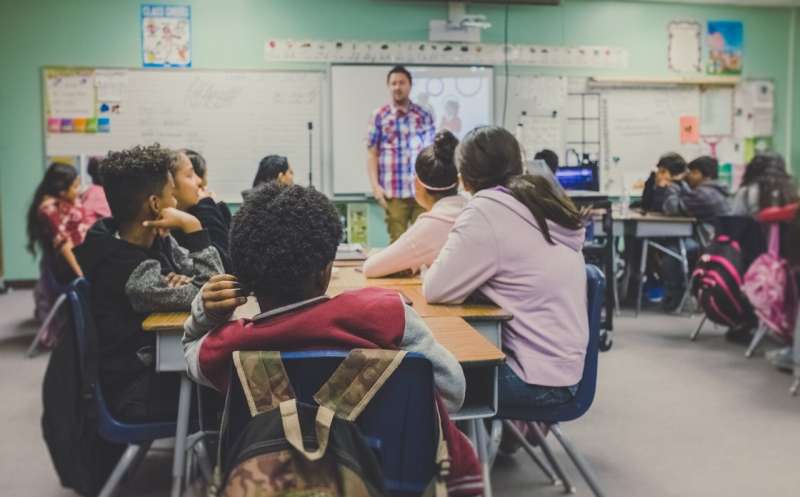
There is currently relatively little objective evidence that the much-promoted “learner-centred” approach to teaching is effective, according to new research. Learner-centred pedagogy is designed to encourage pupils to become more involved in decision-making in the school and more active in class and participate in lessons.
It has been advocated by international bodies such as UNESCO and World Bank, and many countries worldwide have invested considerable time, money, and resources in LCP despite the lack of a comprehensive body of evidence regarding its implementation and outcomes.
New research by Dr. Nozomi Sakata, Dr. Leanne Cameron and Dr. Nicholas Bremner shows how the approach can have positive results, but there is currently little objective evidence to prove its effectiveness. Researchers have called for more larger-scale, objective, rigorous research on its effectiveness over time.
Some studies report teachers’ and students’ feedback that the teaching style helped to boost motivation, confidence, and enhanced relationships. But there is little proof it is more effective than what teachers have been doing previously.
Dr. Bremner, from the University of Exeter, said, “Existing evidence has shown learner-centered pedagogy can have a positive impact, but not enough to justify such a massive policy emphasis worldwide. Much of the evidence is too thin and simplistic to recommend either schools either abandon it or embrace it.
“On the basis of current evidence, there is a real gap in hard data to prove or disprove the value of LCP, especially given its continued prominence in worldwide policy discourses. Many policies have been introduced with good intentions, but they could be implemented in a more thoughtful way which allows teachers to make sensible decisions about using different methods and approaches at different times.”
In the article, published in the International Journal of Educational Development, researchers conducted a review of 62 journal articles from 2001 to 2020 reporting the outcomes of LCP implementation in low- to middle-income countries around the world.
A total of 28 texts cited examples of teachers’ positive experiences of LCP; 7 others were negative. However, only 9 out of the 62 studies contained objective evidence of improved academic learning outcomes.
A total of 26 out of the 62 texts cited examples of teachers or students’ perspectives of enhanced student leaning , while 9 texts cited examples of little to no improvement in student learning.
Dr. Bremner said, “Larger-scale experimental studies may be challenging from a methodological perspective and are likely to imply a large investment in time and resources. However, on the basis of current evidence, there is a real gap in hard data to prove or disprove the value of LCP, especially given its continued prominence in worldwide policy discourses.
“The more subjective research—for example, studies presenting perspectives of teachers and students—was more prevalent than objective research, and did seem to lean towards positive experiences of LCP for non-academic outcomes such as student motivation and confidence, as well as enhanced relationships. Such outcomes may not always be the priority for educational policymakers, but many would argue they are extremely important.”
More information: Nicholas Bremner et al, The outcomes of learner-centred pedagogy: A systematic review, International Journal of Educational Development (2022). DOI: 10.1016/j.ijedudev.2022.102649
“Here every child has their ability and their place”.
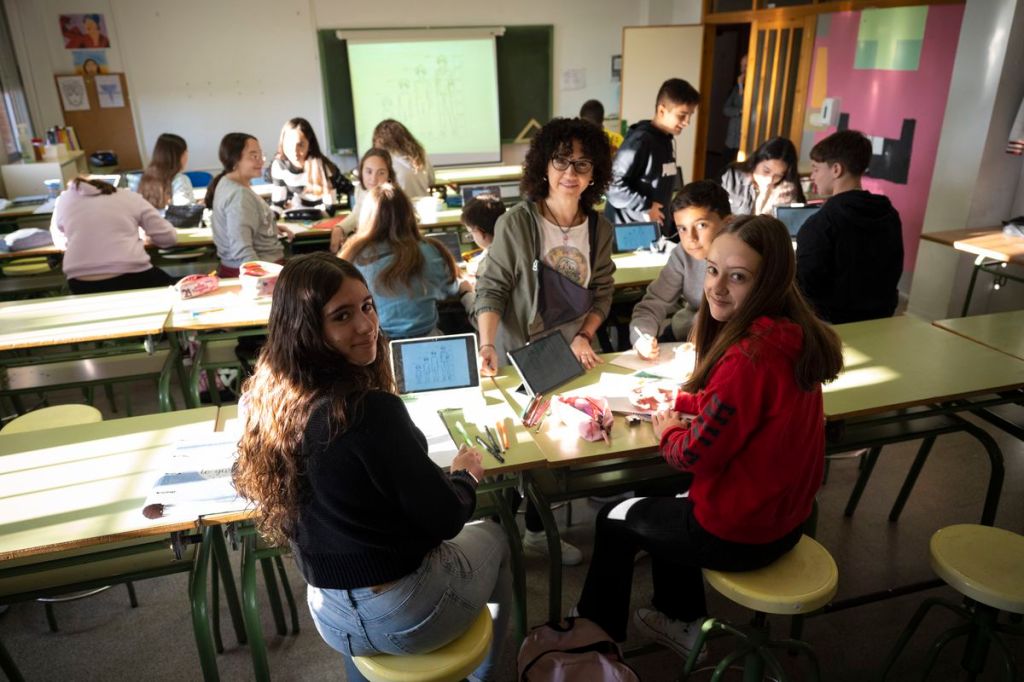
To reach Madrigueras you pass through miles vineyards, fields of almond and olive trees. Leaving behind rows of the low compact houses typical of La Mancha. You would not expect that in this town of 4.650 inhabitants, situated 30 kilometres from Albacete, inside the red brick walls of Instituto Público Río Jócar there is an innovative educational laboratory. The teachers are the key, at 11:30 one Thursday in October, eight of them are sitting around the Head’s desk preparing a group reading of Don Juan Tenorio, a 19th Century work. They decided to use the text as a way of approaching the feelings of adolescents about themes such sexual equality.
In Castilla-La Mancha the school is known for its original system of organisation, based on groups of teachers of different subjects which develop interdisciplinary projects and implanted more efficient teaching methods years before the new Education Law. Participating in these groups is voluntary, but 85% teachers have joined them.
The centre’s popularity means that every year many educators visit it attracted by the less traditional system that tries to achieve success for every pupil. It is one of 3.657 centres that participate in Proa+, a programme to improve educational achievement that has been re-established after a decade, when the PP Government stopped it, even though it was successful.
Proa+ has a budget of 120 million euros per year, each school deciding how to invest the money within the general objectives of improving the pupils’ achievement and supporting them. In 32% schools the money is used for after school classes, typically in Maths and Language.
Other formulas have been developed, with programmes working with the students’ families, improving the libraries and opening them to the local population, individual classes for pupils that need them or personal development for teachers who require them. For the first time in the centre between 20% & 30% of the staff change one course for another because grants are available.
Proa+ targets schools with complex problems, such as socially deprived students or pupils geographically dispersed. Río Júcar belongs to the second group, it attempts to improve the pupils’ social and emotional conditions through a “Social Education Teacher” in the Vocational Orientation Department. Firstly, the students’ psychological condition is monitored and the links with Health services are improved.
Alicia Magan, Social Education Teacher, explains that the pandemia had brought an increase in anxiety, self-harming and suicidal thoughts.
Since then they have developed activities, such as dance, table tennis, cooking, etc.) during the holidays, as well as ensuring that the nursery pupils meet with other children from their town. In Río Jocar Institute this involves around 500 students from the seven municipalities of the La Machuela region.
El Pais – Educacion
The result of an interview at IV International Congress of Educational Innovation in Zaragoza published in El Pais.
The educationalist, professor at Ottawa University and assessor of the Scottish and Welsh educational reforms, says, “Do not blame teachers for the problems that are due to the educational structure”.
Andrew Hargreaves has investigated influential educational factors at universities in the UK, USA and Canada, including Ottawa and Boston College, where he is professor emeritus. He was born 71 years ago in North English working class family. He has written dozens of books,as well as citing as an advisor to the Welsh and Scottish Governments.
Q. You suggest that students are unable to learn properly if they lack wellbeing, feel unwell, don’t have friends or suffer bullying.
A. For a long time we have thought that wellbeing was unconnected to learning. Children need to be cared for, to know that they belong and they matter. These are important in themselves, but they also affect learning.
During the pandemic we have seen that children live in all sorts of homes and have parents who have to work, at times they struggle to feed their children, as well as other adults that they care for. This affects their mental health, as well as their learning.
Well-being has moved to the forefront and that is good, but we must be careful not to see well-being as simply protecting children from harm. That is vital, of course. They must be looked after, well fed and have a comfortable place to sleep,
We can do more. Children need to develop, to feel fulfilled, to do well, not all the time, but for most of the time. The best way to achieve this isn’t to treat it as something separate from learning, but more as a part of it.
One thing that makes children feel good is to go to school knowing that their teacher knows them, cares about them and that they will learn something new every day.
Q. Do schools pay enough attention to this aspect?
A. I believe that primary schools have prioritised integrated care of their children. This is one of the reasons why people become primary teachers.
Q. And in secondary school? Research shows that the enthusiasm for going to school in Spain declines at this stage.
In addition, the students are bigger and the teachers feel that they need more control, more discipline, instead of involving them in activities with more movement and noise, but these may cause behavioural problems. Thus, the loss of motivation towards school should not be seen as a problem of growth, but rather as one caused by how we organise our educational centres.
Q. In international comparisons, the Spanish system stands out for the low level of collaboration between teachers. How much of a problem do you think this is?
Q. How can they change.?
A. The person most able to effect this is the Head. In Spain, there is a complicated tradition of how the head is elected. Whoever leads a school often has difficult things to do. If you have been chosen, you are there to represent the community, not to help them overcome difficult situations, something that may, at times, uncomfortable.
Heads need to gain the teachers confidence and to support them. It’s not about disciplining them or evaluating them, rather having the authority to lead people towards a definite place that will be better for the school, though not everyone will immediately see its benefits. The person who leads must establish a culture, habits and patterns of collaboration.
Q. And what can Governments do?
A. They can create systems that give teachers time to collaborate. Are there enough teachers in schools, not just to take classes, but also to spend time with other teachers to plan, prepare, evaluate and improve their ways of teaching, not to spend all the time teaching. If you are a lawyer and spend all your time in court, you won’t have time to prepare your cases. It’s the same for teachers. Finland, a country with the best educational results is a good example. The teachers spend more time out of the classroom than any other country. This allows them to collaborate, plan, prepare, reflect and improve.
Q. The Spanish educational system is moving from being one based on content to being based on competences. A change that is not supported by everyone. Do you think that this is the right road?
R. I’m pleased that you are going to publish what I’m going to say. “Professor Hargreaves asks the reader that before this paragraph ends, they should try to answer two questions.
The first, “What is Boyle’s Law”
The second. “Who won the Hundred Years War”
Whenever I have asked these questions to thousands of people in many countries, the majority cannot answer them, even though they are topics that are studied in many places.
The question not that we should stop teaching them, rather how do we teach them.
If you examine Boyle’s Law, which deals with pressure, temperature and volume of gases, properly, you will see that it does not apply in certain circumstances. If they had explained to me that this shows that Science is not perfect, but it continually advances and has to update its conclusions; I would have remembered that idea and used it for the rest of my life.
And, if they had explained to me that the Hundred Years War resulted in countries creating permanent armies. In view of the Ukraine War, perhaps I might ask myself, “Do we need bigger permanent armies? That is a relevant question”,
Certainly, we cannot teach everything, we are always going to have to make choices.
Whatever we select, the most important thing is how we teach them, so the children acquire knowledge, skills ad abilities that last for the rest of their lives, instead of forgetting them as soon as they leave school, for the rest of their lives.
Q. You have spent your career firstly teaching, then investigating Education; also you are a father and grandfather. What advice would you give parents about the education of their children?
A. The first thing that I would say to them is that we hear a great deal about preparing them for what they want to do, preparing them for work, “preparing them for jobs that haven’t been invented yet”, a phrase that seems mad to me. The Queen of England once said, “It’s a pity that people don’t have jobs for life”. That is to say that there is a lot of rhetoric about children’s preparation. But the best way of preparing children for the future is to educate them and care for them in the present and not treating the present as a waiting room for the future. Children spent a quarter of their lives in childhood, so we cannot treat childhood as a waiting room for something else. It is important in itself; it is important to feel loved, to belong, to live in a community and the family is their first community. They need to develop responsibilities and become the best that they can. To have a good time, but also to know how to strive and be aware that things can sometimes be difficult. It could be to play the guitar, which is difficult or become a great swimmer. There are lots of ways of doing it, but it is really about well-being, learning, a sense of belonging and of responsibility. If we do all of these, the future will by and large take care of itself.
I would say one more thing to them; “Listen to your son or daughter. Take them seriously and don’t downplay the importance of what they say to you and when something is bothering them, give them the same attention as if they were an adult.
by Alan Flurry, University of Georgia
Collaborative group work is increasingly prioritized across higher education, particularly in the life sciences and STEM-related fields. But how students communicate within these smaller groups is key to their success.
New research from the University of Georgia suggests that students who understand what they do and do not know, and who are willing to ask for clarification and correct misinformation in the group, are more successful in small-group problem-solving.
The study, “‘Oh, that makes sense’: Social Metacognition in Small-Group Problem Solving,” was published in the current issue of CBE—Life Sciences Education.
The new research advances the understanding of how students succeed in innovative instruction environments.
“The move toward more collaborative learning is really big in life science education,” said Julie Dangremond Stanton, associate professor in the Franklin College of Arts and Sciences department of cellular biology and corresponding author on the study.
“If we’re going to ask students to work in small groups, then we have to provide them with some guidance on how to collaborate effectively while problem solving because they are still learning how to do this. Guidance on collaboration may be particularly important when we ask students to use scientific reasoning with their peers.”
Using discourse analysis to examine transcripts from two groups of three students during breakout sessions in an upper-division biology classroom, researchers identified statements and questions that work best in small-group settings. By analysing the conversation for metacognition (the awareness and regulation of thought processes), the team identified seven types of metacognitive statements or questions.
By coding for reasoning, they uncovered four categories of metacognitive statements or questions associated with higher-quality reasoning. For example, when students identified a point of confusion and asked for clarification (e.g., “I don’t understand. Can you explain that?”) the group’s responses helped move their problem solving forward. As another example, when students asked questions that evaluated their group’s answers (e.g., “Does our answer address the question?”), the group’s responses helped them reason at a higher level.
Correcting a peer can be daunting, but it’s beneficial
“It’s fascinating to see. If you and I were working with one other person and you said something to me about how cell division works, and I thought I understood how that worked, but as you’re explaining it, I realize I don’t actually understand how cells divide,” Stanton said. “I might try to clarify my understanding by explaining it back, but maybe the third person we’re talking with realizes, oh no, Julie is still confused, let me correct this part and help her try to understand it.”
That ability, according to Stanton, can be important even though students may be otherwise socialized not to directly correct someone, because it could be considered confrontational. It’s a skill that also combines with an ability to listen and think about the discussion in the group.
“We created timelines of what students did during breakout sessions, and we see times when students are not speaking to each other, and I really appreciated this idea that maybe some silence can be very beneficial to group work, when you take a moment to think about what you’re going to say before you say it, or think about the problem before you jump in to solve it,” she said.
Periods of silence denoted better group problem solving
The researchers were initially excited by another group in the study who spoke continually, even finishing each other’s sentences. But the audio recordings and transcript revealed that, while the group had some success in problem solving, they would never directly correct each other. Even when one student said something that another knew was wrong, the second did not acknowledge the wrong answer by offering a correction or asking a question, and instead gently moved to something else.
According to Stanton the silence is an interesting indicator for both students and faculty, who may be more inclined to correlate noisy classroom discussions with better active learning as well as become concerned with periods of silence while students are working in groups.
Overlapping utterances that don’t include students being direct with one another can lead a group discussion in circles and may exhaust the participants. Instead, the new research suggests providing students more coaching around the metacognitive statements and questions that can promote problem solving. For instance, while it is normally not seen as socially acceptable to correct someone, not stopping to ask questions or make a point could lead down a road that’s not productive for the work or the learning situation as designed.
“We often think about metacognition as realizing what you do and don’t know,” Stanton said. “And a lot of times it’s really beneficial to work with other people because when you hear them talk—or when you explain something to them—you start to realize, OK wait I don’t actually know what I thought I knew.”
by Anna Sullivan, Barry Down, Bruce Johnson, Jamie Manolev, Janean Robinson and Neil Tippett, The Conversation
Under a proposed plan due to start in term 4, students can only be sent home a maximum of three times a year. This is designed to reduce the high number of sanctions against vulnerable children in public schools. But it has been met with opposition from teachers, who say it will increase safety risks when managing disruptive students.
This comes amid a wider debate about how to approach student discipline, which continues to be one of the most difficult issues in Australian schools. The views about student behaviour are diverse and often passionate, with some arguing students should be “punished.”
Unfortunately these views do not always reflect the research, which shows tough approaches make student disengagement worse.
Exclusions vary across Australia. They can either be for a short time, a long time, or they can even be permanent.
State and territory legislation and departmental discipline policies provide guidance on how schools should prevent and respond to problematic student behaviours around Australia.
Recent data from states indicates school exclusions are on the rise. For example, in Western Australia there was a new high of 18,068 suspensions in 2021, an increase of 13% from 2020.
Five issues that need more attention
We are researching how and why Australian schools use exclusionary practices—like suspensions—to manage disorderly students.
Policymakers and schools need to give more attention to the following issues when it comes to discipline and behaviour.
1. Some groups of students are suspended more often
Research over the past three decades has consistently shown suspensions and expulsions disproportionately target students from diverse or minority backgrounds. This is particularly the case for those with a disability or those from specific racial, ethnic and class backgrounds.
For example, in NSW in 2021, while 3.3% of all students were suspended, 10% of Aboriginal students and 8.4% of all students with disability were suspended.
This is not just the case in Australia, but also in the US, UK and New Zealand.
2. We don’t have the full picture
Official statistics provided by education departments offer a publicly available account as to the number of students schools have suspended and expelled from schools.
However, these figures do not always present an accurate picture. Students can be excluded from the classroom in other ways, which are not captured in official data.
For example, schools might let students remain on the school grounds for partial or full days, but not let them join their peers for lessons. This allows schools to “maintain statistical respectability”.
3. What else is going on in students’ lives?
Often discussions on how to manage students’ behaviour focus on responding to the individual’s academic failure, behaviour or disinterest in school. They don’t look at the broader complexities of their lives.
When looking at whether suspension or exclusion is an appropriate discipline technique, schools should consider the likely impact on a child’s life chances, especially for marginalized children. Will a suspension put at risk the chances of the student completing school? Will the student be supervised while they are not allowed to attend school?
Understanding how poverty and other forms of social inequality contribute to behaviour in schools is important.
There are many other ways to manage students’ behaviour that are more supportive and can lead to more positive outcomes for the school, students and families. For example, teaching students how to manage conflict or how to manage their anger.
4. Make students feel valued
Research tells us students value schools that make trust, respect and care central to everything that happens there.
If we are going to help students connect to schooling, we need to look at the deeper causes of student disengagement. This means understanding and attending to students who feel like they do not matter or do not fit in or feel like their interests are not recognized.
This requires a commitment from schools to connect to student’s lives and communities as the foundation for curriculum design and learning.
Treating teachers like professionals and giving them the time and resources to plan engaging and differentiated lessons is critical. This also involves talking and listening to what young people have to say.
5. The broader political context
Schools of course exist in a broader social and political climate. In Australia, the trend in education has been to prioritise individuals and individualism over the public good.
At the broader level, this has seen an emphasis on standards, performance and national testing.
At the micro level, this encourages schools to view problem student behaviours as the responsibility of individuals. So this means there is a focus on blaming “disruptive” students, “dud” teachers or “negligent” parents, rather than look at the influence of broader public policy settings.
So, while the NSW government is making positive steps, there is still so much more to be done to improve our approach to student discipline.
by National Centre of Competence in Research
What do building pyramids, going to the moon, paddling a two-person canoe or dancing a waltz have in common? All these actions are the result of a common goal between multiple partners and lead to a mutual sense of obligation, known as “joint commitment.” This ability to cooperate is universal in humans and certain species of animals, like the great apes.
However, humans seem to have a unique predisposition and strong desire for social interaction that may be one of the components of the emergence of language, according to the authors of the study. How do our social interactions differ from other species? And why? To answer these questions, an international team analyzed the interactions of 31 children between the ages of 2 and 4 in four preschools in the United States (10 hours per child). “There have been only a few quantitative analyses of the spontaneous social interactions of 2 and 4 year olds while interacting with peers, although it is a critical age for the development of children’s socio-cognitive abilities. And the ones that exist are either not based on extensive video recordings following individual children for several days or simply do not allow an easy comparison with great apes’ social interactions,” says Federico Rossano, first author of the study and Assistant Professor at the University of California, San Diego. They then compared their results with similar interactions in adults and great apes
Multiplication of social partners
The researchers analyzed the environmental factors (number of partners, types of activities, etc.) surrounding the children. They found that children have more frequent (an average of 13 distinct social interactions per hour) and shorter (an average of 28 seconds) social interactions with their peers than great apes in comparable studies. Adrian Bangerter, co-author of the study and professor at the University of Neuchâtel explains why: “By being exposed to many partners, children learn quickly about the need to coordinate with each other’s behaviour.” The numbers support this quick learning: 4-year-olds already participate in cooperative social interactions more often than 2-year-olds and fight less than 2-year-olds. “Learning how to coordinate with others and how to communicate towards engaging in joint activities goes hand-in-hand with learning how to minimise conflict,” adds Rossano.
Social interactions are usually marked by an entry and an exit phase (when one starts a conversation with eye contact and a “hello” and then signalling that it is ending by repeating “okay, fine” or with a “goodbye”). These signals are also present in 90% of social engagements in bonobos and 69% in chimpanzees. It appears that young children use these signals only 66-69% of the time, less frequently than bonobos and adults. “On one hand this might be due to the appreciation that they will interact again with the same children throughout the day, like two passengers sitting next to each other on a plane starting and stopping quick conversations throughout a flight without using greetings each time they resume talking. On the other hand, it might reflect the fact that not every social interaction is based on joint commitment to each other, i.e. at times young children might be bulldozing their way in and assume other children will just adapt to them rather than coordinating,” Rossano explains. More empirical research will be needed to confirm these behaviours, however this study is a first step in the understanding of the role of joint commitment for human social interaction and how it impacted the evolution of language.
Cooperation in Swiss children
A similar study is currently conducted within the framework of The NCCR Evolving Language, a Swiss research center that aims at unraveling the biological foundations of language, its evolutionary past and the challenges imposed by new technologies. A team including the co-authors of the University of Neuchâtel is working with the after-school care facilities of Neuchâtel and aims to understand the development of joint action in children by observing how their use of so-called back-channel words (uh-huh, okay) changes over time when they play a LEGO cooperative game. Adrian Bangerter explains why those terms are important to analyse: “We use ‘small’ words like okay, uh-huh, yeah, or right all the time to synchronise our behaviour with our partners. Yet so little is known about how young children acquire the use of them.”
The research was published in Philosophical Transactions of the Royal Society B: Biological Sciences.
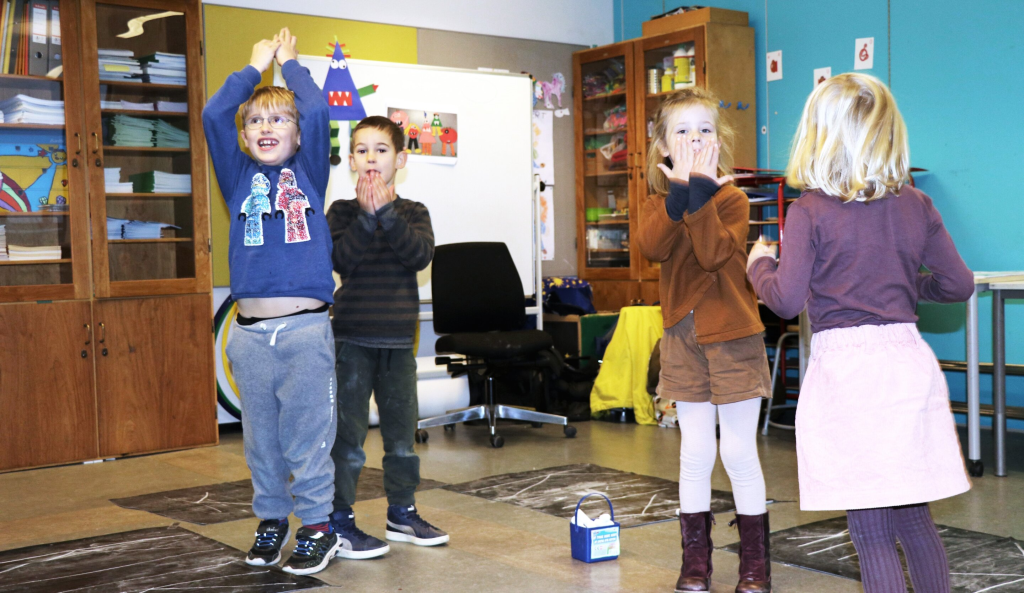
Children who move while learning sounds of letters significantly improve their ability to recognize individual letter sounds. This is the conclusion of a new study conducted by the University of Copenhagen’s Department of Nutrition, Exercise and Sports and Denmark’s National Centre for Reading, in collaboration with 10 Copenhagen area school classes.
Reading is a complex and crucial skill that impacts the ability of youth to perform as students, across social contexts and in their eventual working lives. Therefore, it is important to develop reading skills during childhood.
Now, a team of researchers from the University of Copenhagen and Denmark’s National Centre for Reading has focused on whether whole-body learning in instruction, known as embodied learning, has a positive impact on children’s ability to learn letter sounds.
“Our research demonstrated that children who used their whole body to shape the sounds of letters became twice as proficient at letter sounds that are more difficult to learn compared to those who received traditional instruction,” says Ph.D. student Linn Damsgaard of UCPH’s Department of Nutrition, Exercise and Sports.
With regards to difficult letter sounds, she adds, “There are many difficult letter sounds in Danish and these sounds are particularly important, because once children become proficient at them, it has already been shown that they will be better readers.”
The project included 149 children, 5-6 years old, who had just started school. They were divided into three groups: one that stood up and used their whole body to shape letter sounds; a seated group that shaped letter sounds with their hands and arms; and a control group that received traditional, seated instruction during which they wrote letters out by hand.
The study also demonstrated that students who shaped difficult letter sounds with hand movements while seated also had a greater increase in proficiency than the control group.
Giving beginner readers the best start possible Associate Professor Jacob Wienecke of UCPH’s Department of Nutrition, Exercise and Sports led the study and explains the project’s background:
“The overarching goal is to learn more about which methods can be used to give beginner readers a good start. The idea is that if, through play and movement, we can reach children where they are and where their strengths truly lie—and we can create a form of learning that combines reading with play—then that’s truly positive.”
Previously, the researchers demonstrated that the children felt more motivated by teaching methods which incorporated physical movement. Associate Professor Jacob Wienecke hopes this will provide an opportunity to inspire teachers and school managers to prioritize movement across subjects.
The study also investigated whether a direct effect of embodied learning could be found through children’s reading of individual words. This was not possible, which may be due, among other things, to the fact that the children were at such an early stage of their literacy development that they could not yet transfer their knowledge of letter sounds to reading words. Or, as Ph.D. student Linn Damsgaard describes it: “Just because you learn the notes and sounds of a flute, doesn’t make you a master.”
The study is the first to examine the effect of linking whole-body movement to the learning of letters and their sounds. It is published in Educational Psychology Review.
More information: Linn Damsgaard et al, Effects of 8 Weeks with Embodied Learning on 5–6-Year-Old Danish Children’s Pre-reading Skills and Word Reading Skills: the PLAYMORE Project, DK, Educational Psychology Review (2022
by Cara Murez
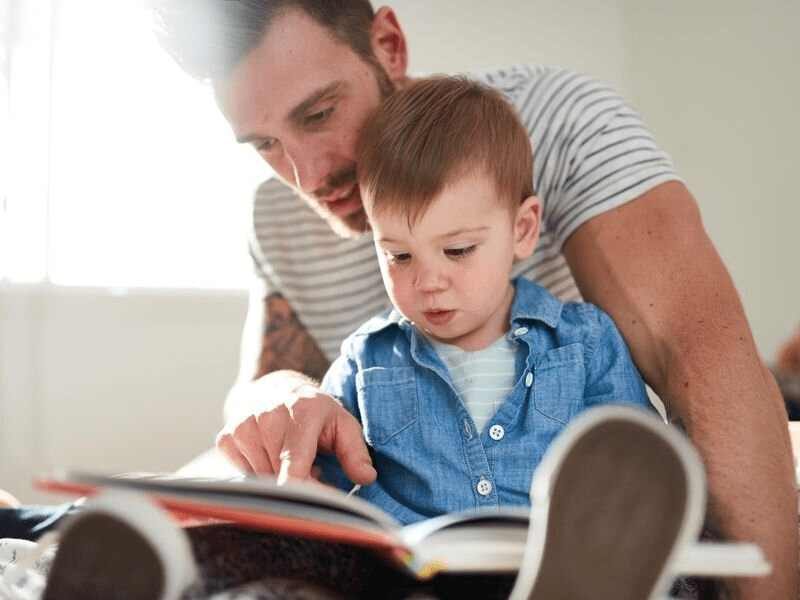
Reading to little ones builds bonds with their caregivers and boosts their language and literacy skills, but story time also benefits older kids, a new study reports
Reading to 6- to 12-year-olds for an hour a day in school can boost their intelligence, Italian researchers report.
“Does it work? Yes, we found some compelling evidence that it does,” said researcher Emanuele Castano during a recent news briefing about the new findings. He’s a professor of psychology and cognitive science at the University of Trento.
The experiment was conducted in 32 Italian elementary schools, where children typically have about six hours of lessons in an eight-hour school day, Castano said.
In the interventional group, the teacher read age-appropriate fiction aloud to students for an hour a day. The control group continued their regular activities. In all, the study included 626 children.
At the outset and again after four months, kids’ were tested with two standard measures: The Wechsler Intelligence Scale for Children (WISC-IV) and the Cognitive Assessment System Scale (CAS2).
WISC-IV measures what kids know—vocabulary, comprehension, similarities, information and word reasoning. CAS2 tests “thinking skills,” such as attention and processing.
While the control group did show gains on both tests, that would be expected in normal development, Castano said. In comparison, the kids who were read to an hour a day showed a “markedly stronger increase on measures of intelligence, tapping both knowing things and thinking skills,” according to the study.
“The improvement emerges on every single subscale on both measures,” Castano said.
The trial builds on a decade-long effort by a University of Perugia research group, according to the study. That work has also investigated the effects of reading aloud to elderly people and to children up to age 12.
The studies have prompted officials in Tuscany, one of Italy’s 20 administrative regions, to adopt an hour a day of reading aloud in public schools, the researchers said.
Castano called the program transformative.
“Once you train teachers, you can have a long-term impact. You can have a long-term impact on the children, on the school. It is easily scalable,” he said. “As previous research has shown, reading fiction—and particularly high-quality literary fiction—can have other benefits for children, such as the development of their social emotional skills.”
An overview of the study was presented Friday at a virtual news briefing held as part of an Association for Psychological Science meeting. Findings presented at meetings are considered preliminary until published in a peer-reviewed journal.
Dr. Dipesh Navsaria, an American Academy of Pediatrics spokesman, reacted to the preliminary findings.
“There is overwhelming evidence that reading to your child, with your child, every day for even a short period of time is incredibly beneficial to them, and probably also to the grown-up in different ways,” said Navsaria. He is an associate professor of pediatrics, human development and family studies at the University of Wisconsin–Madison.
Because the full study was not yet available, Navsaria could not speak to the reported intelligence boost. But he pointed to many other benefits children receive when someone reads to them.
Their vocabularies tend to be larger. They are more familiar with books and how books work. They also have broader knowledge about the world around them, he said.
“The key driver is actually not so much just the book itself, so no one should think, well, we just need to throw more books at children. The key driver is actually the parent or caregiver interaction,” Navsaria said.
When an adult shares a book with a toddler, for example, the experience has to be more interactive to hold their interest, he pointed out.
“You find that there’s all these opportunities for interaction with that adult, that back and forth dance almost, the conversation, the pointing at things, the listening, talking about stories, all those things that the book helps scaffold that is actually the key driver of development,” Navsaria said.
Some kids who are old enough to read do also struggle with decoding text, even if they’ve been read to from an earlier age, he noted. Decoding is the process of translating printed words into speech. Those kids may shy away from reading because it is so much work, Navsaria said.
“Reading aloud, much like audiobooks in some ways, takes away the work of the visual decoding of text and allows them to still enjoy the language, the narrative, the vocabulary, all the elements of things, wonderful things that books bring us, but they do it while taking away that decoding part that, again, for some children is hard,” he explained.
Reading to children can benefit them at all ages, according to Reach Out and Read, a group that Navsaria is involved with. Some families may feel that once their child reads fluently, about third grade, they no longer need to be read to aloud.
“Remember that, again, even for a fluent reader, decoding text takes brain power and the joy of sitting and being read aloud to even if you’re a fluent reader can be notable,” Navsaria said.
The author, poet and playwright on why we should move away from Michael Gove-mandated lessons on fronted adverbials and back to unleashing the creative potential of children.
The Guardian Wed 18 May 2022 15.00 BST
This interview highlights the approach that was developed in the Schools’ Council “Writing and Learning across the Curriculum” (1976) project. Guardian readers will be familiar with Michael Rosen, who was involved in this project.
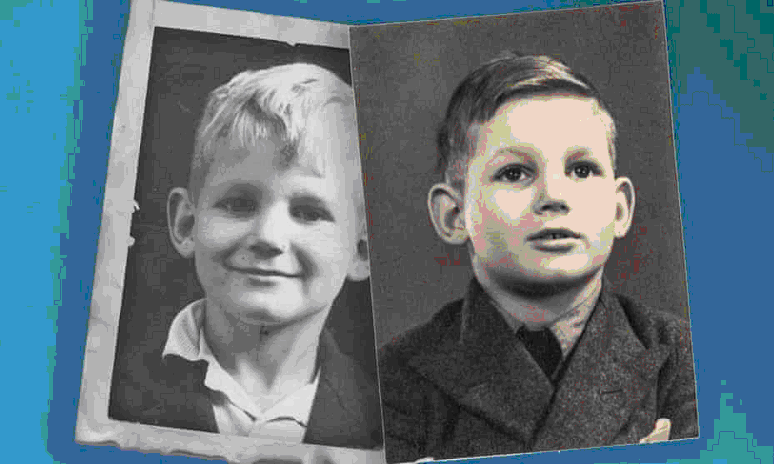
‘At primary school we were taught that words were not for fun’ … Michael Morpugo as a schoolboy. Composite: Guardian Design; By kind permission of Michael Morpurgo.
I didn’t love reading at all when I was young. As a teacher, I loved it, and now as a reader, I love it. But I was put off the whole idea of words very early on.
Some years ago, I was made to do a key stage 2 (seven to 11 years old) English test. I don’t even want to tell you how I did, but it wasn’t good. I find expressions such as “fronted adverbials” and “subordinate conjunctions” extraordinarily abstract and difficult to get my head around. But we’re stuck in the Michael Gove era, in which children are trained in analysing language in a way that seems to me to restrict and inhibit, rather than to encourage creativity. So I was glad to discover that someone has done some proper research on this part of Gove’s education reforms; UCL and University of York have found that this emphasis on grammar in primary school does not improve six- and seven-year-old children’s writing.
When I was a primary school teacher in the 1970s, in a village called Wickhambreaux, just outside Canterbury, we were free of such burdens. I was able to concentrate on encouraging children to find their own voices. That is what literacy is for – to express your thoughts, to discover the music in language, the joy of reading, and all the interest, knowledge and understanding we can gain through that. It is not the analysis of a sentence – that comes later.
As you read one story, they pick up a book by the same author or a similar book with a similar subject, and extend their reading on their own. And I extended their writing by saying to them: “Look, Roald Dahl was your age once. He sat down and wrote his first story. Why don’t we go and write our stories?” I would never make them sit down with a blank sheet of paper, and then say: “Do it”, which is what happens time and time again in tests up and down the country to this day. It’s an impossible task to set a child. You have to inspire them; you have to go out and trigger it somehow.
We would go for long walks up to the nature reserve, look at herons standing in the reeds, and we would be quiet. Then we would go back and write down what we felt about what we had seen. Some children would be descriptive; most were very thoughtful. But each of them was beginning to find their voice as a writer. They weren’t cramped by anything I was trying to teach them.
This is the opposite of how I was taught, at St Matthias primary school in London, which was very punishment-driven. There was fear in the classroom, and grammar and punctuation were part of that. It is now a wonderful school, where kindness and creativity go hand in hand.
I came from quite a bookish family. I was read to every night by my mum, who was an actor. She was guided by the instinct that if she loved a poem or a story, she wanted to tell me that story, or read me that poem. So I was handed the love of stories by my mother, but then went off to primary school, where I learned that words were not for storytelling, or music or fun. They were about spelling and punctuation, and if you got things wrong, you were in trouble.
I didn’t want to go into detention, but I did spend an awful lot of time there because I found the more red marks I got, the more I was scared. And when you’re scared, you don’t do things very well at all. I knew I was pretty good at telling lies, but I didn’t know I could be a storyteller until much later, when I was a teacher.
On World Book Day this year, a pupil asked me: “Do you ever make mistakes?” Of course I make mistakes. When I’m working on my own books, I often slip into a slack way of saying things, which is too oral, if you like. I’m reminded about it fairly firmly by good editors, and that’s fine – it’s a way of improving what’s already there, and refining it. My spelling isn’t that great, either; I’m quite ashamed of that sometimes. My grandson can spell things better than me. But that’s OK. It’s just a side of me that needs improvement. At 78, I’ve got plenty of time left.
I tell children to look at the manuscripts of writers far greater than I shall ever be, and the amount of crossings out that they do. Children are concerned about not getting it right, and that is part of the problem. But actually, it’s really good fun telling a story. I’ve been working on a new one this morning. I started the day thinking it was going to be one kind of a story. I started the first three or four sentences, which didn’t seem to go that well, so I crossed them out. That’s what you do – you judder and judder until you find the right tone for the story and a path seems to open up through the undergrowth in front of you, and you find a way to go. But it’s not going to be helped by a constant worry that the sentence you have just written is not correct.
I grew up with people telling me: never, never start any sentence with “and”; I start huge numbers of sentences with “and”. I’m not just trying to get back at some English teacher I had when I was 10. While I can see how you could overdo it, sometimes there’s a really good reason for doing it. And sometimes there’s a very good reason for having a comma rather than a full stop. It’s a matter of judgment, and not just rules. I think today’s rules are a misunderstanding of language. Grammar, punctuation and spelling are guidelines about how we frame our language, and very important in terms of communication, for accurately reflecting what it is we wish to say and how to be understood. But they’re not supposed to tie us up in knots.
It is important to keep our focus on every child becoming a reader, and having the experience of falling in love with Philip Pullman and Jane Austen and Shakespeare. It is not about teaching something that’s then got to be tested. If you do that, what will happen – and what has always happened in our system – is that those who succeed at that level are fine and go on their way towards university. And those who don’t succeed begin to feel that they’re failures and that language and books aren’t for them, because they’re not enjoyable, because they keep getting bad marks in tests. The problem with testing is that there are winners and losers and we have an education system that divides people very early on. More and more, what has been lacking in our primary schools is space in the curriculum for creativity, for exploring the potential of children in terms of the way they use language.
I often get letters from teachers and children correcting the grammar in my books, and they are quite right. But people can be over-obsessed by it. If you look at some of our great writers and you start analysing sentences, the poetry is what counts, the sound, the meaning. The grammar is supposed to be what serves that. It’s not what you start out with in the first place.
Michael Morpurgo was talking to Amy Fleming

Rather than give every child a chance, these narrow tests have contributed to some of the poorest mental health outcomes in the world.
This Guardian article (2-5-22) emphasizes some of the points made in the previous post.
Why are we doing this to our children? As exam term begins, the question hangs over millions of households. NHS figures suggest that 17% of 6- to 16-year-olds in England now suffer from a “probable mental disorder”, and the incidence has risen by 50% since 2017.
In a survey by the children’s commissioner for England, two-thirds of children ranked homework and exams as their greatest cause of stress. Responding to a poll by the National Education Union, 73% of teachers said they believed the mental health of their students had deteriorated since the government introduced its “reformed” GCSEs, which put more weight on final exams and less on coursework and other assessments.
These reforms, imposed on schools by Michael Gove against expert advice, may have contributed to the OECD’s shocking finding in 2019 that, of the 72 nations in which the life satisfaction of 15-year-olds was assessed, the UK came 69th. Our children’s joy of living suffered the greatest decline of any country since 2015, the year in which the GCSE reforms became effective. If we are going to subject young people, already so vulnerable, to the extreme stress and anxiety of exams, there must be an excellent reason. So what is it?
Given the importance of the subject, it’s remarkable how thin and infrequent are the government’s justifications. For a sustained attempt by a senior government figure to justify the English system, you must go back to an article by the previous education secretary, Damian Hinds, that he wrote for the Sunday Times in 2019. While he accepted that exams were stressful and had “a disproportionate effect on young people’s wellbeing”, he claimed, without any supporting evidence, that this stress was important in “building character” and “developing the resilience and coping mechanisms to deal with challenging experiences”. In reality, the great majority of people who suffer mental health disorders develop them as children or young adults. Great stress in childhood is likely to make us less resilient, not more.
Hinds’ article – simple-minded, hackneyed, cavalier – makes a strong case, but not the one he intended. It shows that you can pass your exams, enter a top university and become a cabinet minister, yet fail to achieve basic standards of research, insight, originality, reasoned argument, empathy or humanity. But at least he tried. While the current education secretary, Nadhim Zahawi, has insisted we return to the exam model that was suspended during the pandemic, he has made no attempt to explain why.
What exams measure is aptitude in exams. While they might rank certain skills, such as the retention of facts and the performance of linear tasks under pressure, these represent just a small part of the equipment a person needs to navigate the world. Many of the challenges we face are complex, long-lasting and multi-layered. They might demand social and emotional intelligence rather than the ability to marshal facts, and might best be overcome by collaboration instead of competition.
But performance in these narrow, unrepresentative tests can determine the entire future course of a student’s life. Some will be branded failures, creating a self-image that will never be erased. I’ve met children who are brilliant in peculiar ways, but who flunk exams. I’ve met adults who, often after long struggles with self-esteem and social condescension, succeed magnificently despite their low grades. I’ve met others whose evident talents remain unrecognised, as they never overcome the stigma.
It’s not the child who fails the system. It’s the system, seeking to force everyone into the same box, that fails the child. It pathologises diversity. For example, as The ADHD Explosion, by the clinical psychologist Stephen Hinshaw and the health economist Richard Scheffler, suggests, a massive increase in ADHD diagnoses appears to be linked to the rise in high-stakes testing. As exams become more important, parents have a greater incentive to seek the diagnosis and acquire the drugs that might improve their child’s performance. At the same time, as a report by the education professor Merryn Hutchings argues, more children are likely to show ADHD symptoms in a stressful, channelled schooling system that forces them to sit still for long periods and reduces opportunities for creative, physical and practical work.
Exams distort every aspect of education. It’s not just a matter of “teaching to the test” and drilling pupils in rote learning rather than encouraging deep understanding, independence and creative thought. They also ensure that the curriculum is narrow and compartmentalised, sealing testable knowledge into artificial boxes. This partitioning, coupled with the ridiculously early specialisation of the English education system, ensures that by the time we reach our late teens we can scarcely understand each other, let alone the world into which we emerge.
So what are exams for? Preserving privilege. Privilege loves competition, because it can always be rigged. Private schools and parents who pay for tuition can afford to drum the necessary requirements into a child, even one whose mind seeks to travel in other directions.
If there is a better case for exams, this government hasn’t made it. They inflict pain and distress on our children, narrow their minds and force them to conform. They turn education, which should be rich with the joy of discovery, into an instrumental misery. They exacerbate injustice, exclusion and inequality. Q: What would a fair, rounded, useful 21st-century education look like?
A: Nothing like this.
The following letters amplify George Monbiot’s argument.
Look to Finland for a more equitable system, writes Chris Sinha;
Full marks to George Monbiot for his critique of the English school exam system (England’s punitive exam system is only good at one thing: preserving privilege, 27 April). He asks what would a fair, rounded 21st-century education look like.
One answer would be to look at Finland, where there are no exams before school leaving and no league tables. All assessment is teacher-based, geared to guiding further learning. Teachers enjoy high professional autonomy, grounded in their own education to master’s level. The Finnish system is avowedly egalitarian, with the aim of minimising social inequalities. All students receive free school meals. And guess what? Finland outperforms the UK not only in terms of wellbeing and life satisfaction of 15-year-olds, but also in their performance in the OECD Pisa tests, based on reading, mathematics and science.
The English education system is based on three Cs: competition, coercion and cramming. The Finnish system rests on three different Cs: collaboration, communication and conceptualisation. Finnish education is not perfect, and it is not the only route to high Pisa performance. But the OECD is in no doubt what a 21st-century education requires: “When teachers feel a sense of ownership over their classrooms, when students feel a sense of ownership over their learning, that is when learning for the … information age can take place.” There is an alternative, if we so choose.
Chris Sinha
Honorary professor, University of East Anglia
• Once again, George Monbiot has highlighted a major flaw in UK society and the role exams play in preserving privilege. It is, of course, possible to bypass the system, as my own experience has shown. Having left state school at age 17 without any A-levels, I then managed to re-enter higher education by gaining workplace qualifications to gain a BSc and PhD, and became a professor at the University of Nottingham.
The challenge of regurgitating information in exams in no way helped me. But having a more rounded education provided me with a much more supportive attitude in teaching students, hopefully helping many to fully reach their potential, beyond the normal criteria of exam grades.
Dr Michael Symonds
Sutton Bonington, Nottinghamshire
• There are reasons other than those George Monbiot mentions that explain the government’s desire for introducing a Gradgrind education system. Reducing the curriculum to easily quantifiable elements makes it easy for the government to control education and to ensure educational deviancy is eliminated. Good schools are those that match up to criteria determined by the government.
Margaret Thatcher’s distress at the wrong sort of people controlling our children’s education is no longer a problem. Curriculum and teaching methods are determined by ministers. Any school that doesn’t meet the imposed criteria will be deemed failing and closed. Educational deviancy, or more correctly, independent thinking, is eliminated from the system.
This system also provides plenty of “red meat” to be thrown to the media. An arbitrary change in the rules makes it easy to find schools that are failing. There is nothing more likely to thrill the rightwing media than a tough minister cracking down on errant schools.
Derrick Joad
Leeds

 Jam Butty's Alternative Education