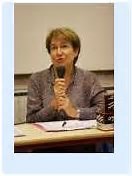
Anne Querrien is a sociologist
The National Library of France holds much information about urban collectives and the extraordinary ideological battle surrounding mutual schools.
In France, mutual schools started in 1816 under the then Minister of Public Instruction, François Guizot and were suppressed by him in 1833, as prime minister, because they were too successful. They disappeared completely during Jules Ferry’s tenure. No one seems to have taken their history seriously.
The mutual schools were closed because of their efficiency.
Like the Brothers’ Schools in the 17th Century, they were created for poor children, to take them off the streets and teach them the basic skills of reading, writing and arithmetic. Their considerable efficacy was down to the sharing of skills and to helping each other. Organised is small groups, those who understood helped the others. This is illustrated in prints showing some pupils giving lessons to soldiers in the Napoleonic army. Between 1816 and 1848 several hundred pupils emerged from these schools; including Pierre-Joseph Proudhon, the French politician and mutualist philosopher. These schools, in effect, went too well. Their students learned twice as fast as those in the Brothers’ schools and this encouraged their curiosity. In the factories they questioned the management’s methods.
Mutual schools were introduced into the UK by the Scot, Andrew Bell, an Anglican minister, who discovered mutual teaching in India between 1790 and 1795. He applied this approach with success in a Madras school. Similar methods were adopted in London by Joseph Lancaster, who popularised them so much that there were over a thousand “Lancasterian schools” around the World.
This approach became known as the monitorial system.
From those mutual schools we can learn about their learning methods. As Bertrand Schwartz said, “It is possible to learn to learn”.
 Jam Butty's Alternative Education