Fernand Oury
Fernand Oury (1920-1998) was a teacher in the Paris suburb of La Garenne- Colombes, at the same school where he had been a pupil. He was close to Francoise Dolto, Jacques Lacan, Felix Guettari and his brother Jean Oury, who founded the psychotherapy clinic of La Borde.
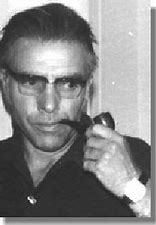
Along with George Lapassade, Francois Maspero and Aida Vasquez, he developed the concept of “Institutional Pedagogy” which transformed the teacher-learners’ relationship. It emphasised how self-governing group dynamics among learners facilitates learning in general and access to critical thinking in particular.
He supported the concept of heterogeneity, simply because children do not grow and develop at the same pace, he put into practice the techniques of Freinet, which he enriched with his own experiences. He adapted the judo principle of grades with coloured belts allowing him to orchestrate the differences in level for the benefit of all.
Traditional pedagogy assumes a homogenous audience; the controlled work assumes identical individuals who regularly progress at the same pace. The general discipline assumes a homogeneous mass without dregs. Fortunately, that homogeneous class only exists in the minds of pedagogues and politicians.
Everyone knows the reality; though equal in law, children are all different and, in class, the “strong” are called “good and acceptable”, the “weak” are described as “bad, unacceptable, discontented, feeble, disturbed or misfits.
Important people love playing God; “sorting the sheep from the goats”. They define the criteria for selection, they orientate, they reform, they restructure and they have fun. They go on to label classes as rubbish and schools as dumps. At the expected level or not, it’s always about classes that they wish were homogeneous.
We are not alone in thinking that school is “made to measure”. Each pupil works at the set pace and level, each for himself. Sometimes it’s like being locked in a teaching machine. What happened to communication, collective working, the dynamism of groups and teams?
The criticism of this approach dates back more than half a century, with some seeing alternatives, providing individualised work. The heterogeneous class that we have is split up and organises itself in a system of tiny more homogeneous classes for reading, French, calculations, problem solving and writing.
“In practice, evaluating the pupils abilities isn’t difficult, I give them a photocopied sheet containing, for example, 25 problems graduated from introductory to middle school levels. They do what they can and then they stop.
Alternatively, I dictate 25 words or phrases and they understand, if they can finish the activity, they won’t have to do the elementary course. We talk about scores, not marks and we can see the “level’ in the same way as we see the temperature.
At no time is there a global comparison. Why do that? Even if they aren’t particularly successful, they know that cheating would be ridiculous? Someone at the basic level would certainly not want to be classed above that because the next level would be above their competence and they risk suffering.
It is the score obtained that determines the course and the colour. The results table, which has no scientific pretensions, is a tool that enables us to create more homogeneous groups.
We all need manageable classes. The colour coding based on the idea of judo belts allows individuals to see where they are in each subject. One pupil may be green in reading, orange in French, blue in arithmetic and green in reading. The results table and the colour code provide all the details for the group. The pupils’ colours can change; there are no barriers.
No one, not a baby, a toddler, an adult or a sick person, will react in the same way to the demands. From a grownup we expect more than a little one. Everyone knows it, everyone does it and if it isn’t said, everyone risks running into the juvenile desire for egalitarian justice. “It isn’t fair; he can do it and I can’t. Why not”?
This legitimate question “is he higher (or lower) than you”, is answered by the results table,
As with Judo, like everywhere, the demand becomes an honour, an indication that the others hold you in esteem. In the elementary course where the normal pupil will be 8 or 9 years old, there are four levels; yellow for a student who performs and is considered as an infant of 6 years. Orange corresponds to 8 years of age, green to 10 years and blue to 12 years.
The better one performs, the more the right and duties increase; but, one the other hand, infantile behaviour is less and less tolerated. Regression remains a possibility, but the word is never used. It is useful to know that levels of behaviour are not necessarily tied to scholastic levels.
Certainly, each new school year, it is me who assigns the levels, if Antoine doesn’t agree, we talk about it in the council.
A Voyage into the Heart of Institutional Pedagogy
In 1973, the three young founders of La Neuville School, Michel Amran, Fabienne d’Ortoli and Pascal Lemaitre wanted to develop their pupils’ well-being. They were influenced by the pedagogue Fernand Oury and the psychoanalyst Francoise Dolto. Within a framework of coloured belts, the youngsters build their learning with adult assistance.
The teacher announces, “We need someone to act as a guide”.
Zachee from the “Corner Group”, volunteers without too many regrets, dragging himself away from the maths problem that absorbed him earlier, in order to accompany the Parisian journalist. He has the responsibility of revealing the ins and outs of this unique boarding school.
The estate consists of a chateau and its surroundings near Longueville (Seine et Marne). The visit commences with the “Staircase Class”, where the youngest children are taught. Max-Adam, the school’s youngest pupil bluntly explains, “Here we learn to read and write. We have some work to do and we get paid”.
Zoheir (12 years) completes the explanation, “Each group works at its own level of difficulty. The Eleven Steps and Corner Groups know more stuff. To get there is a bit like judo, you have to gain the next belt. Me, I’m an orange belt in reading and writing, but only dark yellow in grammar”. The darkest belt is brown. “Here the students progress at their own pace. Everyone helps everyone else and tries to understand their way of working,”.
Zoheir is voluble, “Here, we are in the country. We look after the animals. We’re in a calm place, where we can talk to people and people help us. Like in outside, you can earn money by working. The jobs include changing the date every day, giving out rulers, issuing exercise books and emptying the waste-paper bins. Me, I look after birthdays, today it’s our teacher’s birthday. This evening there is a dance, that’s for relaxation”.
At lunchtime the children responsible for the meal busy themselves in the refectory. Meanwhile, there are two different meetings taking place, one for the boys, the other for girls. Under the guidance of an adult of the same sex, they can debate everyday problems, particularly the problem of managing conflicts between individuals. The main weekly meeting on Thursday evening will be the occasion of a great outpouring in the direction of a student president, who is at least a blue belt. The forty pupils and ten adults, who constitute the body of La Neuville, deal with the propositions and all the decisions will be written up in the “Book of Words” throughout the week.
Michel Amran explained, “When we went to see Fernand Oury for advice, he immediately warned us not to make a new Summerhill, he feared, that in the course of 1968 we would align ourselves with the movement advocating no directivity like that self-managing school. After we reassured him, he gave us his support and directed us to Francoise Dolto.
Fortified by this warning, the trio founded the school, where they struggled for the first few years, but they got by with children whose parents want an alternative education for them. Francoise Dolto sent them children who were undergoing psychoanalysis. It was necessary to adapt, but Dolto was convinced that there would be reciprocal benefits for children who were progressing normally and those who were in temporary difficulty. “Where normality is in force, everyone hides their weaknesses, becoming ashamed of them”.
“In the presence of disturbed children, the mask drops and one can let go to become the person that one really is, with all the strengths and weaknesses, with fear of being judged. Thus began the processes of mutual aid and exchange”.
There would be cross-pollination in the heterogeneous society that lies at the heart of La Neuville Project; an important part coming from the social support.
Undisciplined, sometimes violent children, who are often stuck academically, little by little develop some autonomy and adapt to the rules of life that they themselves help to define.
The visit reaches its end, the garden, the boys’ and girls’ dormitories, the swimming pool, the gym with its new judo mats and the tuck shop where the kids can spend the earnings from their jobs.
In the Angle Group, Zachee philosophises as he waits calmly for the results an entrance test to the self-managed lycée in Paris; “It’s nice here, there’s swallows in summer”.
 Jam Butty's Alternative Education