In 1918 there were many pacifist teachers who were scarred in body and mind. Revolutionary trade unionists formed the Fédération des Membres de l’Enseignement, which aimed at avoiding the slaughter of 1914-18, putting an end to capitalist exploitation and creating a more humane and just society.
Through an educational commission and their review “l’École Émancipée” (The Emancipated School), they reflected on developing a pedagogy involving an “Active School” and “Centres of Interest”. They turned initially to the great thinkers of the past, (Rabelais, Rousseau, Pestalozzi …), then to the experiences pre-1914, such as Paul Robin at the Cempuis orphanage (Oise) with its integrated teaching, to Francisco Ferrer and his Escuela Moderna (Modern School) in Spain, Sébastien Faure at “La Ruche”, near Rambouillet (Libertarian Education).
They were also influenced by the experiences of Faria de Vasconcellos‘s Ecole Nouvelle near Brussels and Kirchstensteiner in Germany, as well as the work of Adolph Ferrière in Switzerland, Ovide Decroly in Belgium, Maria Montessori in Italy and John Dewey in the United States. The proletarian pedagogues of the new USSR, such as Pistrak, Blonskij, Kroupskaïa provided further impetus.
Célestin FREINET was born in 1896 into a modest family in the Alpes-Maritimes. He studied at the École Normale d’Instituteurs in Nice from 1912 until 1915, when he was mobilised. As a young officer, he was seriously injured by a bullet in his lung that required a long convalescence. In 1920 he was appointed to teach at Le Bar-sur-Loup, where he remained for eight years.
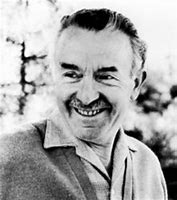
He was passionate about teaching, but wanted to change things. During his holidays he visited various educators (Hamburg in 1922, Montreux in 1923 and the Soviet Union in 1925. He wrote articles for avant-garde journals such as “Clarté” and “l’École émancipée”. He campaigned for trade unions and participated in numerous cooperative enterprises such as “Abeille baroise”
In his modest rural school, he set up a printing press on which he printed accounts of his experiences for a variety of reviews.
During 1926 he corresponded regularly with René Daniel and his class at St-Philibert-en-Trégunc in Finistère, setting up the “Coopérative d’Entr’aide pédagogique” (Cooperative for mutual educational assistance) to create a set of “Books of Life” composed and printed by the pupils on the press.
He married Élise Lagier-Bruno, a teacher and artist who won the Gustave Doré prize for printing in 1927
In August 1927 during the Teaching Federation’s Congress (CGTU) at Tours, he held the first international congress for printing at school with most of the 40 active participants present, including a delegate from the Spanish Education Ministry.
Rémy Boyau and a group of politically moderate teachers formed the “Cinémathèque Coopérative de l’Enseignement laïc Société” (Cooperative Society for the use of film in lay education) which ensured the availability of film, projectors and cameras, envisaging the production of educational films.
At the second congress, the activities of printing, radio and cinema were brought together into the “Société Coopérative de l’Enseignement Laïc” (C.E.L.). The members of the CEL developed techniques and new methods, whilst the worry of educational materialism led them to produce “Enfantines” and “Fichiers Scolaires Coopératifs”.
Célestin and Élise Freinet were appointed to teach at Saint-Paul de Vence. There he created a documentary brochure for children “Bibliothèque de Travail” (B.T.) (The Library of Work), whilst his review “l’Imprimerie à l’École” became “l’Éducateur Prolétarien” (The Proletarian Educator). In 1932 the CEL produced a short film “Prix et Profit” (Prices and Profits) directed by Yves Allégret with the Prévert brothers as actors.
As Fascism arose, Freinet and his group were attacked violently by the extreme right and Charles Maurras promoted a campaign against Freinet. At the age of 37 years he left National Education, he and his wife opened a “proletarian” private school at Vence. Here the “Front de l’Enfance” with Romain Rolland in charge, aimed to promote popular education.
During 1937 his school welcomed numerous children who had escaped from the Spanish Civil War. A “Célestin Freinet School” was opened in Barcelona by the Catalan Généralitat.
During the Second World War, the activities of Freinet’s Movement were curtailed, he was arrested and interned. His school was closed and wrecked. Members of the CEL were deported and several died.
After the liberation of France, he formed the Comité Départemental de Libération at Gap, where he occupied himself with the child victims of the war. The CEL restarted, its review reappeared and the school at Vence was able to reopen.
The Mouvement Freinet developed rapidly, forming the Institut Coopératif de l’École Moderne (ICEM) in 1947. Faced with the slander that the French Communist Party propagated, Freinet and Élise left the Party in 1948 after 22 years of membership.
The following year, J.P. Le Chanois’s film “L’École buissonnière” (The Truant’s School) was devoted to Freinet as a pioneer. This film was a great success and had wide repercussions. Élise Freinet’s book, “Naissance d’une pédagogie populaire” (Birth of a Popular Pedagogy) was published in that year.
From 1950 to 1954 Stalinists in the PCF waged a virulent campaign against Freinet, trying unsuccessfully to destabilise the ICEM and CEL.
The FIMEM (Fédération Internationale des Mouvements d’École Moderne) was created in 1955 connecting the Movements of ten countries and devoted to the international spread of Freinet’s methods.
Freinet’s school was recognised as an “experimental school in 1964 and its teachers were appointed by the Ministry. Its fame attracted numerous students and visitors from all over the World. Every Summer there were courses known as “Journées de Vence” with the participation of personalities and researchers from the world of education.
Until his death in 1966, the route that Freinet followed went under the description of Natural Methods and was tentatively experimental. He also fought for good working conditions with 25 pupils to a class from 1953, he defended children’s rights and worked ceaselessly for peace.
Élise Freinet continued their work and ran the school until her death in 1981. Their daughter Madeleine Bens-Freinet took over in 1991, from which time the Freinet School, purchased by the state became a public school.
The Freinet Movement continued to follow his route and the ICEM adopted the Charter of the Modern School (Charte de l’École Moderne).
In 1996, on the occasion of his centenary UNESCO acknowledged Freinet’s importance by welcoming 49 delegations of children from all over the world to experience Freinet’s methods.
Currently cooperative classes in École Moderne always work with the techniques of free expression, the school journal and interschool correspondence, plus modern technology. The teachers are motivated by the original hope for freedom of children and that of Men, being sure that Freinet’s live and generous methods can bring hope and modernity to popular education in the 21st Century.
https://www.icem-pedagogie-freinet.org/celestin-freinet-et-son-mouvement
Freinet’s philosophy was that students should learn by producing resources such as the publications that they created using the school’s printing press. He felt that students learned better by directly experiencing ideas within a context and for a set purpose. They created formal versions of their free writing exercises. Using a range of techniques and methodologies, Freinet was able to devise a revolutionary system which arose when other systems were being developed, resulting in Freinet becoming less well known than his contemporaries.
Students worked in groups and were encouraged to learn from their mistakes. They worked collaboratively and used a work schedule, which was negotiated with their teacher. This determined their tasks for a period of time. They were then able to carry out investigations to support their class work. Fieldwork allowed students to leave the classroom and investigate their environment. When they returned to class, they wrote up their findings, printed them and sent them to other students elsewhere in the country.
This led to students producing a collective Class Journal and a school newspaper. These publications were exchanged with students elsewhere in France. The Freinet Movement led to teachers using more advanced technologies such as movie and audio recordings to further their message.
This child-centred approach ensured that the students were always the focal point of any exercise and that they were fully involved in any decision-making that took place.
In this way the students created and revised a working class library from their experiences. They would discuss the text as a class, so that the final outcome was truly a collaborative class effort – somewhat like a Wiki nowadays. Students learned much from being placed in the situation where they had to seek information, rather than passively learning from their teachers. They received positive feedback to their documents thereby reinforcing their knowledge.
Pupils would also use self-correcting files which were worksheets covering such fundamental skills as spelling, humanities and maths. These were used in order to improve their performance, according to their needs.
http://www.schome.ac.uk/wiki/Freinet
Freinet’s Principles of Pedagogy
- Pedagogy of work – Pupils were encouraged to learn by making products or providing services.
- Enquiry-based learning with trial and error, work in groups.
- Pupils co-operated in the production process.
- Centres of interest – The children’s interests and natural curiosity are starting points for learning.
- The natural method – Authentic learning by using the children’s experiences.
- Democracy: children learn to take responsibility for their work and for the community through democratic self-government.
Freinet drafted his pedagogical constants to enable teachers to evaluate their class practices in relation to his basic values and to appreciate the path that remains to be followed.
“It is a new range of academic values that we would like to establish, without bias other than our preoccupation for the search for truth, in the light of experience and common sense. On the basis of these principles, which we shall regard as invariable and therefore unassailable.”
“This Pedagogical Code has several coloured lights to help educators judge their psychological and pedagogical position as teachers:
- Green light: for practices conforming to these constants, in which educators can engage without apprehension because they are assured of success.
- Red light: for practices not conforming to these constants and which must therefore be avoided.
- Orange and blinking light: for practices that may be beneficial, but can create problems and should be used cautiously.
Freinet’s constants
- The child has the same nature as an adult.
- Being bigger does not necessarily mean being better than others.
- A child’s academic behaviour depends on his constitution, health, and physiological condition.
- Neither child nor adult likes to be commanded by authority.
- No one likes to align themself, because to align oneself is to passively obey an external order.
- No one likes to be forced to do a certain job, even if the work is not particularly unpleasant. It is being forced that is unpleasant.
- Everyone likes to choose their job, even if this choice is not advantageous.
- No one likes to act mindlessly, that is to follow prescribed mechanisms in which he has no say.
- Teachers need to motivate the work.
- No more scholasticism.
- Everyone wants to succeed. Failure is inhibitory, destructive of progress and enthusiasm.
- It is not games that are natural to the child, but work.
- The normal way to acquire knowledge is not through observation, explanation and demonstration, but through experimental trial and error.
- Memorisation, which is frequently used in school, is applicable and valuable only when it is truly in service of life.
- Knowledge acquisition does not take place by the study of rules and laws, but by experience. To study these rules and laws in language, in art, in mathematics, in science, is to place the cart before the horse.
- Intelligence is not, as scholasticism teaches, a specific faculty functioning as a closed circuit, independent of the other vital elements of the individual.
- The School only cultivates an abstract form of intelligence, which operates outside reality, by means of words and ideas implanted by memorisation.
- Children does not like to listen to an ex cathedra lesson.
- The child does not tire of doing work that is in line with his life, work which appears useful to him.
- No one likes control and punishment, which is an attack on one’s dignity, especially when exercised in public.
- Grades and rankings are always a mistake.
- Talk as little as possible.
- The child does not like to work in a herd, where he has to comply with the group’s requirements. He prefers individual or teamwork with a cooperative group.
- Order and discipline are needed in class.
- Punishments are always a mistake. They are humiliating for all and never achieve the desired goal. They are at best a last resort.
- A reformed school presupposes cooperation through management by its users of the school’s life and work.
- Class overcrowding is always a mistake.
- Large school complexes are an error and a hindrance because they result in the anonymity of teachers and pupils.
- The democracy of tomorrow should be prepared by democracy at school. An authoritarian regime at the School does not create democratic citizens.
- One can only educate in dignity. Respecting children, who must respect their teachers, is one of the prior conditions for this.
- Opposition by reactionary social and political elements is also a constant, with which we have to reckon.
- The trial and error process authenticates our action: it is an optimistic approach.
 Jam Butty's Alternative Education